









December 29 2025 - 8:15am
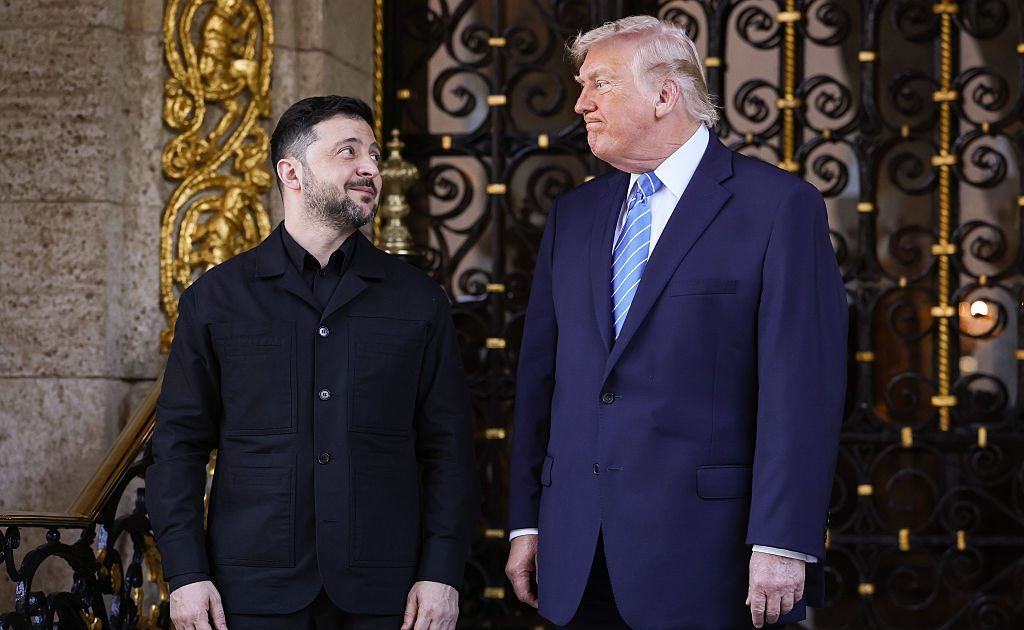
For the fourth time in 2025, Ukrainian President Volodymyr Zelensky traveled this weekend to the United States to meet with Donald Trump, arriving at Mar-a-Lago yesterday. Onlookers could be forgiven for feeling a sense of déjà vu about this latest round of diplomacy over the Russia-Ukraine war.
As on his previous visits, Zelensky came hoping to extract commitments from the US on security guarantees and promises of post-war economic and military support for his weary nation. Once again, his meeting with the American side was preempted by a phone call between Trump and Russian President Vladimir Putin which occurred just hours earlier. Once again, Trump and Zelensky consulted European leaders. And once again Zelensky left mostly empty-handed.
Though all sides called discussions “constructive”, the day had no winners. Moscow and Kyiv remain far apart on the terms of a deal, and Washington’s ad hoc approach to brokering an agreement has largely failed. As the year ends, peace in Ukraine seems barely closer than when Trump returned to the White House 11 months ago. A radical change in strategy will be required if his administration hopes for a better result in 2026.
The purpose of yesterday’s meeting was to discuss the “20-point peace plan”, negotiated over recent weeks between the US, Ukrainian, and European delegations and said to represent a convergence of the American and Ukrainian positions. The meeting was doomed before it began, and still managed to disappoint.
For starters, the two sides failed to reach agreement on the sensitive issues that the meeting was meant to resolve: security guarantees, territorial concessions, and control of the Zaporizhzhia Nuclear Power Plant. In remarks to the press after the two leaders’ private discussions, Trump offered vague responses to questions about security guarantees for Ukraine, suggesting only that most of the burden would fall on Europe. He was more explicit on the issue of territory and the status of ZNPP, admitting that no agreement had been reached in either area.
But even if the United States and Ukraine do eventually achieve consensus, there is a fundamental problem in the Trump administration’s negotiating approach. A deal between the US and Ukraine which excludes Russia is useless as a means for reaching peace. No war has ever been resolved by an agreement that leaves out one of the combatants, let alone the combatant with the advantage on the battlefield.
The current 20-point peace proposal is far from what Moscow is likely to accept and from what the US and Europe can deliver. The commitment to keep Ukraine’s peacetime military at 800,000 soldiers, for example, is likely to be both a non-starter for Moscow and ultimately out of reach for Kyiv. Ukraine does not have the manpower or Europe the money for a peacetime force of this size.
Plans for a European reassurance force inside Ukraine after the war are just as fanciful. The ability and readiness of any European country to fight for Ukraine in case of future war is near zero. In any case, Russia has made this a red line and will not stop fighting so long as this outcome is on the table.
At the same time, many of Moscow’s demands are ones that Kyiv cannot accept. In recent days, Putin has reiterated that Russia’s war aims have not changed. In his call with Trump, the Russian President reportedly rejected Kyiv’s push for a ceasefire before a final political agreement and asked again for Ukraine to withdraw from the portions of Donetsk that its military still controls. Zelensky has made clear that a unilateral withdrawal is a political impossibility, and he’s probably right: there is little support for such a move, from Ukraine’s parliament or its public. Even if he accepted Putin’s demand for withdrawal, Zelensky likely could not implement it.
Despite these vast disparities and the lack of strategy for bridging them, Trump remained upbeat as the meetings concluded. He expressed confidence that he could get the two sides to an agreement soon, perhaps in weeks. This can only be magical thinking. At this point, battlefield exhaustion and not American diplomacy appears to be the best hope for ending the war.
The three parties did agree to hold working groups on economic and security issues, starting in January. This is being framed as evidence of progress, but it is not. Putin and Trump made a similar arrangement in August after their meeting in Anchorage and nothing came of it.
If this time is different, it will be a good thing, but participation must expand outside Trump’s inner circle to include technical experts who can get into the details and hash out remaining differences. Unfortunately for the US President, such a process will not be quick, glamorous, or easy. Whether he has the patience to stick with it could determine the outcome of this war.
 jekavanagh