









February 22 2026 - 8:00am
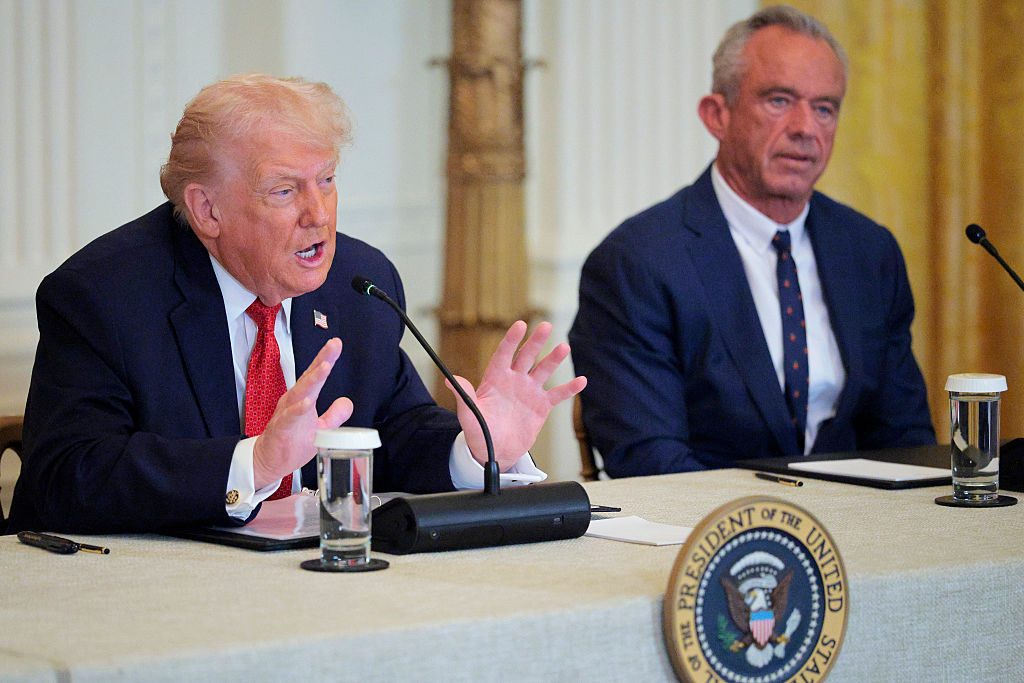
On 20 January 2025, US President Donald Trump excitedly announced his intention to withdraw his country from the World Health Organization (WHO). Last month, his White House followed through on that pledge. It cited “profound failures” in the handling of the pandemic, such as the WHO’s endorsement of totalitarian mass quarantines, as a key reason for its exit. As Health Secretary Robert F. Kennedy and Secretary of State Marco Rubio explained in a joint statement, this withdrawal is “for the Americans who died alone in nursing homes, the small businesses devastated by WHO-driven restrictions, and the American lives shattered by this organization’s inactivity”.
Does this mean that Trump’s White House is giving up on the global — or quasi-global — health project? Seemingly not. This week the Washington Post reported that Kennedy’s department is leading efforts to construct a US-led rival to the WHO which “first and foremost protects Americans”. The parallels with Trump’s recently-formed “Board of Peace” alternative to the United Nations are striking.
A cynic could be forgiven for reading this as the Trump administration’s attempt to shift blame for a damaging, totalitarian pandemic response, the first part of which its leader, at least nominally, oversaw. But let’s shelve cynicism for now and focus instead on the claim that pandemic totalitarianism was “WHO-driven”, and the implication that a US-led alternative would avoid repeating this approach in the very likely event of a future pandemic.
The pandemic response was not “driven” by any single organization — be it the WHO, WEF, or CCP. Instead, it emerged from interactions in a much broader network of actors with overlapping but distinctive practices and priorities. This included disease surveillance systems in search of microscopic monsters to destroy, clinicians standardizing and circulating case definitions for a new disease, epidemiologists collecting data based on these definitions, modelers trained to represent the world, and model interventions such as quarantine. On top of all this, there were drug developers promising silver bullets (e.g. vaccines) to perennial terrors (e.g. plagues), and politicians worrying about health systems being overwhelmed and feeling pressure to do something major. Citizens also played a part, buying into the idea that something major needed to be done. Pandemic totalitarianism was less a leviathan and more a hydra.
The WHO’s “meta-governmental” role in organizing parts of this network and specifying “best practice” policies should not be minimized. But blaming the organization for global pandemic totalitarianism is a lazy simplification.
While it is still too early to tell, nothing suggests that Trump’s para-system of global health — assuming that it manifests — will meaningfully differ from what came before. The Post’s report only says that a “US-run alternative would re-create systems such as laboratories, data-sharing networks and rapid-response systems”. Given the administration’s flawed understanding of Covid-19 policy, this reads like a charter to recreate the existing network of people and organizations — the preconditions of pandemic totalitarianism — only with vaguely “America First” characteristics. And guarantees from Kennedy and his team that they would avoid making the same mistakes should not allay our worries. Political economists have shown that organizational opportunities for totalitarianism can lie dormant for years, if not decades, long outlasting any single administration.
Ultimately, just as investing in the state’s “defense” capacity means investing in its capacity to control and harm human beings, including its own citizens, recreating the network alluded to above means recreating a polity’s potential for pandemic totalitarianism. Unfortunately, the Trump administration has yet to demonstrate the big-picture appreciation of organizational dynamics necessary to confront this threat.