









March 3 2026 - 10:00am
It was under Charles de Gaulle, the father of the Fifth Republic, that France made its first forays into nuclear weapons. After the country’s first nuclear test in what was then the French Algerian desert, de Gaulle quipped: “Hurray for France! Since this morning, she is stronger and prouder.” Channeling his greatest modern predecessor, Emmanuel Macron this week committed to improving France’s nuclear arsenal, claiming that “to be free, we have to be feared.”
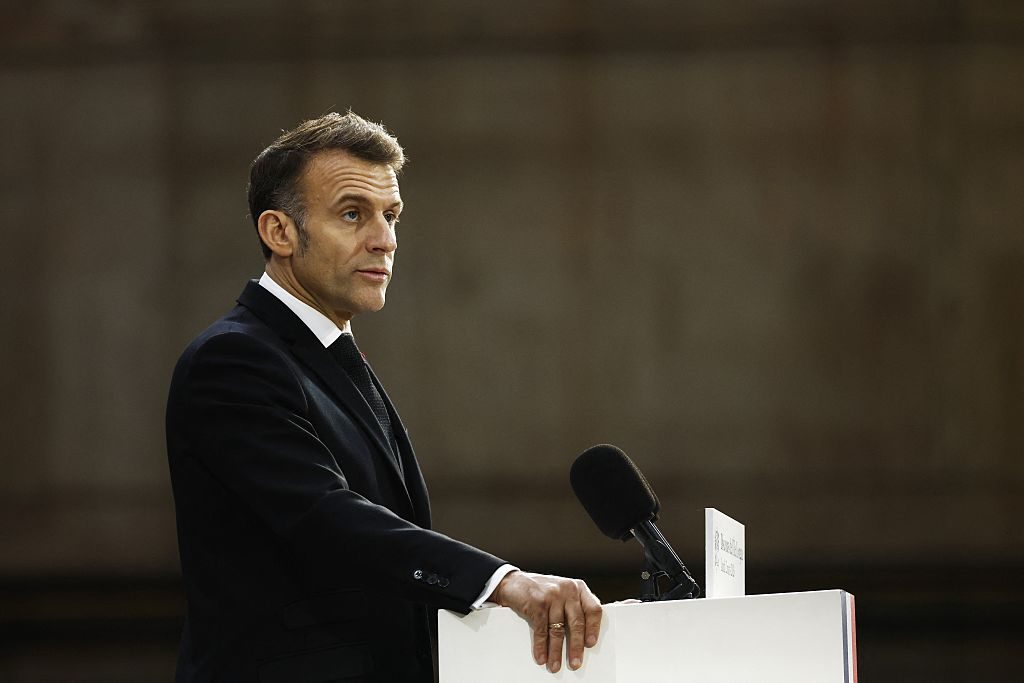
Speaking from the Île Longue nuclear submarine base in Brittany yesterday, the President unveiled an ambitious vision. The country’s nuclear warhead stockpile will be expanded and the next Invincible nuclear-submarine class is set to sail from 2036. The strategic air force and nuclear naval air force will also have their nuclear cruise missiles upgraded. And just for good measure, Macron reminded the audience that Paris can still defend itself. “A single one of our submarines carries the equivalent to all the bombs dropped during World War II,” he said.
The most anticipated part of Macron’s speech concerned Europe. His critics had spread rumors that he may undermine sovereignty and share the nuclear button with Brussels or Berlin. He denied that outright, saying: “France will always bear the sole responsibility for the deliberate crossing of the nuclear threshold.” Defining “vital interests”, he added, “will remain a matter of sovereign judgment”.
Yet he did present one evolution that he referred to as “forward deterrence” — a new doctrine that could include European joint nuclear exercises or even moving nuclear warheads abroad, as well as in-depth talks on nuclear doctrine. Some eight European states have stated their interest, including Germany, Poland, Sweden and Britain.
Some of the fiercest anti-American voices in Europe might have hoped for Macron to push for the replacement of America’s nuclear umbrella. But despite the current volatility of US foreign policy, the American nuclear umbrella is far from gone — as was made clear last month at the Munich Security Conference by the US Under Secretary of Defense for Policy, Elbridge Colby. Even Macron himself acknowledged that replacement wasn’t his objective.
At heart, the President was desperately trying to regain not only France’s credibility but Europe’s. France’s military and its support for Ukraine have been hampered by its own political and fiscal woes. What’s more, Macron’s reputation as a master statesman was damaged by his ill-timed and unsuccessful attempts to negotiate with Vladimir Putin following the 2022 invasion of Ukraine.
There was a risk that yesterday’s speech would fall on deaf ears — as happened when Macron made his previous nuclear speech in 2020 — or that ultimately Europeans no longer trust France. De Gaulle famously doubted that America would risk Chicago for Paris should the USSR strike the French capital. In that vein, many European leaders are probably wondering whether France would sacrifice Paris or Lyon for Helsinki or Tallinn. After all, Macron has not granted his allies joint decision-making on nuclear strategy, despite polling across the continent indicating a strong support for France to Europeanize its nuclear umbrella.
The coming years will determine what “forward deterrence” actually means. But Macron’s address — one of his final major foreign speeches as President — seems to have paved a realistic path towards a continental nuclear umbrella, driven reliably by France.
François Valentin is a political analyst and co-host of the Uncommon Decency podcast.
 Valen10Francois