









April 21 2026 - 8:45pm
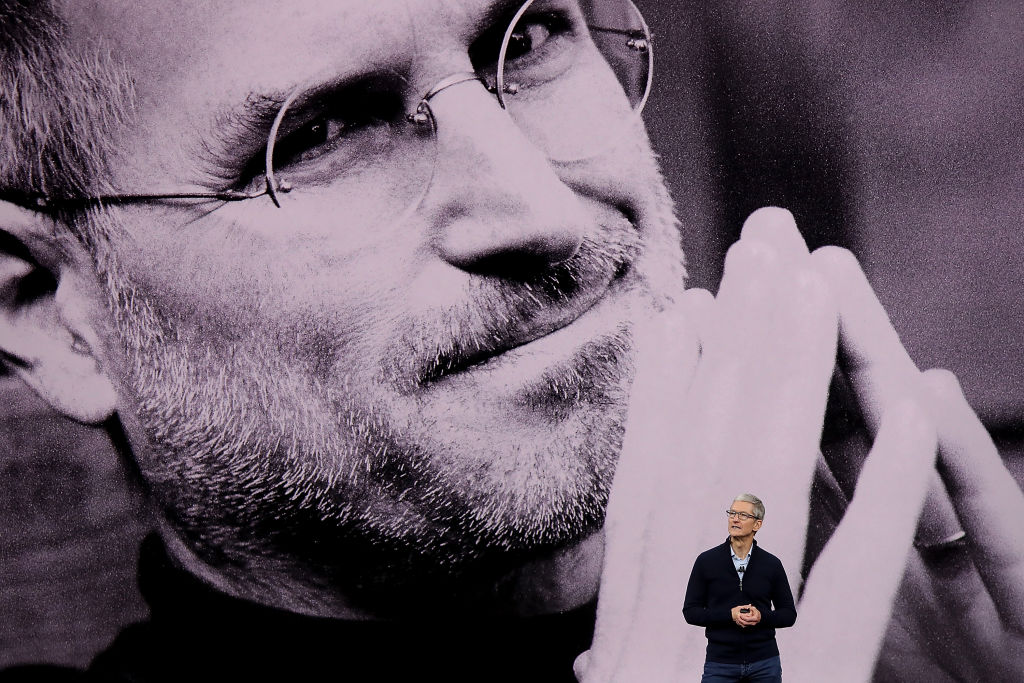
Tim Cook was an excellent CEO from the only point of view that truly matters: money. Apple is 10 times bigger than it was 15 years ago, remains one of the three highest-valued companies on the planet, and has expanded respectably into services while doing nothing to screw up its foundational positions in hardware.
But there is one crucial ingredient that has been lost under Cook’s leadership: vision. Gone are the days of the iPhone, the iPod, and even the old MacBook — all of which were culturally significant in their own right. Under Cook, these innovative products have been replaced by the Apple Watch, AirPods, and various software services. None of these were conceptually new, but the achievement was operational: tighter integration, higher margins, and a more hermetic ecosystem.
It took EU regulation to force Apple to give up its proprietary Lightning cable and shift to the USB cables everyone else uses. That episode serves as a neat metaphor: preserve control, preserve margins, and preserve the aura of specialness until an external force compels change. Unless they’re hardcore Linux junkies, the most anti-capitalist artists in the world still end up on Apple hardware. This was Jobs’s vision all the way, and Cook hewed to it skillfully.
Apple’s AI development, on the other hand, remains hazy to the outside world, with its 10-year attempt to develop a self-driving car finally abandoned in 2024. Ironically, it was Cook’s most ambitious bid to leave some kind of Jobs-like footprint, hoping to create a completely autonomous car that didn’t need any driver intervention. This was a daunting task that Jobs himself likely would have rejected as infeasible.
Jobs’s coup with the iPhone was taking several pieces of technology and infrastructure that already existed — mobile networks, ARM CPUs, and supply chains — and yoking them together to dump us into an always-online world. The risk remained, but it was trivial compared with the Apple Car, which, true to Apple’s austere design ethos, was reportedly conceived without human driving controls at all, effectively betting on a self-driving infrastructure that didn’t yet exist even in prototype form. Elon Musk may be planning for a Mars colony, but he hasn’t made it a product division of Tesla.
Still, when a company has a $3 trillion market cap, it’s easy enough to absorb a failed moonshot project like an autonomous car. It could be argued that outside of AI, the general lack of mind-blowing tech from the tech titans over the last fifteen years has been a result of that monumental success, where these companies that are big enough to absorb any threats to dominance are also too big to get reality checks put on their dreams before it’s too late. We are still waiting for the next generation of usurpers, as Microsoft usurped IBM and Google and Amazon et al. usurped Microsoft.
Nonetheless, Cook did not screw things up like Steve Ballmer, who dragged Microsoft down with Windows Vista and Windows 8 before Satya Nadella somehow righted the ship, and that is enough to cement a respectable place in corporate history for him. He didn’t often try to be his predecessor (and when he did, as with Apple Car, he didn’t make a big noise about it). Nor did he indulge the kind of personal eccentricities that sometimes surrounded Steve Jobs, including his well-documented openness to alternative approaches to medicine during his illness.
David Auerbach is an American author and former Microsoft and Google software engineer.
 AuerbachKeller