









November 25 2025 - 1:00pm
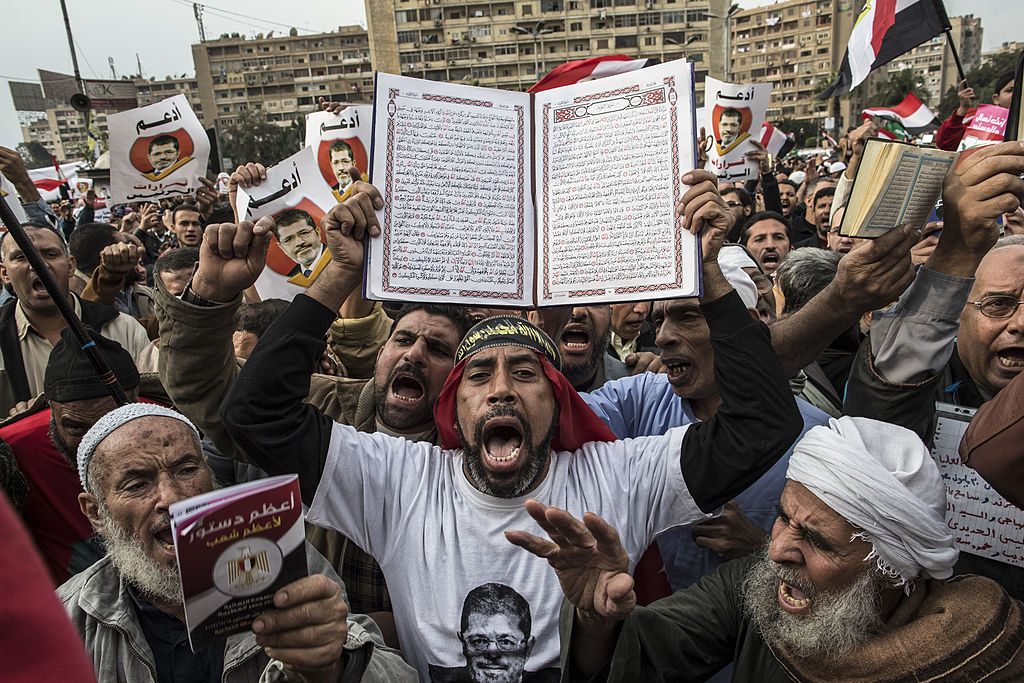
Donald Trump this week moved to designate the Muslim Brotherhood, an Islamist group which supports sharia law and the creation of a caliphate. Given its own exposure to the Brotherhood’s influence, should Britain consider doing the same?
Earlier this year, the French Ministry of the Interior published an official report on the organization’s networks, strategies and methods inside democratic societies. It concludes that the Brotherhood’s core threat is not conventional terrorism but instead subversion from within. It documents a deliberate, long-term campaign to infiltrate civic life: religious councils, educational settings, charities, advocacy groups and municipal political structures.
The report warns that the Brotherhood uses democratic freedoms to undermine the foundations of democracy, cultivating influence over communities and local decision-makers while avoiding any formal organizational footprint. The document identifies Sweden and the UK as two of the European countries where the Brotherhood’s entrenchment is most advanced and least scrutinized. In May, following the French report, Sweden’s government announced its intention to commission a study into Islamist infiltration. The UK did not follow suit.
A separate study, published this month, details the same pattern in the United States. It reveals how Brotherhood-aligned groups have entered student networks, interfaith organizations, civil rights bodies, philanthropic foundations and policy forums. Their goal is not spectacular attacks or recruitment for violence, but shaping norms, debates and policy environments from the inside. These networks, the report argues, have been able to influence messaging around the Middle East, legitimize anti-Western and illiberal views, and secure access to policymaking circuits — often without ever being publicly understood as an ideological project. Its strategy is a slow-burn one of narrative dominance and institutional capture.
Unlike France or much of the Middle East — where the Brotherhood is banned — Britain has taken no meaningful action, perhaps out of fear of being accused of Islamophobia. Yet the UK is precisely the type of environment in which Brotherhood networks thrive. A large charitable sector with relatively light oversight, a fragmented local government ecosystem vulnerable to community-bloc pressure, a permissive environment for foreign funding, a permeable Civil Service: all these give Brotherhood-linked actors easy routes into advisory spaces. That’s before considering an academic sector vulnerable to infiltration, which can then indoctrinate generations of students. The result is a space where Brotherhood-aligned organizations can shape policy and narratives with minimal scrutiny.
A 2015 UK Government review found Brotherhood-linked individuals and organizations influencing student networks, charities, mosques, and advisory bodies, with some openly supporting terrorism. The review was limited, leaving gaps that a fresh, comprehensive assessment should now address.
Proscription would allow UK regulators to scrutinize finances, audit charities, trace cross-border funding, investigate front organizations, and prevent entryism into political and civil-society structures. It would make it harder for Brotherhood-aligned networks to operate behind innocuous branding. And it would send a clear signal that using Britain’s democratic institutions to advance illiberal ends is not a protected activity.
If France and the United States have independently reached the same conclusion about the Brotherhood’s strategy, the UK should take note. The question is no longer whether it poses a threat. It is whether Britain is prepared to look in the places where the group operates and root it out.
Dr Limor Simhony Philpott is a writer and researcher focusing on antisemitism, extremism and defence.
 limorsimhony