









November 3 2025 - 10:00am
On Friday, the White House X account published a post attacking religious persecution abroad. “The United States cannot stand by while such atrocities are happening in Nigeria, and numerous other Countries,” it read, in reference to a series of killings by Islamist militias in the African country. “We stand ready, willing, and able to save our Great Christian population around the World!”
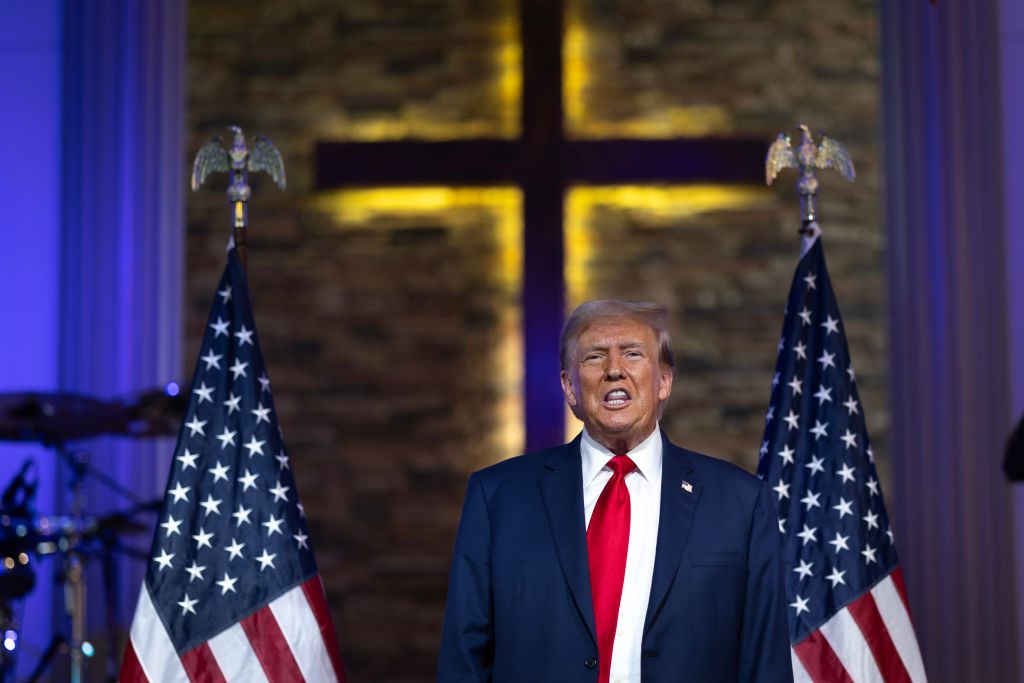
At first glance, the post signals concern for black Christians in Nigeria, challenging the common perception that Trump’s foreign moral concern is racially exclusive. Instead, it suggests that the US President’s worldview is better understood as Christian nationalist, with his rhetoric and policy priorities shaped by religious identity and civilizational framing rather than race alone.
The term white supremacist has been used repeatedly to describe Trump and his administration. White supremacy is an ideology that prioritizes race, emphasizing white cultural, political, or demographic dominance on the claim of its inherent superiority. Christian nationalism, by contrast, fuses politics and religion, framing national or civilizational goals around the protection or advancement of Christianity. While the two can overlap, they are distinct ideologies with different end goals.
The White House post explicitly advocates for global Christian populations, including those in majority-black countries, as seen in the Nigerian situation. But this is not the first time Trump has positioned himself as a global guardian of Christians. Last year, on his Truth Social platform, he criticized Kamala Harris for doing nothing to address the persecution of Armenian Christians and pledged that, if re-elected, he would protect persecuted Christians worldwide. In September of this year, he addressed the United Nations General Assembly, calling for protection of what he described as the most persecuted religion in the world: Christianity.
This focus on defending vulnerable non-white Christians contrasts sharply with the rhetoric often associated with Trump. His aggressive border policies have been widely criticized as racist, xenophobic, or anti-immigrant, and his fast-tracking of white South African refugees has drawn attention as an alleged example of racial favoritism. Yet a closer look reveals a more nuanced picture: many of Trump’s interventions are framed around defending persecuted groups — Christians in particular — rather than advancing white supremacist aims.
Ironically, mainstream “anti-racist” attention often prioritizes racial narratives, overlooking non-white Christians facing persecution in places such as Nigeria, the Middle East, and parts of Asia. Trump’s concern exposes this selective focus, whether motivated by genuine conviction or political calculation. In many debates, moral urgency aligns more closely with religious solidarity than with racial identity.
Of course, it would be naive to ignore the overlap between white supremacy and Christian nationalist discourse. Many of Trump’s domestic supporters — and even some critics — conflate “Christian” with “white”, giving his rhetoric racial undertones. Yet labeling him a white supremacist, someone who fundamentally believes in the inherent superiority of white people, oversimplifies a more complex civilizational and religious worldview.
Trump’s ideology is best understood through the lens of Christian nationalism rather than white supremacy; a worldview centered on preserving America’s foundational heritage as an Anglo-Protestant state. He can be clumsy and offensive in his expressions, but mislabeling him as a white supremacist obscures genuine global concerns, such as the persecution of Christians outside the West. If anti-racists genuinely care about the oppressed, they might broaden their moral imagination beyond race alone, a challenge that Trump, for better or worse, compels us to confront.
