









February 26 2026 - 4:00pm
What is general knowledge? I would say it’s something that a reasonably well-educated person ought to be ashamed of not knowing. It is that fear of public shame which gives the edge to any quiz contest, whether in a pub or on national television. It is fun to get it right, of course — especially in front of others. But it is particularly so because it would have been so embarrassing to get it wrong.
So, if you were to ask me, in front of a large audience, “What is the name given to aggregations of the protein alpha-synuclein that can appear within, and often displace, the components of brain cells?”, I am afraid I would shrug cheerfully and confess: “I don’t know.” I’d also think I’d come to the wrong place.
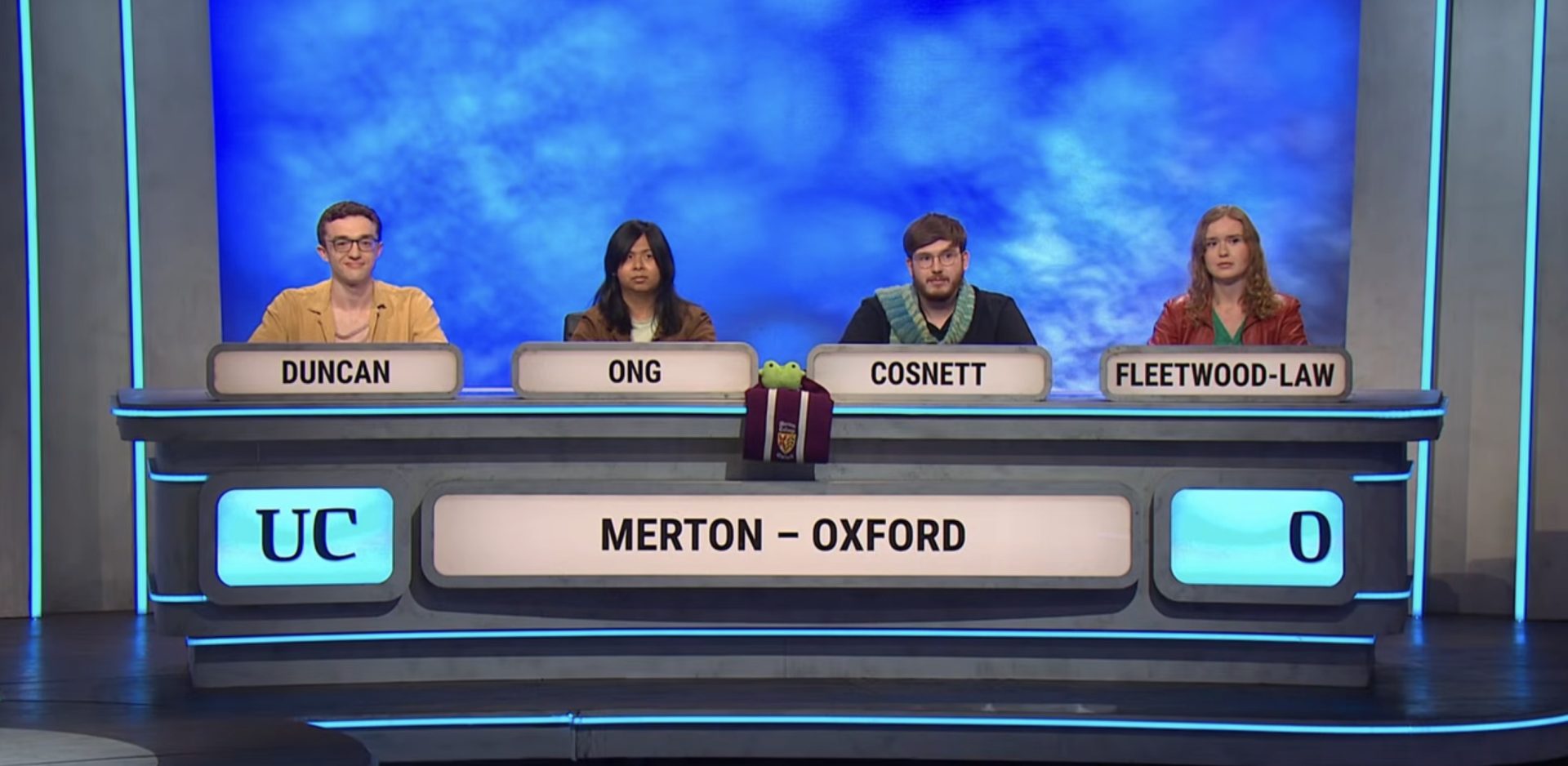
This is specialist knowledge — and it was one of the early questions in this week’s edition of University Challenge, once one of the most popular quiz shows in Britain. I confess I was delighted when none of the students faced with this ridiculous puzzle could answer it. I think they put in these bizarre, obscure questions so as to fend off any suggestions that the contest has been “dumbed down”. Which, of course, it hasn’t been. If it were, it might go the way of the old contest Top of the Form, which eventually closed down in 1986 as it struggled to cope with the lower standards that followed the closure of selective state grammar schools.
University Challenge is now a test of highly specialized knowledge quite different from the interests and preoccupations of people in the pre-1997 universe. One of my chief reasons for watching the program nowadays is to jeer at its strange, solemn-faced new format, in which questions of this sort are common. The program had begun with a contorted, contrived question about which vowels appeared in the titles of three unnamed films directed by various people I had never heard of. Amazingly, one contestant actually managed to answer this.
For a long period, the answer to almost any request to identify the painter of a classical work seemed to be “Artemisia Gentileschi”, who remains much loved by feminists. The same is often so with questions about mathematicians, scientists or astronomers. Anyone boning up for the program would be wise to burrow diligently through the internet looking for women in such fields of endeavor, or for women who have won the Nobel Prize. Also useful is knowledge of the flags of tiny Pacific archipelagos or obscure West African states. Chinese or Indian geography or history are a good bet, too, but rarely does knowledge of this country’s shape or past prove valuable.
The question-setters are more or less obsessed with computer games. Sometimes English literature comes up — often in the form of recently published novels which I am afraid I have never heard of. But quotations that were considered standard knowledge when I was 13 sometimes produce no echo at all. On this week’s episode, a team from a major university was asked what the lines “close bosom-friend of the maturing sun” referred to. The contestants were told that they were written by John Keats. After some discussion, in which one team member actually mentioned the word “autumn” and even said Keats had written an ode to it, while another opined “yeah, it’s not an ode,” they cheerily answered: “The horizon”. Nobody was shocked.
I thought, in recent years, that I had detected a general politically correct tendency in the program. The old “BC” and “AD” designations for dates became “BCE” and “CE”. All measurements are now given in metric units. And, of course, there were Artemisia’s paintings and those female math geniuses. Egalitarians and anti-egalitarians alike have long pointed out — for their own very different reasons — that Oxbridge colleges with a few hundred undergraduates often triumphed over huge, less selective universities. Then, in 2024, an account from a former captain of Balliol College, Oxford, team revealed that the “production team considered it good optics to have a few Oxbridge teams ‘steamrollered’ in the opening round”.
What’s more, the former Balliol student described the long pre-screen selection process he and his team had endured, writing: “It’s clear that being knowledgeable is a necessary, rather than sufficient, condition of advancement.” He added: “Diversity was clearly important. In our briefing notes, we learned that the program aimed to ‘showcase’ the entire UK’s student population ‘in terms of race, gender identity, sexuality, disability, faith, socioeconomic background, and more’.” This is a rare first-hand account of something important — the cultural revolution at work in detail. That revolution cannot leave anything alone, and it knows — as I do — that even (perhaps especially) TV quiz programs influence the minds of those who watch them.
I speak, by the way, with slight knowledge. My late brother never got over a Sixties appearance on the program (Balliol College again, supposedly the top intellectual powerhouse of Oxford). My family watched — I think it may have been live in those days — as Balliol was thrashed by tiny St David’s College of Lampeter. I can recall Christopher answering one question correctly, which I think was about rabbits. I had no idea he knew anything about the subject.
Sobered by this horror, I hesitated for all of 30 seconds when asked to take part in a special “Tabloids versus Broadsheets” edition of the program in 1999, when a shockingly black-haired and lah-di-dah-voiced Jeremy Paxman presided over a roomful of journalistic egos — including the future PM, Alexander “Boris” Johnson. I didn’t do too badly, and my team won, but I learned that your main opponents are on your own side. Time and again I stabbed violently at the buzzer and no sound emerged, because the astonishingly quick-witted Tony Parsons had got there first. You can find it on the internet, and it is still a good watch: far more entertaining and exciting than the stodgy programs of today.
Peter Hitchens is a columnist for The Mail on Sunday and author of A Revolution Betrayed.
 ClarkeMicah