









May 22 2026 - 6:00pm
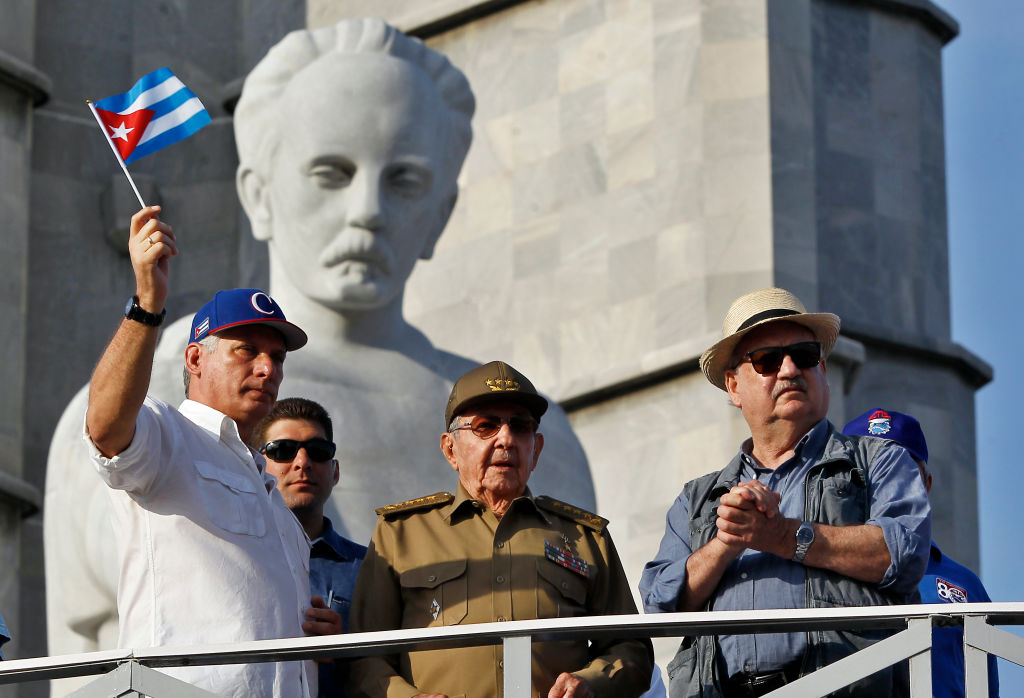
The US indictment of former Cuban leader Raúl Castro reflects the Trump administration’s escalating effort toward regime change in Havana. Castro, now 94-years-old, has been charged with murdering four Americans after their humanitarian flights were shot down by Cuban forces in 1996. Yet this indictment isn’t ultimately about justice for long-dead victims. Instead, it’s about providing a legal foundation for US military action against the Cuban regime. It’s also about increasing pressure on regime officials, pushing them to make major concessions out of a fear that they will share Castro’s fate.
Likely encouraged by Secretary of State Marco Rubio, whose parents were Cuban, President Donald Trump appears to see the island’s liberation as a potential signature legacy achievement. Yesterday, Trump warned that possible military action in Cuba was on the cards, while Rubio suggested that the country was a “national security threat”. The war in Iran has only strengthened the impulse that toppling the Cuban regime could be a legacy achievement.
Trump has grown frustrated as the conflict drags on and the Tehran regime in Tehran remains untoppled. The war’s economic fallout is also creating a mounting political problem for both the President and his party ahead of the November midterm congressional elections. Together, these developments risk making Trump appear out of his depth — something to which he is particularly sensitive. Cuba therefore offers him a dramatic opportunity to change the conversation.
The Trump administration’s first preference is that its pressure will provoke a Venezuela-style resolution in which the most ideological elements of the Cuban regime are replaced by more pliant leaders. To that end, Rubio and CIA director John Ratcliffe have held multiple meetings with Castro’s grandson, Raúl “Raulito” Castro, with Ratcliffe visiting Havana last week. These efforts have gained added urgency as protests spread across Cuba amid increasingly catastrophic shortages of energy, medicine, and other basic goods.
Still, there is little prospect of genuine internal regime change. Unlike the fractious inner circle surrounding deposed Venezuelan dictator Nicolás Maduro, Cuba’s communist elite remains bound together by both endemic corruption and a deep ideological hostility toward the United States. The regime’s highly capable DI intelligence service, combined with the military’s control over the economy, further reduces the likelihood of any successful revolt from within the state or security apparatus.
Castro and his allies may nevertheless be mistaken if they believe these obstacles will deter Trump from escalating pressure. The US President has plainly grown more comfortable with the use of military force during his second term. He will also be mindful of the message sent by the American raid which captured Maduro — an operation widely reported to have involved Delta Force commandos and to have inflicted heavy losses on elements of Maduro’s security detail, including Cuban personnel.
Equally importantly, the kinds of globally destabilizing risks associated with Iran — above all the potential closure of the Strait of Hormuz — are not a factor in Cuba. That lowers the geopolitical and economic costs of taking a far more aggressive approach towards Havana.
There are other indications that military action beckons. Consider the recent appointment of a new commanding general of Southern Command, the US military command responsible for Cuba. Gen. Francis Donovan is a Marine infantry officer who previously led a formative Marine special operations unit in Iraq. Cuba’s island coastline in proximity to the US makes it ripe not just for special operations raids, but for amphibious assaults — although if an invasion is being prepared, we will see weeks of preparatory build-ups.
Clearly, then, the Trump administration senses a rare opportunity to force Cuba’s communist leadership into a stark binary choice between Venezuela-style negotiated submission or outright systemic collapse. The indictment of Raúl Castro is therefore best understood not as an isolated legal escalation but instead as an opening move in a broader campaign of sustained political, economic, and potentially coercive pressure.
In short, this is merely the visible edge of a much larger iceberg now bearing down on the regime, shaped by tightening sanctions, intelligence pressure, and explicit signaling that regime durability is no longer assumed. For Havana, the question is no longer whether pressure will intensify but how quickly and how far it will escalate, and whether the system can absorb the shock without beginning to fracture.
