









November 29 2025 - 5:00pm
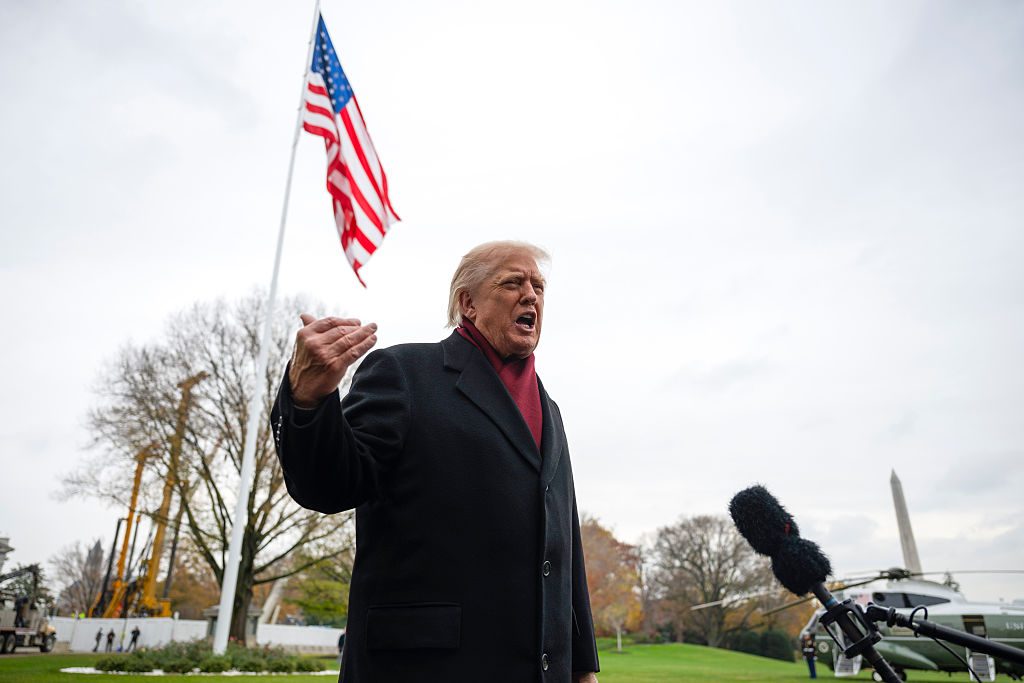
A day after two National Guard soldiers were shot, one fatally, in a “barbaric terrorist attack” in Washington, DC, President Trump declared that the United States will “permanently pause migration from all Third World countries”. The announcement landed just days after the US State Department issued an unprecedented statement, explaining that “mass migration poses an existential threat to Western civilization and undermines the stability of key American allies.”
Under new guidance, US embassies must now report the human-rights impacts of mass migration on receiving nations. These include crime waves, terror attacks, sexual assault patterns, community displacement, political retaliation against citizens who oppose mass migration, and two-tiered justice systems emerging for illegal immigrant offenders. This is a historic reframing. For the first time, mass migration is formally recognized as a human-rights issue for host societies, and sovereign governments are acknowledged to have the right — and obligation — to protect their people.
The suspected DC attacker, Rahmanullah Lakanwal, arrived in the US during the 2021 Kabul evacuation under Operation Allies Welcome and was granted asylum in April 2025 after claiming he had served alongside American forces in Kandahar. That credential was accepted as sufficient proof that he posed no threat.
Clearly, he did. As National Counterterrorism Center (NCTC) Director Joe Kent put it: “It is true that the terrorist who conducted the attack in D.C. was ‘vetted’ by the intelligence community, however he was only vetted to serve as a soldier to fight against the Taliban, AQ, & ISIS IN Afghanistan.” Kent went on: “He was NOT vetted for his suitability to come to America and live among us as a neighbor, integrate into our communities, or eventually become an American citizen.”
After Afghanistan collapsed, true vetting was impossible. Civil registries were unreliable even before Kabul fell. Afterwards, the US lost access entirely. Tens of thousands of evacuees were processed using fragmented or outdated data systems incapable of verifying identity, criminal history, or network affiliation. Inspector-general reports later confirmed that individuals with security flags nonetheless entered the United States.
The Trump administration has now announced a nationwide halt on all asylum decisions, and has instructed officers to apply “country-specific factors” for nationals from 19 high-risk nations. Beyond those 19 nations, the administration will almost certainly replace the informal term “Third World” with a defined list grounded in national-security findings. The issue is not income level or geography — it is whether a country can provide reliable identity, criminal, and security data. Many cannot. This is especially true for states dominated by cartels, transnational criminal organizations (TCOs), jihadist networks, or foreign intelligence proxies. In those cases, the United States has no basis to assume the risk at all.
Mass immigration flows deepen the challenge. Cartels, CCP-linked triads, Venezuela’s Tren de Aragua, and foreign intelligence services increasingly control migration pipelines, using debt bondage and coercion to compel illegal immigrants into labor, sex trafficking, and revenue generation. Illegal populations become sub-governed communities, extensions of the networks that moved them. Every illegal immigrant is a financial asset and operational tool for these organizations. These are hybrid-threat network-driven movements that the United States cannot map, measure, or vet.
However, US law is built for moments like this. Under §212(f), a president may suspend “any class of aliens” whose entry is detrimental to national interests — a power upheld by the Supreme Court in 2018’s Trump v. Hawaii. And so the question before the country is simple: how can a state protect its citizens when it cannot verify who is entering or which foreign adversarial networks they belong to?
When a nation can no longer see, the first duty is to stop moving forward blindly. Recent US immigration policy has been misguided and far too lenient. Under such conditions, a pause is not a political statement: it is the minimum threshold of national security.