









February 12 2026 - 10:00am
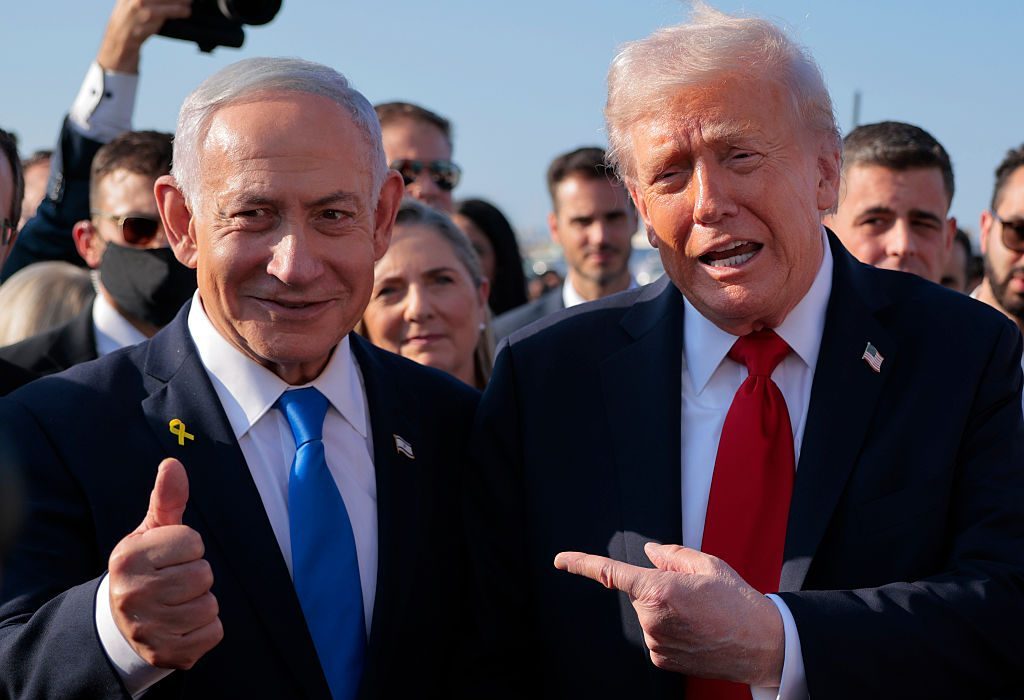
After a three-hour meeting in the White House yesterday with Israeli Prime Minister Benjamin Netanyahu, Donald Trump quickly took to Truth Social to announce the results: no decisions were made. “There was nothing definitive reached other than I insisted that negotiations with Iran continue to see whether or not a Deal can be consummated,” the US President wrote. “If it can, I let the Prime Minister know that will be a preference. If it cannot, we will just have to see what the outcome will be.”
Netanyahu’s seventh meeting with Trump came less than a week after Steve Witkoff and Jared Kushner, Trump’s special envoy and son-in-law, traveled to Oman to reopen negotiations with Iran. Those talks ended on a relatively positive note, with Iranian Foreign Minister Abbas Araghchi calling them a good start in what is likely to be a long, torturous negotiation over Tehran’s nuclear program. Netanyahu, however, became increasingly concerned that Trump would strike a deal with Iran which excluded all the other files Israel is worried about, such as Tehran’s support for proxies in the Middle East and the ballistic missile program the Iranians are swiftly rebuilding. Netanyahu’s last-minute visit to Washington was an attempt to get Trump back on side.
Whether it worked or not is difficult to say, because Trump’s entire negotiating position is, in a word, confusing. On some days, he strikes an optimistic tone and says that diplomacy with Iran is his first choice; on others, he reminds everybody what happened during the last round of negotiations in June, when he pulled the plug. Israel then conducted a 12-day air war that killed a significant portion of Tehran’s military leadership. Trump’s message in the last few days is unambiguous: if Iran doesn’t give me what I want, more American bombs will drop. Indeed, even as the Trump administration presses diplomacy, a second US aircraft carrier is preparing to depart for the Persian Gulf.
It’s not altogether clear what Trump wants from these negotiations. Last spring, the White House was adamant that under no circumstances could Iran retain an indigenous nuclear enrichment capability. The Iranians, of course, refused to entertain any such deal. Trump’s demands have become increasingly bellicose as time goes on, and the US President has insisted that Iran must shut down its entire nuclear program, ship all of its enriched uranium out of the country, and sign onto a binding pledge foregoing further enrichment.
The White House also wants Iran to limit its production of ballistic missiles, cut relations with the non-state groups in the region, and stop detaining Iranians who protest against the regime. For the Americans, none of these items should be controversial. Yet in the Iranian government’s view, what the Trump administration is essentially asking is to make itself vulnerable, if not defenseless, to US military action down the line. “The Islamic Republic’s missile capabilities are non-negotiable,” Ali Shamkhani, Supreme Leader Ayatollah Ali Khamenei’s foreign policy adviser, asserted this week.
Another round of US-Iran talks will likely take place in the coming weeks. The good news is that diplomacy is still alive, and Trump, his warmongering language notwithstanding, at least appears sympathetic to finding an off-ramp. The bad news is that his maximalist demands, coupled with old-fashioned Iranian intransigence, could obstruct whatever progress is made between the two sides when discussions resume. While Tehran’s negotiating position is weak relative to the United States, this doesn’t necessarily mean it will agree to sign what is effectively a US-imposed surrender document. If anything, history has shown that the regime battens down the hatches and unifies internally when its back is against the wall.
Negotiations, by their very nature, involve give-and-take. Trump likes to talk about making deals, but is rarely prepared to do what is required to come to a mutually acceptable agreement with the other side. He’s much more interested in the stick of coercion than the carrot of concessions. Whether the ongoing dialogue with Iran produces a settlement or instead becomes a prelude to an unpredictable, costly war is tied directly to Trump’s willingness to take yes for an answer.
Daniel R. DePetris is a fellow at Defense Priorities and a syndicated foreign affairs columnist for the Chicago Tribune.
 DanDePetris