








February 20 2026 - 8:30pm
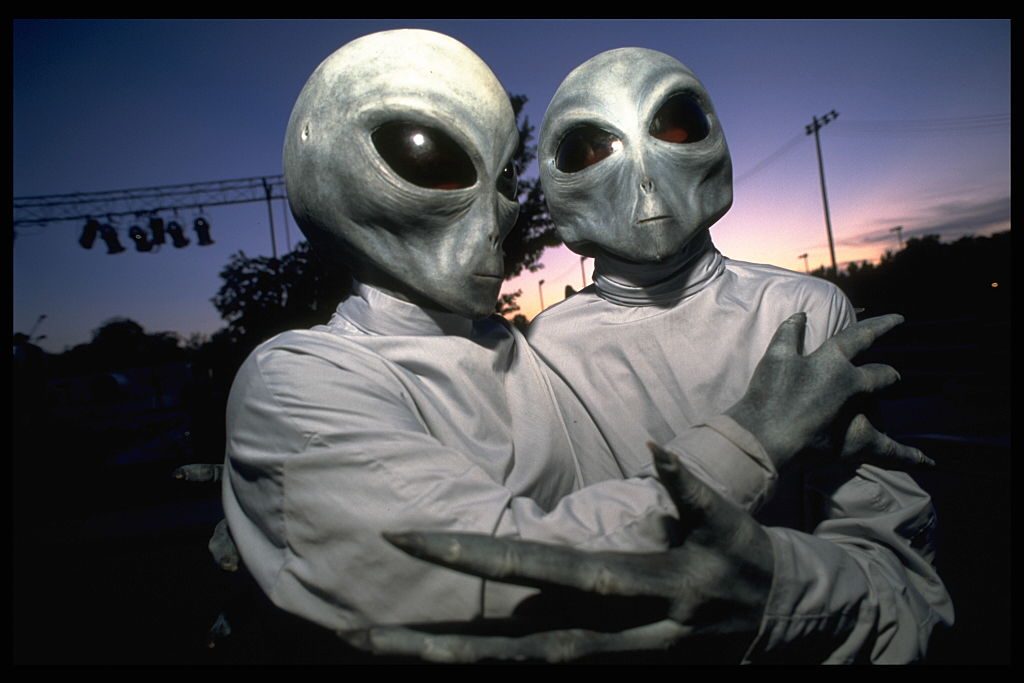
On Thursday, US President Donald Trump ordered the government release of UFO records and classified documents relating to extraterrestrial life. It followed former president Barack Obama’s claim on a podcast last week that aliens are in fact “real”. Trump told journalists that Obama had revealed classified information and was not supposed to be discussing it. But why has it taken so long for transparency on the subject?
Much of the information concerning unusual objects in the sky is classified, and there are understandable reasons for that. First, the data is often collected by highly sophisticated, classified sensors. The US does not want adversarial nations to understand the quality and capabilities of those systems. In addition, if intelligence officers are studying materials or images they cannot identify, they may prefer to keep that information classified. If such objects were manufactured by adversarial nations, revealing details could expose vulnerabilities in defense systems. No nation wants to advertise weaknesses in its detection or response capabilities.
But there is also a bureaucratic dimension. Administrators in intelligence agencies may not want to publicly acknowledge that there are objects they cannot identify, especially given the large budgets allocated for national security. Classification limits the number of people who can review the data, including members of Congress. For all these reasons, it makes sense that such information remains classified.
At the same time, the President is aware of many incidents in which intelligence personnel and military officers encounter unusual objects whose origins they cannot determine. One possibility is that these are technological systems developed by other nations, which would be a serious national security concern. But because the data is classified, the broader public does not have access to the evidence.
When Obama spoke about unidentified objects, that information may well have been classified. However, it does not rule out the possibility that some of these objects could represent extraterrestrial technologies. To determine their origin, we need better data. In most cases, that data simply does not exist. The simplest approach is to set the issue aside until better evidence becomes available.
That is precisely why I am leading the Galileo Project at Harvard University. We need a systematic, scientific way of logging and analyzing potential signs of extraterrestrial life. Without that, we’ll never know if a more advanced civilization exists in interstellar space. The Galileo Project is designed to search for objects which operate outside the envelope of known human technologies. Even if we do not find extraterrestrial technology, the sensors and artificial intelligence tools the project has developed could benefit national security.
However, my primary interest is extraterrestrial technology, while the Pentagon focuses on human-made systems. Our interests are complementary, not overlapping. If we discover something unusual, it could either improve national security or advance one of the most profound scientific questions: are we alone?
One step that can be taken immediately is to declassify events from 50 years ago. Technologies used half a century ago are no longer strategically sensitive. Naturally, we are dealing with one of the most mysterious aspects of life on Earth. Yet making the historical record public would advance scientific research without compromising vital national security infrastructure.
Join the discussion
Join like minded readers that support our journalism by becoming a paid subscriber
To join the discussion in the comments, become a paid subscriber.
Join like minded readers that support our journalism, read unlimited articles and enjoy other subscriber-only benefits.
Subscribe