









March 22 2026 - 7:00pm
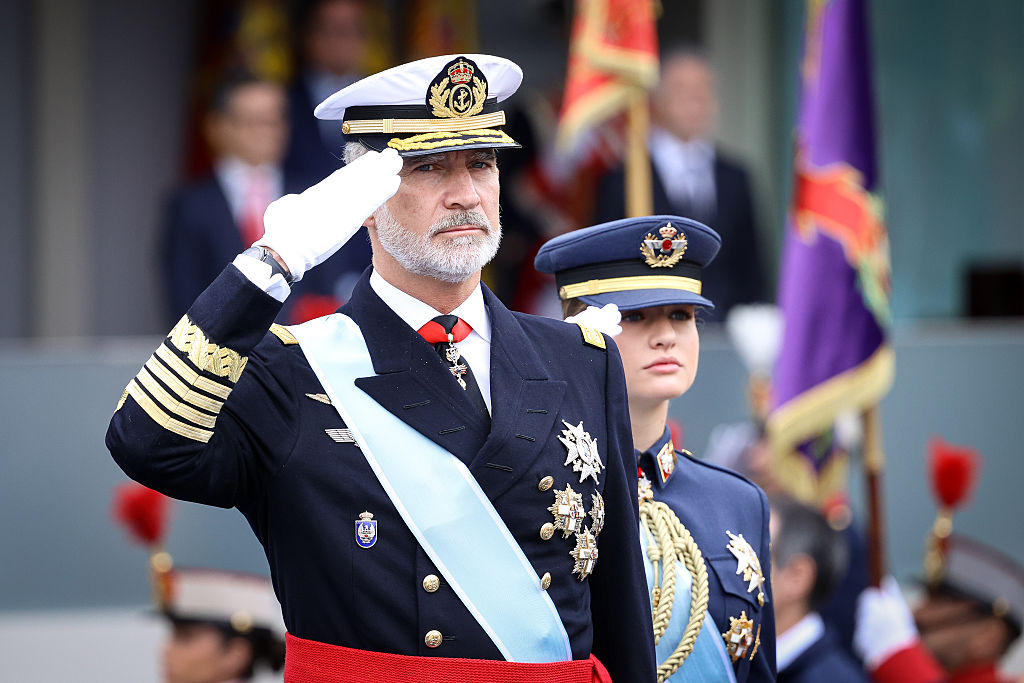
After years of near-unquestioned loyalty, the Spanish Right is turning against its King. Felipe VI’s recent acknowledgment “many abuses” and “ethical controversies” committed by the Spanish Empire has sparked outrage among the nation’s reactionaries. As Spanish politics polarizes, the monarchy is emerging as the next front in the country’s political realignment.
Speaking at the opening of the exhibition Half the World: The Woman in Indigenous Mexico, Felipe VI drew attention to Spain’s own history. In a conversation with the Mexican ambassador about the empire, he admitted there was “a lot… a lot of abuse” and said Spain “needs to learn lessons, as there were fights as well as moral and ethical controversies.”
That criticism proved too much for the country’s Right. Alberto Núñez Feijóo, leader of the moderate conservative Partido Popular (PP), reaffirmed his “pride” in Spain’s legacy in the Americas, adding that “making a judgment in the 21st century of things that happened in the 15th is nonsense.”
The hard Right Vox, meanwhile, went further. The party’s spokesperson, Pepa Millán, hailed the Spanish enterprise in the Americas as “the greatest evangelizing and civilizing mission in world history.” Vox’s official stance denies the catastrophic impact on indigenous peoples, describing the conquistadors’ actions as the opposite of “the greatest genocide” in the New World.
Spain’s empire remains a particularly sensitive topic for conservatives. Critiques are seen not just through the lens of Left-wing identity-politics revanchism but also the Anglo-Saxon Black Legend — a Protestant-era narrative that Spaniards still view as a tool to single out their history as uniquely brutal compared with other European empires. Responding to the King, the PP’s spokesperson emphasized that “in Hispano-America there is a legacy of brotherhood between peoples; there are no ghettos like in the British Empire.”
This isn’t the first time Felipe VI has faced criticism for appearing too close to the PSOE government. Vox European Parliamentarian Hermann Tertsch posted on X that “many of us don’t understand your formal and almost habitual support for the arguments of those who only want to damage Spain’s history.”
In September, the King drew further ire from conservatives by calling for an “end to the killing” in Gaza. While the statement received international praise, Vox dismissed it, claiming that “in New York the King has read a socialist, globalist, totalitarian pamphlet.” A more measured critique suggested that Pedro Sánchez had “tricked” the King into “defending the indefensible,” but the episode remains a point of contention.
Since the democratic transition of 1978, the Crown has been a central pillar of Right-wing identification with the Spanish state. The monarchy still commands overwhelming favorability among Right-wing voters. But there is now a strand on the Right that is more openly criticizing the King, marking a significant shift in the country’s political landscape.
The backlash against Felipe VI forms a part of a broader nationalist disenchantment with the constitutional order. Repeated elections have returned socialist governments despite a majority of self-identified Spanish national voters backing parties of the Right. For many Vox supporters, the King is no longer a counterweight within the establishment but an integral part of a system they believe works against them.
If Spain’s Right finally breaks with the Crown, it will mark the end of one of the defining bargains of the post-Franco order. The monarchy was meant to embody unity above politics; instead, it is being dragged into the very conflicts it was designed to contain. Once that line is crossed, it is not easily redrawn.
