









August 21 2026 - 12:45pm
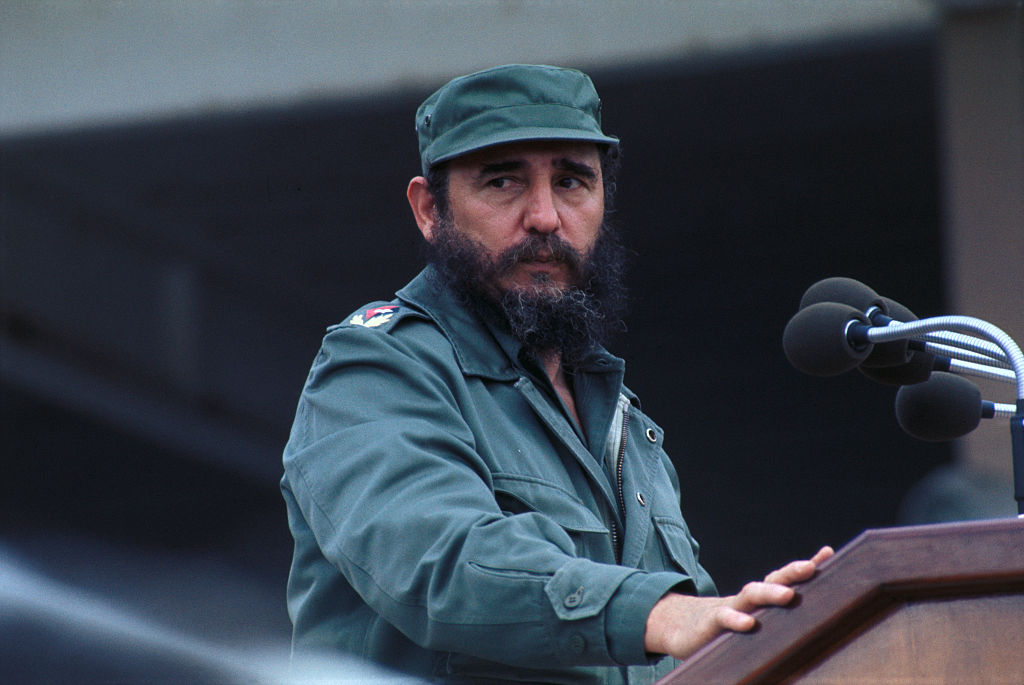
In the middle of a generational winning spree, the Democratic Socialists of America (DSA) chose to honor the legacy of a decidedly undemocratic dictator, issuing a fawning statement to “[Commemorate] 100 Years of Fidel”. Worse yet, as DSA leaders continued their recent media tour, it became clear they were not prepared to convincingly defend this warm embrace of Castro.
The group’s statement reads like a parody written by a conservative Boomer looking to prove the DSA is much more radical than it lets on. “Fidel was an organizer, a fighter, and endures as a stalwart symbol of anti-imperialist struggle and self-determination for the Global South,” said the statement. Meanwhile, DSA national co-chairs Megan Romer and Ashik Siddique spent most of the last month appearing on seemingly every major news outlet to demystify the organization that elected several underdog candidates in this summer’s Democratic primaries.
Why, then, if the group is in the midst of a concerted effort to prove democratic socialism isn’t so scary after all, would the DSA honor one of the scariest men in Cuban history? In 2020, Bernie Sanders caused controversy when he argued that Cubans didn’t rebel against Castro because “he educated their kids, gave them health care, totally transformed the society”. But Sanders also had no problem describing the Cuban government, then under the rule of Raúl Castro, as “authoritarian” in the same breath. Indeed, the global Left has spent many years debating the merits of Castro. Debate over Cuban authoritarianism has occurred even within the DSA.
As Romer and Siddique take to the airwaves of Fox News and CNN seeking to pitch democratic socialism as a friendly alternative to capitalist imperialism, celebrating Castro would seem to be an unforced political error of enormous proportions. In Florida, where the Cuban vote is crucial, DSA candidate Angie Nixon just won the Democratic primary and will now face this association with Castro every time she talks.
Take Hasan Piker’s viral lament as DSA candidates swept to victory in New York City’s June elections. “I wish they’d stop calling me a terrorist,” he said. “That’s what I wish. I wish they’d stop calling me a radical. None of these people are radical. They just want healthcare. They want to end American militarism. They want to spend money on roads, infrastructure, on schooling, on healthcare, rather than bombs overseas.”
But many DSA members are radical. That’s not a mere matter of semantics. It’s why Siddique crumbled in front of Cuban CNN anchor Boris Sanchez, who described the imprisonment of his grandfather under Castro. Siddique, confronted with this story, stammered and chuckled awkwardly through his answer.
Both Romer and Siddique similarly struggled when confronted by the Mexican journalist Jorge Ramos. “I think in the United States it’s hard for us to judge other countries being dictatorships when we have Donald Trump as president,” said Siddique when asked whether Cuba is a dictatorship. Pressed again, he pivoted to talking about the US blockade of Havana. Romer did the same in her efforts to clean up Siddique’s answer, later telling Ramos, “I believe that Cubans have access to their democracy in ways that we do not.” This is a facile dorm-room revolutionary argument, not the kind of fresh, visionary rhetoric that Zohran Mamdani and Bernie Sanders generally exhibit.
This is the DSA’s core problem both politically and morally. Socialism has long been pitched as capitalism’s humane alternative, then materialized as authoritarianism under bloated and violent bureaucracies. It’s certainly okay to believe the pattern can be broken, but the DSA is bogged down by modern identitarianism, fearful of condemning dictators from perch of imperialist privilege in Brooklyn.
Unless the DSA can make a clean break from the socialist vision that’s failed to capture the hearts and minds of Americans in the past, its prospects for national success will have a major disadvantage. You can’t sell Americans on Castro. But can you sell the DSA to members without him? The unfortunate answer seems to be no.
