








December 5 2025 - 1:00pm
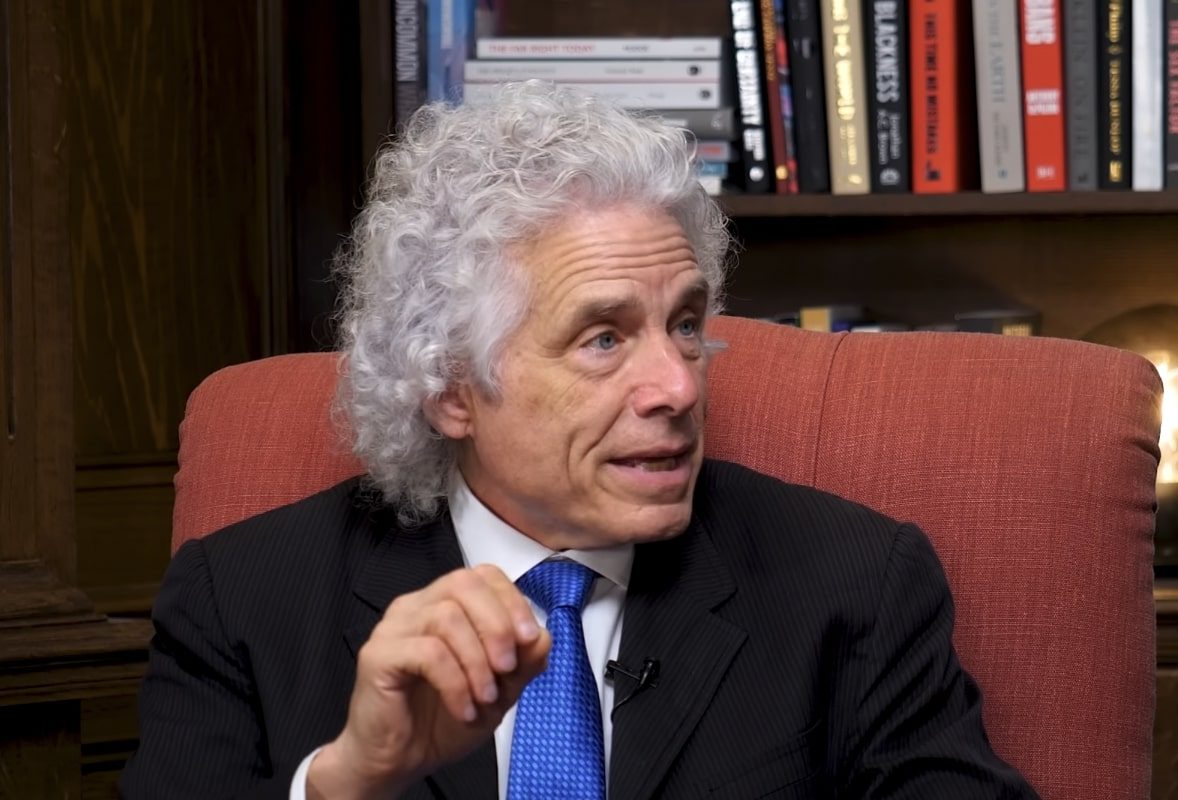
Harvard psychologist Steven Pinker expressed alarm last night about the “utter lunacy” of growing “neo-reactionary” movements within Silicon Valley.
Pinker, who has long argued in books such as The Better Angels of Our Nature and Enlightenment Now that technological innovations have dramatically improved human welfare, criticized what he believes to be a new and “horrific side” of the tech industry.
Speaking at the annual Orwell Foundation Lecture in London, Pinker maintained his optimistic view of many of Silicon Valley’s current projects, such as its aims to create clean energy, self-driving cars, and AI medical research assistants. However, he said he had been blindsided by recent ideological shifts within the industry. “I did not see this coming even five years ago, when Silicon Valley was pretty much mildly libertarian and generally liberal,” he told the audience. “They supported Democratic candidates.”
Pinker singled out the tech billionaire Peter Thiel as an example of how certain industry giants have embraced a “bizarre family of movements”. These include advocating for systems of monarchy and theocracy, and holding what he termed a “nostalgia for medieval Christendom”.
The comments come after Thiel delivered a widely-covered series of lectures in San Francisco this year. In these, he warned that critics of technology and AI could be “legionnaires of the Antichrist”, aiding the figure who is prophesied in the New Testament to falsely present himself as a savior while drawing people further from salvation. In leaked recordings from October, Thiel argued that the Antichrist would come to power by exploiting fears about existential threats such as climate change.
Responding to an audience question on the political transformation underway in Silicon Valley, Pinker also turned to Curtis Yarvin, the blogger and software developer whom he charged with popularizing “national conservatism” and “neo-reactionary” movements within tech circles. Yarvin, whom US Vice President JD Vance has described as a “friend”, has advocated for replacing American democracy with monarchy-style governance. When the event moderator suggested that Yarvin was a “nutjob”, Pinker agreed.
In response to these views, Pinker launched a defense of the distinction between church and state, arguing that “religious foundations for morality and politics” would not “unify the country”. He invoked the Thirty Years’ War of 1618-48 as evidence that faith-based governance is “the least unifying force”, referring to how the theological differences of the period resulted in one of the most destructive conflicts in human history.
Last week, Pinker wrote about his concerns in The Free Press with Marian Tupy, the founder of research publication Human Progress. Together they condemned “techno-authoritarian” movements which “reject the entire family of enlightenment values”. In the piece, Pinker and Tupy point to Yarvin’s October debate at Yale Law School, in which he suggested America should “end the democratic experiment” and that Donald Trump is “biologically suited” to being a monarch.
A year on from Trump’s election, the tech industry continues to foster close ties with his administration. Apple, Amazon, Meta, Microsoft and Google were all among the donors for the new $300 million White House ballroom. OpenAI boss Sam Altman also this year credited the Trump administration with creating “a vibe shift” in Silicon Valley, calling this transformation “a breath of fresh air”.
The result of the newly-close relationship between Silicon Valley and the political Right, Pinker fears, is that an industry built on the secular Enlightenment principles is now embracing what he characterizes as distinctly pre-Enlightenment politics.
Join the discussion
Join like minded readers that support our journalism by becoming a paid subscriber
To join the discussion in the comments, become a paid subscriber.
Join like minded readers that support our journalism, read unlimited articles and enjoy other subscriber-only benefits.
Subscribe