









October 8 2025 - 11:20am
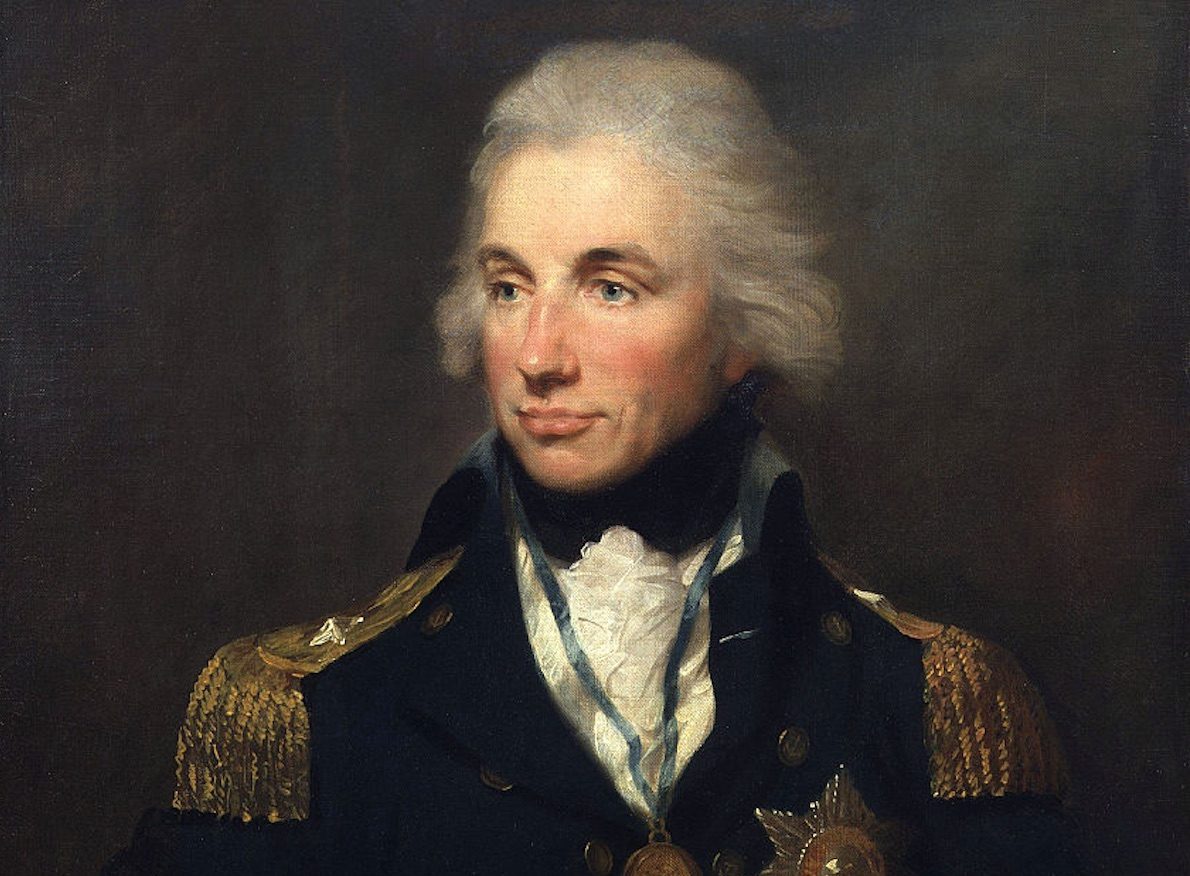
There is a venerable journalistic principle that any question posed in a headline can be answered with the word “no”. For instance, “can drinking salt water add 10 years to your life?” In the same vein, when a curator at the Walker Art Gallery in Liverpool suggested drawing attention to their splendid painting, Benjamin West’s The Death of Nelson, with the question “was Admiral Nelson homosexual?”, somebody further up the chain of command might have said: “I think we know the answer to this one.”
Nelson was, of course, rather famously not homosexual, being married to a woman and conducting a very public and scandalous affair with the delicious Lady Hamilton. So what were the Liverpudlians thinking? It turns out that they had heard of Nelson’s supposed last words at the Battle of Trafalgar, where he asked Captain Hardy to kiss him. “Historians have speculated about the exact nature of the relationship between Hardy and Nelson,” the curators slavered, unconvincingly.
Of course, it’s nonsense. Nelson was formed by a culture that adored the public display of emotions and open tenderness. From Henry Fielding’s Amelia onwards, no novel omits scenes of embracing, weeping, and open expressions of overwhelming love and devotion — not necessarily indicating sexual desire. Nelson simply drew on decades of literary sensibility and asked the nearest person he loved to kiss him. The sad truth is that the curator who thought it was worth speculating about the two naval officers as a gay couple knows absolutely nothing about the culture of Nelson’s lifetime.
This sort of thing is on the rise. In 2023, the keepers of Henry VIII’s flagship, the Mary Rose, seriously proposed that some objects, including a mirror and a wedding ring, could be interpreted through a “queer” lens, on the grounds that gay people sometimes inspect their own appearance and these days can get married to each other. There is a network of institutions, including English Heritage, devoted to “queering the museum”. Since the verb is only recorded from the mid-Nineties, and then only in America, perhaps a lack of historical awareness is inevitable.
The problem is that there are rich fields to explore in the lives of gay men and women from the past — real ones, not Nelson or the Duke of Wellington or whoever. These lives were interestingly strange and self-defined. There was Horace Walpole’s circle of fey exquisites at Strawberry Hill in the mid-18th century, for instance, or the cluster of late-Victorian gay men including John Singer Sargent, Henry James, Simeon Solomon. Or how about the famous Ladies of Llangollen, who lived together at the end of the 18th century and became almost a tourist attraction? Proper investigation would reveal some interesting sidelines on our ideas of how existence could be more varied than we assume.
But the likelihood of a historian of any talent or rigor taking on these subjects is, inevitably, diminished by the immense quantity of absurd claims being produced. What ambitious historian would want to write about Horace Walpole’s circle when it will be lumped in, as “LGBTQIA+ History” with ridiculous suggestions about Nelson’s supposed proclivities?
The fact is that if we want to write about the past, we have to understand it on its own terms. We mustn’t assume that they would really have much preferred to be like us and that when Nelson nobly said “Kiss me, Hardy,” he meant exactly what a man in 2025 would mean in asking another man to kiss him. If we don’t try to understand the past, we have no chance whatsoever of understanding the present, either.
Philip Hensher is the author of 11 novels and a Professor of Creative Writing at Bath Spa University. His new book, A History of the Novel in Britain, will be published by Pelican in September.
 PhilipHensher