









February 5 2026 - 12:00pm
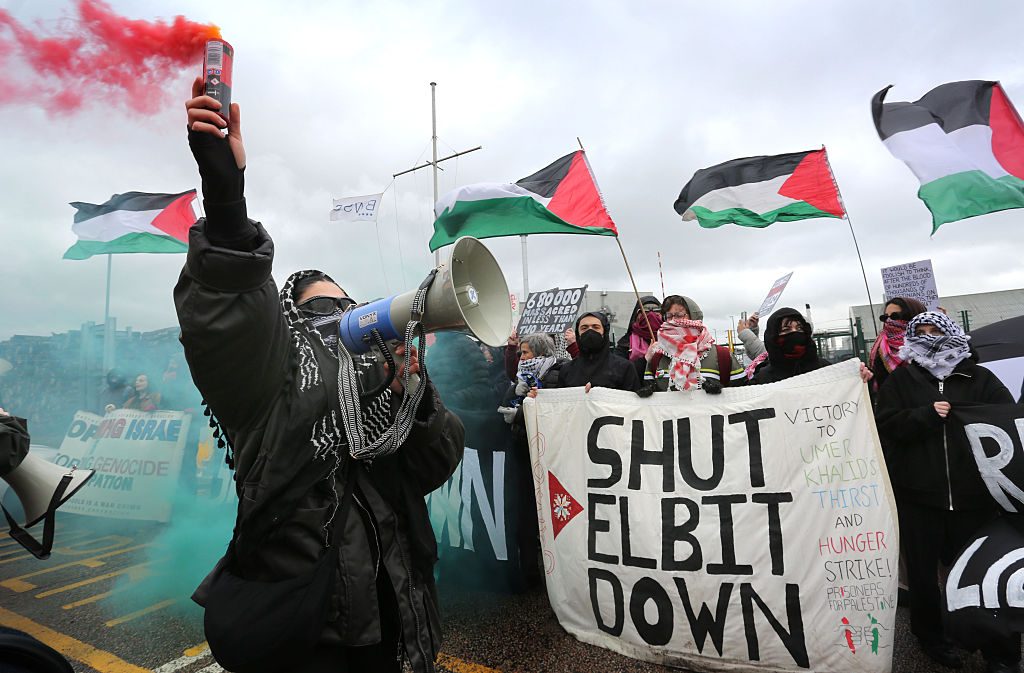
In reporting the intricacies of criminal trials and their outcomes, there is often a trade-off between accuracy and readability. But we deserve better than misleading media efforts on yesterday’s trial verdict for the first six of the “Filton 24”, the group of pro-Palestine activists prosecuted after breaking into the Elbit Systems site in Bristol.
“None of the six activists were convicted of any offense,” runs the Guardian’s sub-headline. “Palestine Action activists acquitted amid ‘jury tampering’ claims,” screamed the Times. And, of course, the protest groups themselves are spinning all this as a Glorious Victory that fatally undermines Britain’s evil Zionist regime. But we must not let these cries for attention lead us to scapegoat the jury system, not least because all six of these defendants may yet end up convicted.
Hung juries are not uncommon and are certainly not confined to trials with a political dimension. The last murder case I prosecuted had to be tried three times before the defendants were found guilty. And when a jury is hung, the usual thing is for the Crown to go for a retrial. In the Elbit case, we’ll be told in a fortnight.
The unanimous acquittals on the charge of aggravated burglary should trouble no one. The Crown had to prove that the defendants intended to cause injury with their sledgehammers — should the need arise — as opposed to merely using them to smash things up. It is not surprising that the jurors were somewhere short of “sure” on that point, especially given the character of these defendants.
As for the attack on the female police officer with a sledgehammer, which fractured her spine, that might look like an open-and-shut case of grievous bodily harm. And perhaps those who hung the jury did so out of an oath-defying hatred of Israel. Or perhaps, when considering whether that defendant might not have intended serious harm, they weighed the effects of being pepper-sprayed, and the defendant’s autism more heavily than the others did. Perhaps a new jury will agree, one way or the other. But to take the failure to reach a verdict this time round as a de facto decriminalization of hitting police with hammers is absurd.
The hung jury on the criminal damage allegation, however, does look a little more “perverse”, as the judge did not direct the jury that there was any lawful defense. But it can go to a retrial, as can the three defendants were not acquitted of violent disorder. And though perverse verdicts may be ugly, the power of a jury to deliver them lends important moral weight to its decision when it convicts.
That said, the recent proliferation of placards around the court building during politically sensitive trials, telling jurors of their power to acquit in breach of their oath, is a bad thing. Advocates are rightly banned from directly encouraging it in their speeches. So why should a defendant’s supporters be allowed to do so on the court steps?
“Jury equity”, as it is known, is a knotty problem. In 2024, the High Court, while dealing with a protester at an Insulate Britain trial, found that her placard did not constitute contempt of court. But the issue was revisited by the Court of Appeal in an Extinction Rebellion case just a fortnight ago — and Lord Justice Edis made significantly less enthusiastic noises. Further judicial clarification, or even legislation, will likely follow soon.
Jury equity is one of those pleasing fudges that achieves its purpose through longstanding convention. But it must not be allowed to undermine the rule of law, either by juries routinely feeling they can ignore the judge’s directions or by restrictions on the right to trial by jury. You might think you want judges determining facts in protest cases, but don’t forget they’d also be deciding your free speech allegation.
The Elbit verdicts — or rather, the lack of them — is not a public endorsement of the right of protesters to use violence, or even to commit criminal damage. There will probably be a retrial, so let’s wait for the process to reach its conclusion before we draw our own.
