









June 2 2026 - 7:00am
“Identity politics is tearing communities apart,” according to Arooj Shah, former leader of Oldham Council. After stepping down from her role last month, Shah has spoken this week about the race riots of 25 years ago across the North of England. But by going to great lengths to suggest that child abusers can be found in every ethnicity, race, and social class, is she herself indulging in identity politics?
Louise Casey’s 2025 National Audit on Group-based Child Sexual Exploitation and Abuse found that authorities “shied away from” the ethnicity of those involved in grooming gangs. Oldham has been the subject of a number of investigations into grooming gangs and sexual exploitation cases dating as far back as 2006. A local review published in 2022 found that Greater Manchester Police and Oldham Council had failed the vast swathes of girls affected. Both organizations muttered the usual “lessons will be learned” and said they were “deeply sorry”.
It was only after the national statutory inquiry was announced that Shah jumped on the bandwagon, stressing that all communities want to see grooming gang members “punished to the full extent of the law”. She wants everybody to play nicely, but some would prefer the problem put to one side to avoid the hassle of fractured relations in the area.
As Sarah, a survivor of Oldham grooming gangs, told me last week: “I know for a fact that there are Pakistani Muslim men that call themselves ‘community leaders’, that do not want to acknowledge the extent of their problem within their own back yard.”
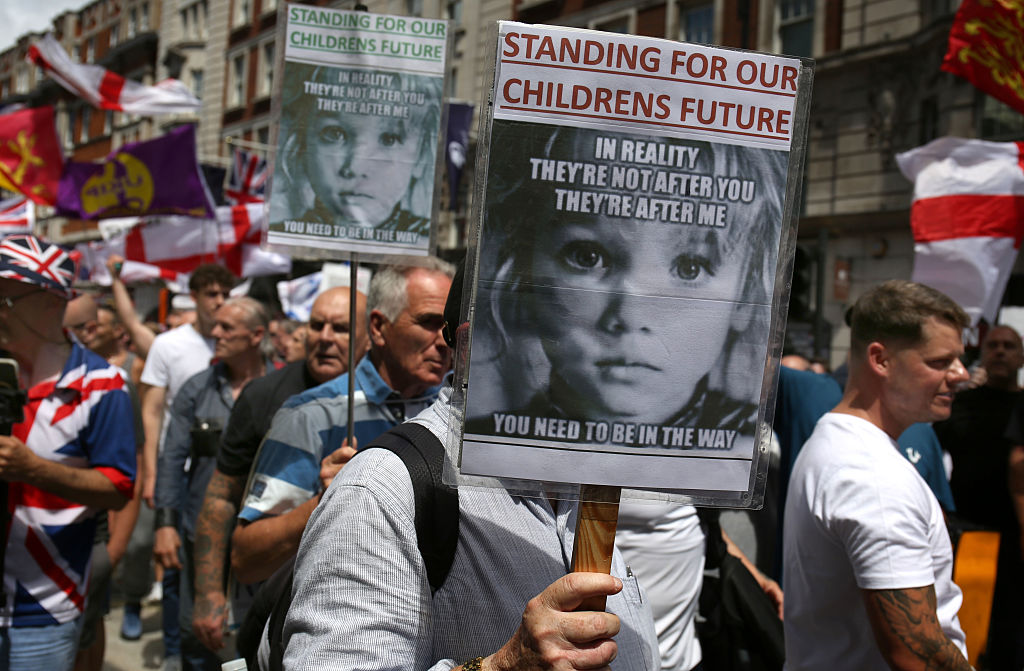
I began investigating the grooming gang scandal in the early 2000s, and was appalled when, in 2004, the then-Chief Constable of West Yorkshire Police was instrumental in delaying the broadcast of a documentary featuring victims of grooming gangs, for fear that it “could stoke racial tension” or “provoke racial violence” – a delay that proved a gift to members of the British National Party, who made it ‘their’ issue.
The grooming gang victims in Oldham have been hideously betrayed. Had politicians and police officers been honest back then, rather than framing the conversation as racist, we would not be in the mess we are in now. Sarah, who was abused by a group of Pakistani Muslim family members from the age of 12 until 16, told me: “They were all related. Cousins, brothers, you name it, they were part of a Pakistani clan, and they used to tell me that they were untouchable because they were like the mafia.”
She also spoke of her disgust when Shah voted against a statutory national inquiry. “The council marks their own homework, of course they will deny what happened, and the extent to which they let us all down,” Sarah said. “While they were doing that, men were out and about, raping and abusing girls, ruining their lives.”
After much prevarication, Shah – who has always firmly denied any cover-up – eventually came out in favor of the national statutory inquiry, which can compel public bodies to hand over information on their own role in the scandal. But victims like Sarah have long argued that the particular dynamics of Pakistani Muslim perpetrators must be exposed, just as the specific phenomenon of sexual abuse by Catholic priests had to be scrutinized in order to prevent it happening again.
Of course, there is no evidence that Shah was instrumental in covering up the grooming gang scandal. But neither has she been proactive in naming the problem.
Julie Bindel is an investigative journalist, author, and feminist campaigner. Her latest book is Lesbians: Where are we now? She also writes on Substack.
 bindelj