









Oct 31 2026 - 4:00pm
The documentary starts with copies of The Cornell Daily Sun being printed on 6 October. The student paper’s editor-in-chief, Sophia Dasser, begins: “You never know what is going to ignite something in someone else. You never know.”
This is the Netflix instant documentary, or “instadoc”, released on Thursday about the “Cornell Seven” scandal. It’s entitled Jane Doe v. Cornell and yet, far from at least attempting to give a balanced treatment to this complex story, the 35-minute production makes it clear from the very beginning which side it’s on.
The film hinges on commentary from individuals who essentially all agree with one another about the case: Dasser and Daily Sun senior editor Cereese Qusba, two other Cornell students (one a former fraternity president and the other a sexual assault victim per Title IX proceedings), Doe’s attorney Thomas Giuffra, victims’ advocate Amanda Walsh, and New York Governor Kathy Hochul.
Qusba advertises the Daily Sun’s editorial and financial independence from Cornell University as allowing it “to report completely honestly and be a very open source of information for students”. Yet there are serious questions about the paper’s conduct.
Consider the manner in which the editorial board broke the “Cornell Seven” story. On 21 September, the newspaper published an editorial, titled “Cornell Won’t, We Will”, arguing that “Cornell has failed to protect its students. Cornell has failed to address the growing issue of sexual assault on campus with its pathetic task force.” The publication also named the seven men who had allegedly raped Doe, warning them: “We know who you are.”
One might expect this sort of rhetoric from campus activists or an individual op-ed. But from the editorial board of an Ivy League campus’s main paper, in the process of breaking a story? The Netflix documentary fails to mention this charged language, which was perhaps most responsible for jumpstarting the “I am Jane Doe” posting frenzy.
At various points, the production shows montages of individuals questioning the Daily Sun’s narrative on the men’s alleged guilt and the university’s role in facilitating them. Yet the video clips of the likes of Glenn Greenwald and Megyn Kelly are seemingly included to portray these commentators in a negative light, with the latter shown saying that Doe is “probably thrilled to be so admired”. Kelly has since claimed that the film is “deceptively edited”.
In the documentary, Hochul recounts that her first reaction to hearing about the case was: “How disgusting. Not again, not again.” Earlier this month, the New York Governor tweeted that “choosing to have a drink is not consent, and it’s never a license for sexual assault.” Yet there is no New York law that says choosing to have a drink is consenting to sex; and as civil-liberties attorney Jenin Younes has pointed out in UnHerd, Hochul’s efforts to rewrite state rape legislation “would put sexual partners in an impossible position and all but guarantee life-ruining allegations of rape against people who do no wrong”.
Tompkins County District Attorney Matthew Van Houten had initially determined that “Jane Doe’s statement described her participation in drug use and sexual conduct as voluntary, conscious, and consensual,” but reopened the case on 28 September following the media attention. That was not enough for Hochul, who announced that she’d “lost faith” in the DA and appointed New York Attorney General Letitia James as special prosecutor on the case. James had previously affirmed Doe’s allegations in a Facebook post, though her and Hochul’s willingness to effectively prejudge the case is not brought up in the Netflix documentary — or, at least, not as a bad thing.
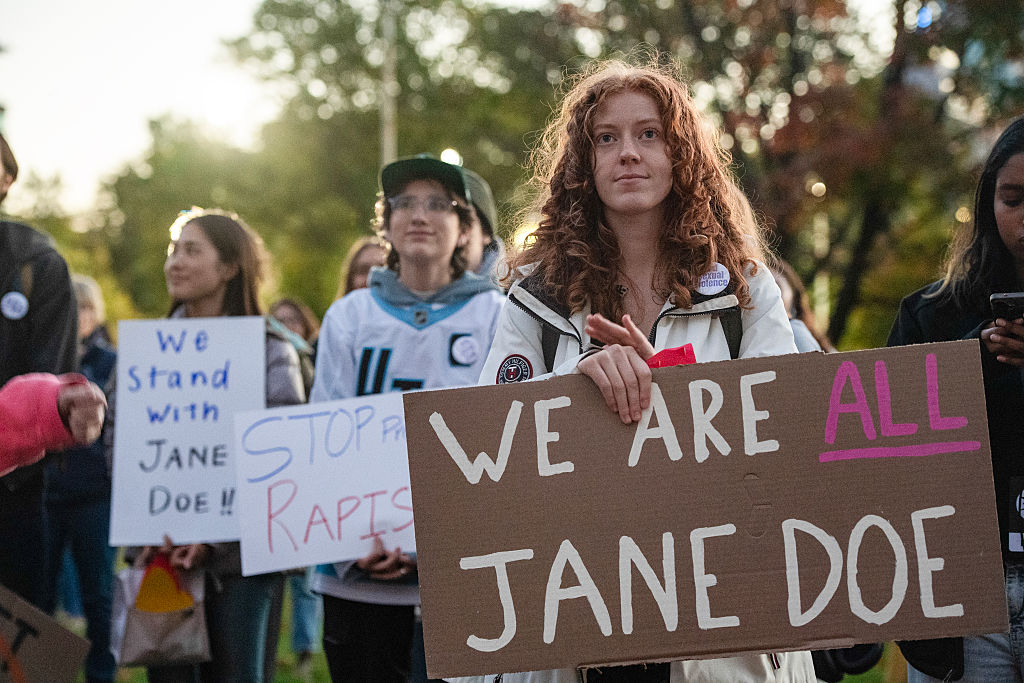
Then there’s the appeal to emotion. One Cornell student is shown crying over the fact that the university’s Title IX verdict supposedly didn’t punish her assailant enough, though the details of the assault are not specified. A former fraternity president laments “a lack of accountability and education” in Greek life, and says that “we all stand with Jane Doe,” while acknowledging that there have been threats made against members of other frats who have done nothing wrong.
Netflix’s Jane Doe v. Cornell finishes with a scene in the Daily Sun offices, as Dasser and Qusba open cards from supporters. “This is so many different people. They’re, like, all Jane Does.” It’s a fitting conclusion for a documentary whose tone leans more into activism than investigation.
