









April 9 2026 - 6:00pm
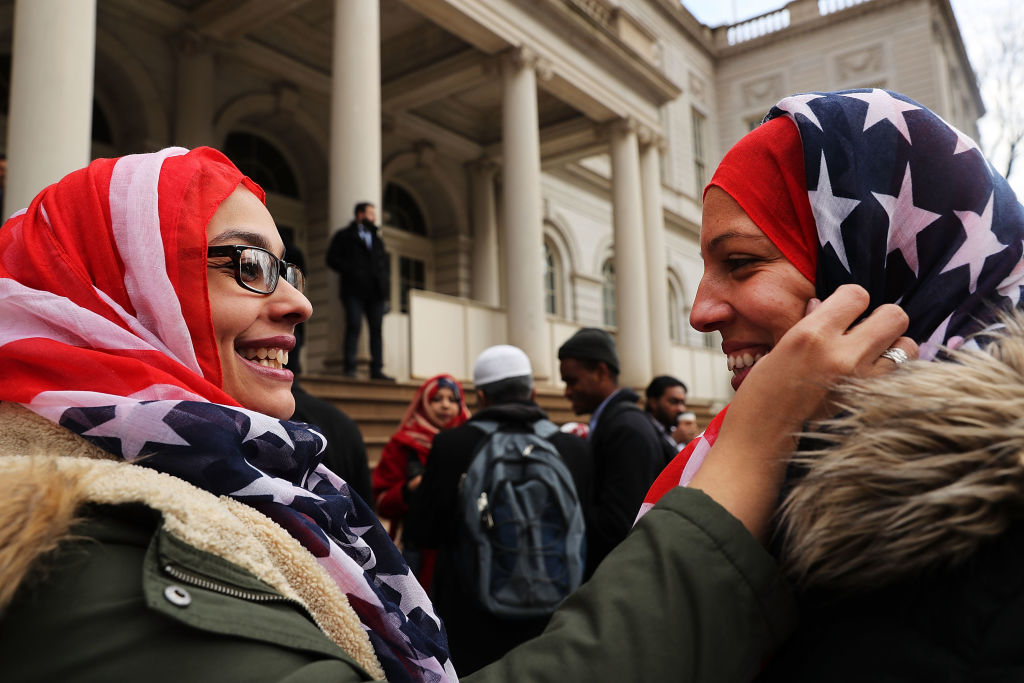
There is something admirable in Shadi Hamid’s protest. In an article for the Washington Post, he argues that Muslims should not have to assimilate into American society to belong and should resist secularization. He resists the impulse — so often evident in American life — to place minority groups perpetually on probation, to demand that they justify their belonging through displays of loyalty, conformity, or gratitude. This is a moral insight worth affirming. A democratic society ought not to condition membership on cultural surrender.
But Hamid’s argument, in my judgment, errs in what it leaves out. It offers a theory of belonging without a theory of social order. It affirms pluralism but neglects the moral ecology that makes pluralism sustainable. The difficulty lies in his treatment of what he calls “assimilation”. Hamid understands it primarily as coercion — an external demand that Muslims abandon their distinctiveness to be accepted. Against this, he asserts a principle of unconditional belonging: one can remain fully oneself and yet be fully American. This sounds generous, but it is incomplete.
Societies are not sustained by declarations of inclusion alone. They are held together by what I have elsewhere called an informal social economy: a web of expectations, judgments, and norms through which trust is allocated, and cooperation becomes possible. These norms are not written into law. They are enforced through reputation, honor, shame, and the quiet but consequential decisions people make about whom to trust. Hamid’s argument abstracts from this reality. It treats belonging as a moral entitlement rather than as a social achievement. But in practice, belonging is mediated through relations, not merely proclaimed through rights.
This is not to say that minorities must “earn” their place in some degrading sense. It is to recognize that, in a society of strangers, trust does not arise automatically. It must be cultivated. And it is cultivated, in part, through conduct that signals a willingness to participate in a shared civic order.
Here is where the analogy to what is derided as “respectability politics” becomes illuminating. The critique of respectability — like Hamid’s critique of assimilation — contains a valid concern. Appeals to behavioral norms can be used unjustly, whereby they can shift attention away from structural barriers and onto the supposed deficiencies of the disadvantaged.
But this rejection of respectability has gone too far. It denies the basic sociological fact that the reputation of a group functions as a public good. Individuals do not bear the full consequences of their conduct. The impressions they create — fairly or unfairly — are generalized to others who share their identity. These reputational spillovers shape how the group is perceived and, in turn, how it is treated. Hamid’s argument asks us to bracket this entire domain of social reality. He insists that Muslims should not have to demonstrate anything — should not have to reassure, adapt, or converge in any way — to belong. But this is not how human societies work.
Hamid wants pluralism without convergence. He wants a society in which big differences persist indefinitely without generating friction. But he does not tell us what binds such a society together. This omission is not trivial. It is decisive.
The question is not whether Muslims should be accepted as Americans. Of course they should. The question is how a society of diverse peoples sustains the mutual trust on which democratic life depends. Hamid’s argument risks abandoning this insight. In rejecting the unjust demand that minorities prove their worth, he also rejects the prudent recognition that how a group is perceived affects its prospects.
A mature pluralism does not require cultural erasure. But neither can it dispense with the norms that make common life possible. It requires a balance between the preservation of difference and the cultivation of shared expectations. To insist only on the former is to indulge a moral idealism untethered from social reality. This is not a concession to prejudice. It is an acknowledgment of the conditions under which a free society endures. Hamid is right to resist the degradation of conditional belonging. But he is wrong to suppose that belonging can be secured without regard to the moral ecology in which it is lived.
