









April 8 2026 - 10:00am
In the early hours of Easter Monday, 26-year-old Aurelio Mejia was found with stab wounds outside a nightclub in south London. Despite the best efforts of paramedics, he died at the scene — another victim whose name has already disappeared into a pile of criminal justice statistics. Five men have so far been taken into custody on suspicion of murder.
The Government’s response to this outbreak of violence has been characteristically technocratic. This week marked the launch of the National Knife Crime Center, a Home Office-funded hub designed to track the “gray market” of online bulk-buying of bladed weapons and their redistribution via social media. Coupled with “hyper-targeted” AI mapping to identify at-risk schools, the state is betting big on data to meet its ambitious goal of halving knife crime within a decade.
While these are sensible administrative tweaks — and will include adult chaperones taking children to and from the 250 schools the Home Office has identified as vulnerable to knife crime — they are ultimately a digital sticking plaster applied to a systemic hemorrhage. The focus is almost entirely on supply, yet this ignores the terrifyingly resilient demand.
In the year ending March 2025, there were over 20,000 knife and offensive weapon offenses dealt with by the criminal justice system, marking a 26% rise over the past decade. Despite the rhetoric of “getting tough”, the reality of the courtroom is different. The proportion of offenders receiving an immediate custodial sentence actually dipped to 30.9% in early 2025. When criminals do go down, the average jail time is just eight months.
We are told that this is a national emergency, yet the legal and social penalties remain woefully inadequate. For the law to work as a deterrent, it needs teeth; for society to work as a deterrent, it needs a moral compass. In many of the “internecine” youth and gang-based circles where these attacks occur, carrying a blade is less an aberration than a prerequisite. It is a failure of leadership, parenting, and community self-policing that has got us here. Lack of resources is just the cherry on top.
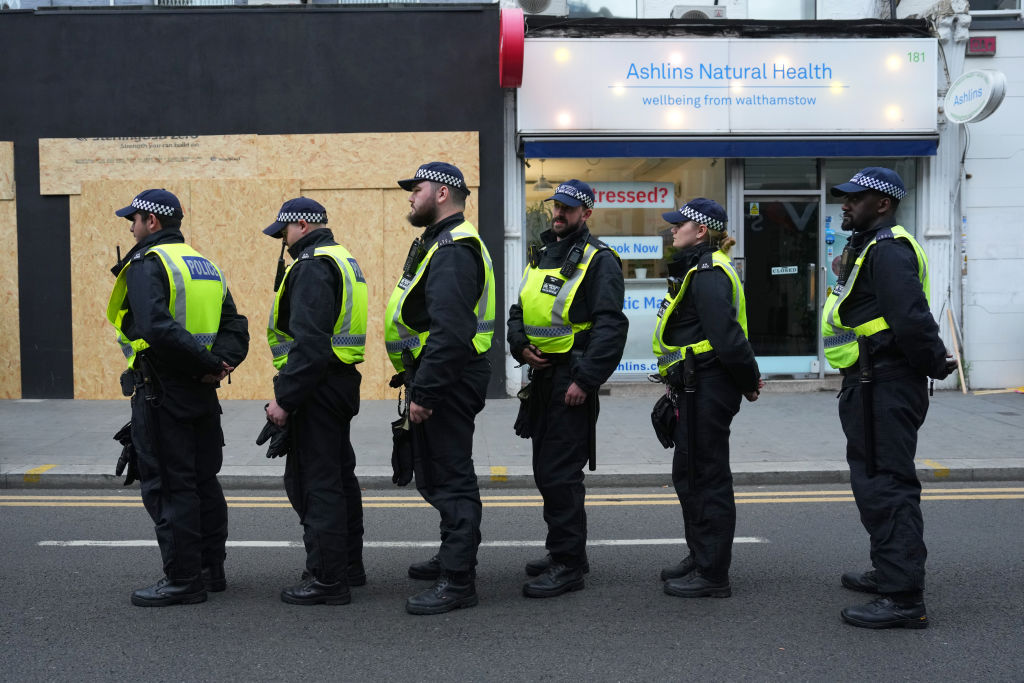
Policing failures have become part of the urban landscape. A heavy police presence descended on Clapham High Street last week following a social media-fueled “flash mob” of rampaging youths. Officers rocked up in force during rush hour, perfectly timed for the commuter crowd to see “something being done”. An hour later, as the sun set and the risk profile actually increased, they were gone.
The new National Knife Crime Center risks falling into the same trap of “performative management”. It seeks to close loopholes in online sales and monitor Border Force gaps, but it cannot monitor the heart. Statistics consistently show that knife crime victims are predominantly male and young, with 50% under the age of 25. In London, where the Metropolitan Police records 31% of all knife offenses, the violence is concentrated among specific demographics which the state has effectively abandoned.
The root causes — such as deprivation, the collapse of youth services, and the “county lines” drug trade — require massive, sustained investment. But this kind of action is unlikely. From a purely political standpoint, tackling the deep-seated cultural and economic drivers of knife crime just isn’t a vote-winner. It’s expensive, and the results take a generation to manifest — far too long for politicians preoccupied with the optics of four- or five-year terms. For now, the Government’s mission looks less like a solution and more like a tactical retreat into spreadsheets, algorithms and the false dawn of digital solutions to analog problems.
