









January 21 2026 - 11:55am
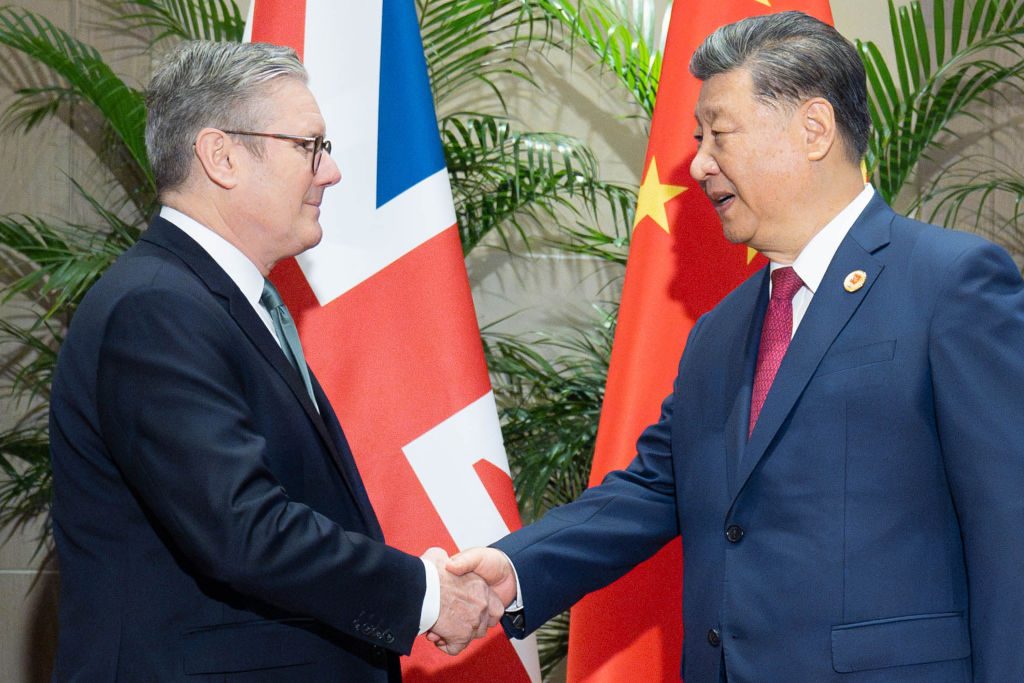
Yesterday, the British Government decided to allow plans for China’s “mega-embassy” in London to go ahead. This came amid reports that the Royal Mint site in the City — which China bought in 2018 — is located close to vital fiber optic cables used for sending sensitive information in the financial district. But ahead of Prime Minister Keir Starmer’s visit to China, the decision shows just how tricky it is to carry out effective diplomacy from a position of weakness.
Even in its moment of triumph, Chinese state media continued to hint that the Prime Minister’s visit — which looks set to take place next week — was not guaranteed. Foreign Ministry spokesperson Guo Jiakun said today that “providing support and convenience for the construction of diplomatic premises is an international obligation of host countries.”
Guo’s statement laid down a formal marker but avoided political messaging. That came in a column in Global Times, a nationalist outlet affiliated to the People’s Daily, which put the United Kingdom in its place. The paper said that “Chinese experts welcomed the progress” because it signaled “a shift of the UK’s China policy from one of overpoliticization to a more pragmatic stance”. It quoted Wang Hanyi, a research fellow at the China-UK Center for Cultural Exchange at Shanghai International Studies University, who said that it marks “a phased victory of pragmatic and rational diplomacy over an over-securitized mindset”.
Never mind that the Chinese Communist Party puts politics at the core of everything. Global Times, which is Xi’s mouthpiece for these purposes, also quoted the scholar as noting that “honoring international obligations and respecting sovereignty are prerequisites for the healthy development of China-UK relations”. In that case, what else could the British Government have done? Approval of the embassy “would create favorable conditions for Prime Minister Keir Starmer’s potential visit to China”. Beijing had to keep implying that it was not at all a done deal.
Usefully for China, the decision was also a reminder that attempts to “securitize” or “politicize” cooperation issues will “ultimately backfire on those pursuing them”, according to Wang. That is meant to deter China critics in Britain, including Conservative MPs such as Iain Duncan Smith and Alicia Kearns, former chair of the Foreign Affairs Select Committee. Beijing and its emissaries scorn them for “zero-sum thinking” and a “Cold War mentality”.
The British Government can take comfort in assurances from the intelligence services that its security concerns can be assuaged. Nonetheless, MI5 boss Ken McCallum and GCHQ head Anne Keast-Butler conceded in a letter yesterday that “it is not realistic to expect to be able wholly to eliminate each and every potential risk.”
Ultimately, the project could not fail. Xi was invested in its success and had raised it personally with the PM, elevating the dispute to a matter of prestige on which Beijing could not back down. According to Reuters, Starmer hopes to reset China-UK relations and revive a “golden era” of dialog during next week’s visit accompanied by British business leaders.
The question is whether, in classic Chinese diplomatic style, Xi will now seek more gains. China is having a moment at Davos and on the international stage, thanks to the chaos and disarray among its adversaries. With Europe and Nato focused on Donald Trump’s threats to annex Greenland, Beijing will continue to evade scrutiny in the meantime.
Domestically, the practical security challenges of the Chinese embassy in London are years away, considering that there will be some legal wrangling for the foreseeable future. But the immediate political lessons are bleak. This was a case where there was no satisfactory outcome. On a more positive note, this allows China to combine its seven London embassies into one site, possibly making it easier for MI5 to deal with. For now, it also seems to have stopped an already difficult Chinese regime from becoming more hostile. And yet with a 20,000 square-meter plot — its largest Europe mission — in the heart of London, Beijing is unlikely to cease being a diplomatic headache any time soon.