









September 14 2026 - 7:00pm
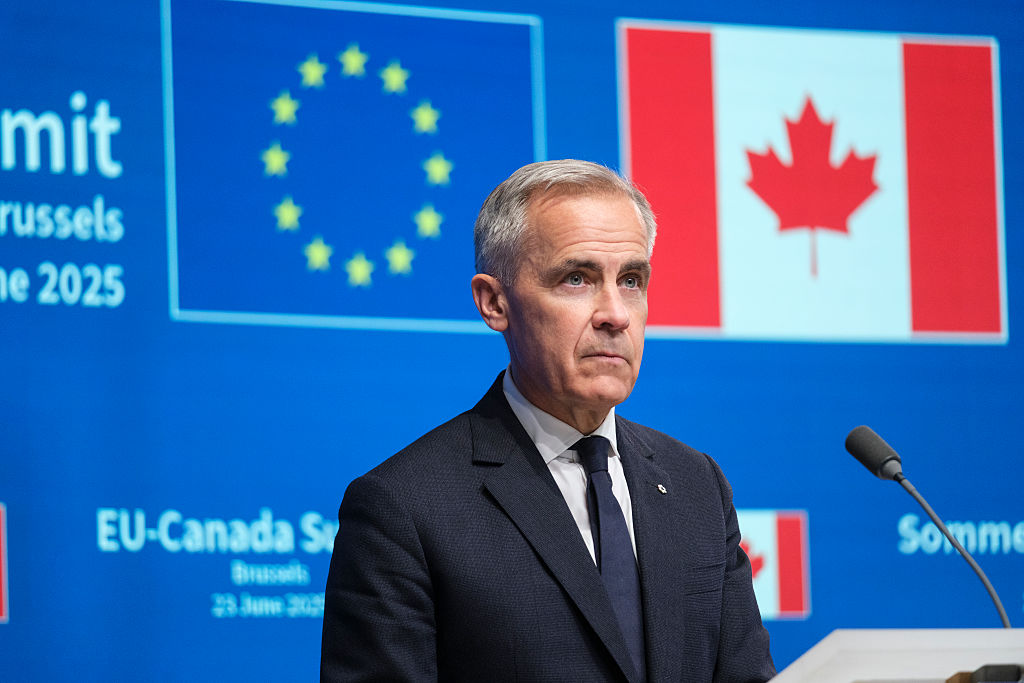
Trade talks between Canada and the United States have stalled once again, and this time Prime Minister Mark Carney isn’t waiting around for President Donald Trump to make a deal. Before his scheduled address to the European Parliament in Strasbourg later this week, Carney has floated the idea of making Canada an “associate member” of the European Union to help deepen strategic and economic ties with the bloc. Ever since he secured his majority government last year, Carney’s Liberals have been pursuing a diversification policy away from trade reliance on the US toward Europe, China, India and ASEAN countries.
On the surface, this shift toward the EU makes sense. Carney has previously called Canada “the most European of non-European countries”, and the two have an existing framework for cooperation in place, including the Comprehensive Economic and Trade Agreement (CETA), as well as their shared membership of Nato. But aside from a desire to strengthen trading ties with one another, Canada and the EU also have something else in common: over the past two decades, both have steadily fallen behind the United States in productivity growth, technological innovation, business dynamism, and capital formation. Forging closer ties with an alliance of 27 nations who internally can’t agree on how to fix their own problems is not going to help Canada secure a prosperous future for itself.
An EU “associate” membership would require Canada to adopt the continent’s regulatory framework and industrial policies, creating even more administrative hurdles and red tape than what it currently practices. If Canada wants to innovate, then embracing Europe’s overly protective employment laws, raising taxes and doubling down on unachievable green energy mandates is not the answer. Canada needs to scale back on overregulation if it hopes to attract talent and capital to reverse its productivity slump.
Then there’s the question of free movement and immigration; will being a member of the EU require Canada to have the same open-borders policies that member states share, and potentially open itself up to the mass migration crisis plaguing Europe? If so, that would be a deeply unpopular policy for Carney to sell to the Canadian people, as more than two-thirds now believe that high immigration levels are adding to the country’s economic and social problems. Giving more people free access to live and work in Canada from other parts of the world will not be a winning strategy for the Liberals come next election season, and will put further downward pressure on Canadian wages.
The irony for Canada is that if it wants to establish itself as a major economic player on the world stage, it should be looking to work more closely with the US, not Europe. Canada cannot escape its geographic and economic integration with the United States, making a European pivot an unrealistic core solution to Canada’s economic and defense challenges. Canada’s best option right now is to wait until the US midterms later this year and ride out Trump’s presidency as best it can, instead of panicking and signing away its sovereignty to gain membership of an alliance that may not be around for much longer.
