









February 17 2026 - 5:15pm
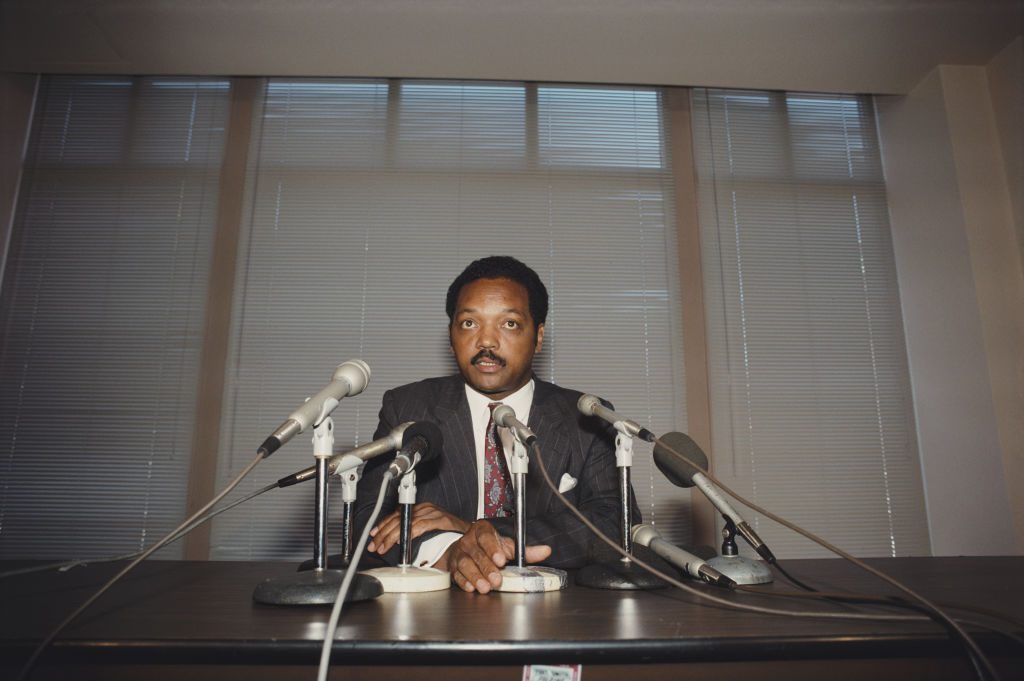
Today, it was reported that leading American civil rights activist Jesse Jackson has died aged 84. In 2015, I traveled with the Reverend to his home state of South Carolina; the same state in which he was arrested for attempting to check a book out of a public library in 1960. The cruelty of America’s apartheid acted as Jackson’s entrance into the Civil Rights Movement. Many years later, he would tell me that his enlistment into a movement to transform a so-called “democracy” of white supremacy into the genuine article gave his life meaning.
For Jackson, the existential question of meaning was inextricably linked with the pursuit of justice, the enlargement of democratic potential, and politics in the classic, Aristotelian sense of attempting to make other people’s lives better.
He brought his morally simple, yet politically profound vision to South Carolina in 2015 in an attempt to convince then-governor Nikki Haley to accept Medicaid expansion funds from the Obama administration, and to remove the Confederate Flag from government property. Speaking at the podium of a church, Jackson articulated his appeal for more equitable healthcare policy in the ethical vocabulary of universal humanitarian justice. At several points of his impromptu address, he emphasized that more white residents of South Carolina would benefit from affordable healthcare than black people. “No matter your race, religion, or political ideology, if you are black or white, Republican or Democrat,” Jackson said, “If you are sick, you need medicine, just like you need clean air to breathe, just like if you have children, you want them to have a good education.”
During the audience question-and-answer session that followed, a young woman confronted Jackson in rage. “Why are you talking about white people?” she asked. “Aren’t we enough?” As the only white person in the audience, I felt several eyes turn toward me.
Jackson, without hesitating for a second, told the story of his first visit to the Soviet Union. “What all the young people wanted to talk about more than politics and the Cold War,” he said, “was music. They asked me questions about Aretha Franklin and Ray Charles, Motown and Memphis.” “Take Motown,” he told the young woman with a smile, “What if Diana Ross, Smokey Robinson, and Marvin Gaye had just stayed in their own neighborhood and played music for each other?”
No answer to the question was forthcoming. So, Jackson filled in the blanks: “We can start something beautiful on our side of town, but if we take it to the other side of town, we make the whole town better.” The young woman applauded.
When Jackson ran for president in 1984 and ’88, he hoped, and largely succeeded, to construct a “rainbow coalition”. Starting on his “side of town” by registering millions of black people to vote for the first time, he would later make direct appeals to whites in rural America, such as farmers from Iowa and coal miners in Kentucky. He held events for Latinos with a Spanish-language translator. He also tried to win the votes of Asians by meeting with immigrant and citizen organizations across the country, and Native Americans by campaigning on reservations. He was the first presidential candidate to call for the full support of gay rights.
In that spontaneous speech I was lucky enough to witness, he said that “If we leave the racial battleground to find economic common ground, we can reach for moral higher ground.” As American politics descends into increasingly deadly divisions — with ICE storming through cities, and progressives implementing petty identity purity tests — the country mourns the loss of a unifying figure. We ignore the vision and legacy of Jesse Jackson at our own peril.