









August 12 2026 - 4:30pm
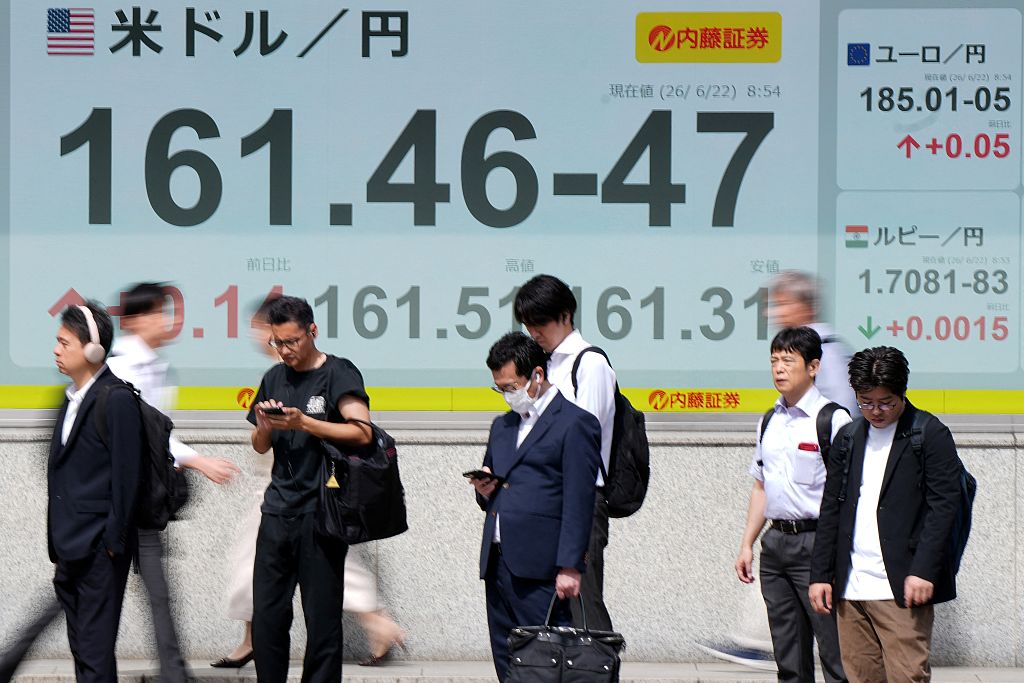
As the Japanese yen faces a rapid decline, the US last week stepped in to save the day. The currency hit a 40-year low in July, fueled by the country’s low interest rates and uncertainty around the Iran war, after which the US decided to buy up yen for the first time in 30 years in order to stave off an even worse slump. The yen then rallied somewhat, but it has ultimately proved to be a false dawn in the Land of the Rising Sun. By Monday, its value had fallen back by 1%, wiping out half of the gains made since the US intervention. And despite US Treasury Secretary Scott Bessent’s promise to do “whatever it takes” to help stabilize Japan’s currency, a continued slide is predicted, until further and more extreme government intervention may be necessary.
How much of a failure the historic intervention has been is as yet unclear, as we don’t know how much the US spent. Bessent left a cryptic note on his desk at a meeting at Camp David, pictured by an alert journalist, that read, “To do: buy JPY 5-10 bn.” This gives us a ballpark figure for what the US had in mind, but the true extent of the package won’t be revealed for a while.
What isn’t in doubt is that more will be necessary. But more of what? According to Japanese Prime Minister Sanae Takaichi, there needs to be at least partial repatriation of the country’s vast overseas holdings, including $1 trillion of US securities. An interest rate rise from the Bank of Japan to that end seems increasingly likely. Simply defending the currency from current reserves, even with US help, will not be enough.
It matters hugely what happens next, because the yen is the third-most traded currency on global markets and its fluctuations affect everyone. A repatriation of US-based funds has the potential to destabilize the American economy. If the Japanese start bringing their money home, it would lead to a spike in bond yields and have a huge impact on US investors, which means everyone from debt-heavy US companies to anyone with a mortgage or personal loan. Given the interconnectedness of the global economy, these ill effects could metastasize and hurt us all.
Bessent sounded bullish when interviewed on CNBC about the situation in Japan and downplayed the US’s self-interest in a stronger yen, stressing the need for regional financial security and expressing confidence that Takaichi’s government was on the right “policy path” to fiscal good health.
Here in Japan, however, people are less sanguine about the future. The US intervention has been met with little enthusiasm. It is not that the weak yen has no advantages, but a steadily eroding currency instills a sense of general malaise and decline that reinforces many other social concerns.
Japan faces a plummeting birth rate, a faltering and still largely gerontocratic establishment, a crippling reliance on imports, and the feeling of a traditional culture made redundant in the face of the internet and AI. The decline in the yen feels like a metaphoric index for this general national failure.
The symptoms are everywhere. Inflation and unemployment are up, while productivity and wages are stagnant. Japan ranked 28th among the 38 OECD members in a productivity index in 2024. Corporate bankruptcies rose 6.9% in July from the equivalent figure last year.
Japan increasingly looks like a country reliant on the generosity — self-interested though it may be — of its friends. Whatever happens to the yen in the coming months seems superficial, especially if it is artificially boosted by exogenous moves. A complete change in the financial mindset — a shaking off of the pessimism and torpor that now pervades Japan — seems more necessary, and perhaps urgent.
