









August 8 2026 - 8:00am
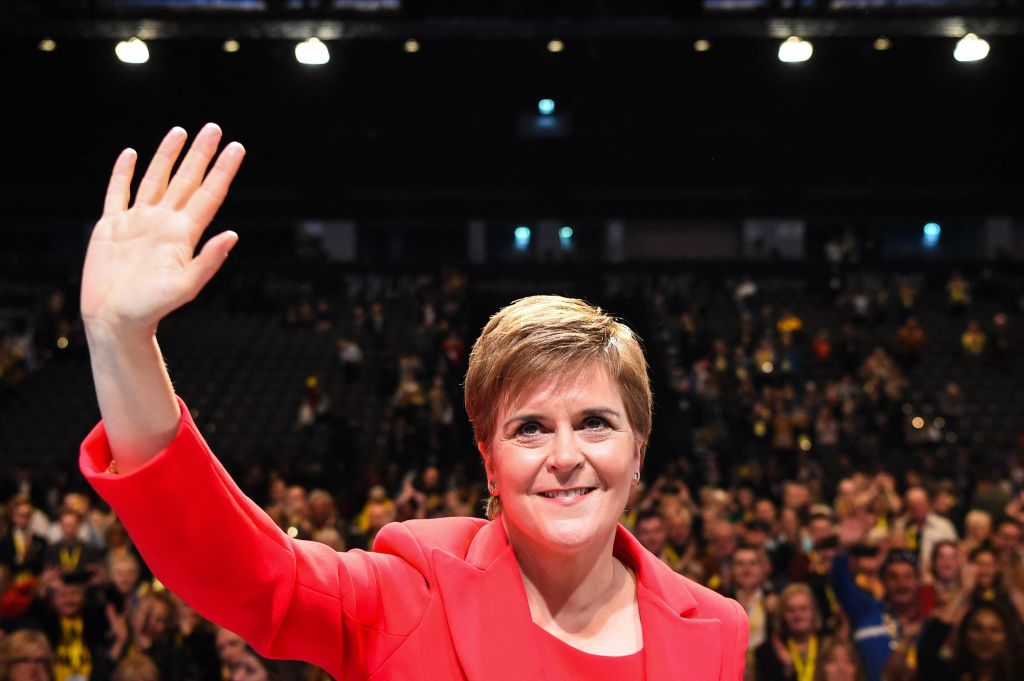
Once again, the Scottish National Party is at war with one of its former leaders. According to reports, the new foreword to Nicola Sturgeon’s memoir contains criticism of the current leadership — and, in particular, the SNP’s campaign in the Scottish elections back in May. She believes the party was lacking in “vision or big-picture thinking”. Scottish Education Secretary Màiri McAllan, an ally of First Minister John Swinney, has hit back, describing Sturgeon’s comments as “nonsense”.
Sturgeon’s former colleagues have reason to feel aggrieved. Whatever the merits, or otherwise, of the election campaign, it did win the SNP an unprecedented fifth consecutive victory in Scotland. What’s more, the victory came despite the embezzlement allegations surrounding Sturgeon’s estranged husband, Peter Murrell. Shortly after the election campaign, Murrell was convicted of stealing over £400,000 from SNP funds and jailed for five years and three months. The former first minister has herself faced questions from the media about what she knew, but through it all her party colleagues have stood with her as she strenuously denies all fault.
More than most, Sturgeon ought to know just how bitter the SNP’s internal feuds can get. It was during her tenure as party leader and first minister that her predecessor Alex Salmond was accused and acquitted of multiple charges of sexual misconduct. Salmond asserted that he was the victim of the Scottish Government, against which he pursued legal action until his death in 2024.
The idea that there’s something off about the SNP’s political culture can, of course, be dismissed as a Unionist calumny. And yet this is an unusually leader-centric party. Since September 1990, when Margaret Thatcher was still prime minister, it has only had four fully-fledged chiefs, including Humza Yousaf’s unhappy year-long tenure. The other three were Salmond, Sturgeon, and Swinney. That’s not entirely without parallel in other parties — after all, Nigel Farage first became leader of Ukip in 2006. But in the case of the SNP, perceptions of a personality cult are combined with a near-permanent grip on power: the party has ruled over Holyrood since 2007. Nevertheless, even if one suspects that this doesn’t make for the healthiest of political dynamics, it is a dynamic confined to Scottish politics.
But for how much longer? As he enjoys his holiday, Prime Minister Andy Burnham will no doubt ponder the option of a snap election. If the current Burnham bounce in the polls is as good as it’s going to get for Labour, he should go for it. But pay attention to the numbers. According to the Election Maps Nowcast model, Labour is currently projected to get 213 seats — which would make it the largest party, but well short of a majority. Even with the Liberal Democrats’ 76 seats, a center-left coalition would still fall short. However, if he could also get the support of the SNP (42 seats) then that would do the trick. Of course, it would also mean fusing Scotland’s political dynamics with Westminster’s. Sturgeon, who has moved to London and left Scottish politics behind, may find herself remarkably close to it.
Peter Franklin is Associate Editor of UnHerd. He was previously a policy advisor and speechwriter on environmental and social issues.
 peterfranklin_