









June 27 2026 - 8:00am
Britain waits on tenterhooks to see which Andy Burnham will enter No. 10 next month. Will he live up to the promises of “Manchesterism” and become the era-defining radical: a new Thatcher-in-reverse, waiting to bend the country’s governance structures and political economy to his will? Or will he be yet another dud, a bit-part player in our mismanaged decline?
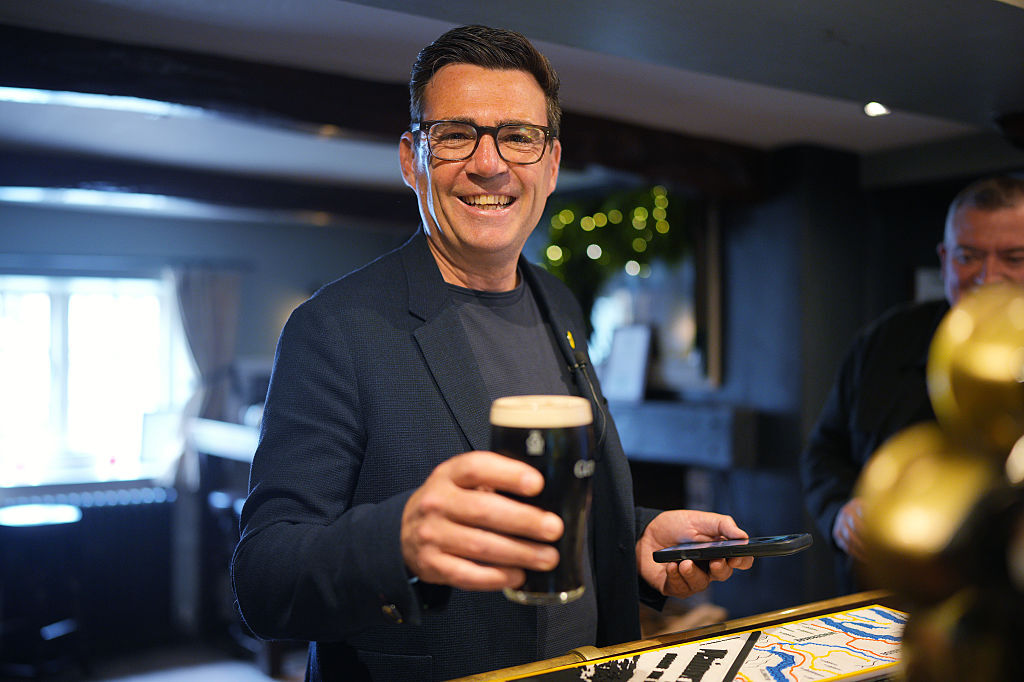
Some claim disparagingly that the former Mayor of Greater Manchester will simply be a “Keir Starmer with vibes”. His vibes are certainly real: Burnham garnered over five million views this week with a tongue-in-cheek selfie video replying to a jibe from Kemi Badenoch, to which even Burnham-critics like Telegraph podcaster Tim Stanley replied, “If he calls an election right now, he’ll win.”
But the criticism of Burnham as simply a “cooler” Starmer ignores the centrality of character and communicative ability to political leadership. Could Ian Duncan Smith, armed with the same philosophical scaffolds, institutional support, advisors and detailed plans, have pulled off the Thatcherite revolution? It’s doubtful. Personality matters. Connection with the public matters. And there are signs that, in Burnham, Labour might have found its most instinctive and natural communicator since Blair, but one equipped for the age of the tech platform rather than the tabloid.
His almost-daily, straight-to-camera video updates embellish an image of Mr Normal, the blokey-but-unthreatening normie populist taking on the Whitehall machine. Critics seethe and balk at the whole charade. But it’s a little different to Harold Wilson with his pipe, or Thatcher with her handbags. His response to Badenoch is a sign of what’s to come: expect a regular cultivation of the cheeky chappy, on-your-side schtick, projected via vertical video as the new fireside chat.
While leading the northwest’s largest combined authority, Burnham grew into the “King in the North” persona not with umpteen policy papers on “business-friendly socialism”, but by appearing, directly, to speak for the people during lockdown, articulating their grievances and frustrations against a faraway establishment. Critics may point to the apparent superficiality of it all. But in an era when politicians are roundly seen as robotic, boring, and downright weird (and often not without reason), differentiating yourself from the detached Brahmin class is core to generating public support.
There was a time when politicians spoke, and people listened, and even believed. The medium was radio and perhaps a couple of television channels. A man at the Beeb could push a button and define consensus reality for millions of Britons. But the information environment today is more hostile. Politicians jockey to put their message across against an infinite array of ideological entrepreneurs. The smartphone is ubiquitous, and the power of the old gatekeepers is diminished.
But alas, politics, as ever, is slow to come to terms with techno-cultural shifts. Parliamentarians like Keir Starmer still revere Aunty’s flagship news programs and treat set-piece speeches as if the public will hang on their every word.
That is, save for a few populist outriders who have mastered the art of “cutting through” and speaking to the public, unfiltered and unmediated — at least in appearance. Nigel Farage can do it. Zohran Mamdani can do it. And Labour may have now found its first social media-savvy communicator as leader in the new PM-in-waiting.
The true task for Burnham, though, is coupling this ability with a genuine prospectus for change, as well as the force of will to drive the agenda through. Vibes are crucial, not an added extra. But without the necessary program, it will be Sir Keir 2.0 — this time with rizz.
Jonny Ball is a Contributing Editor at UnHerd. He formerly wrote under the name Despotic Inroad.
 DespoticInroad