









February 22 2026 - 4:00pm
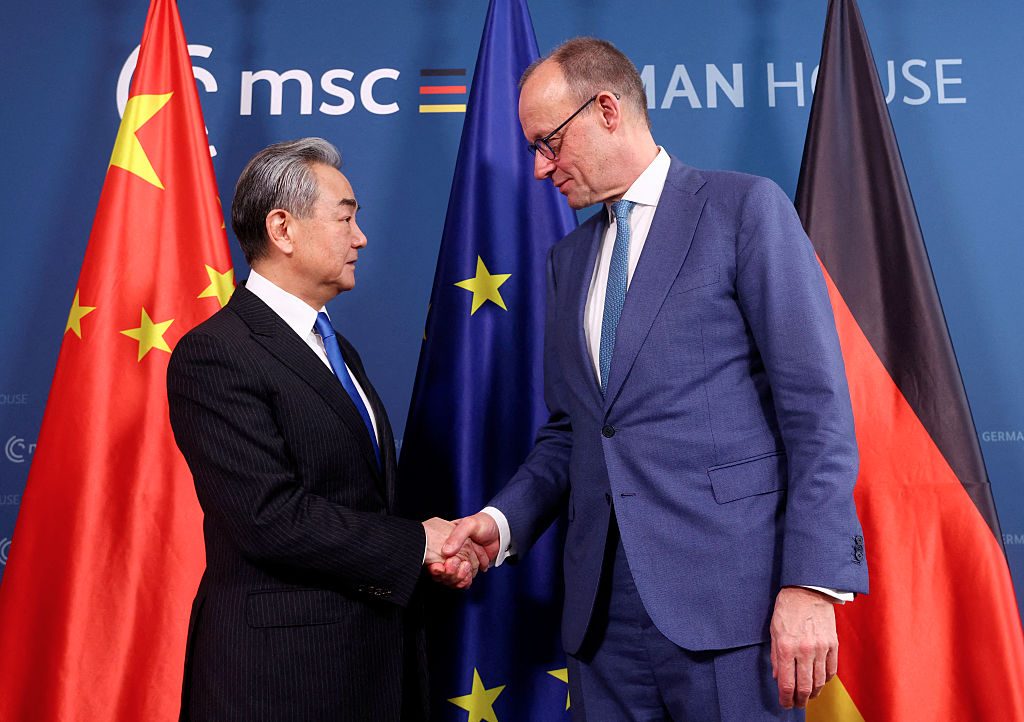
China has regained its position as Germany’s top trading partner, with bilateral trade totaling €251.8 billion in 2025 according to new data from Germany’s Federal Statistical Office. Coincidentally, Chancellor Friedrich Merz this week stated his intention of strengthening ties with China ahead of his incoming trip to Beijing, despite Chinese competitors crushing German manufacturing. That shows that despite their dire prospects, German policymakers can’t think beyond an export-oriented economy addicted to a shrinking Chinese market for their products.
The US overtook China in 2024 as Germany’s main trading partner — but that was a blip. China had been Germany’s main trading partner continuously from 2016 to 2023, and Trump’s tariffs didn’t help breaking the Germany-China trade relationship. If anything, they may have reinforced it by pushing more Chinese goods into Europe and by hurting German exports to the US. The Chinese market has played a key role in sustaining Germany’s export-oriented economic model, which was consolidated under Angela Merkel. That model was built on two pillars: cheap Russian energy to keep manufacturing competitive, and insatiable Chinese demand for high-quality German industrial goods, from cars to the precision machinery that Beijing needed for its own industrial rise.
For years, Germany looked like one of the rare economies that could keep China as a major customer while still running large export surpluses overall. This seemed to vindicate its strategy.
But that era is now over. Chinese electric vehicles are making inroads across European markets while German cars have been losing ground in the Chinese market. Germany’s trade deficit with China has widened, while German exports to China have continuously decreased. In 2024, Germany imported €170.6 billion worth of goods from China, more than double the €81.3 billion it exported in return. With Russian gas off the table and mounting regulatory and labor costs, its competitive edge is fading away. In December 2025, Volkswagen announced the first closure of a production plant in Germany in its 88-year history. “Made in Germany” no longer carries the same prestige.
The German leader’s pledge to renew Berlin’s economic engagements with Beijing reflects a lack of options more than a coherent strategy. His country’s industrial supply chains are deeply intertwined with China, and even if its market share is shrinking, China remains a lucrative market that simply cannot be replaced in the short or medium term.
Merz has often talked about the need to change course. Nevertheless, a genuine shake-up would demand profound reforms and a degree of pain, for which there is no appetite among the German or European political class. The industrial sectors which might be interested in a European protectionist push don’t seem to have the necessary economic and political weight to force a change of course. Merz could return from Beijing with concessions in terms of a price floor for Chinese electric vehicles and the opening of Chinese factories in Germany. But this would be little more than a consolation for Europe’s manufacturing juggernaut, ignoring the security worries which would follow.
The European Union is currently engaged in a series of trade disputes with Beijing while simultaneously trying to improve its relationship with China in the face of American volatility. For Germany, there seems to be no clear economic blueprint, only a managed decline of its crumbling industrial foundations.
Miquel Vila is a political and geopolitical risk consultant focusing on industrial strategy, critical infrastructure and global supply chains.
 miquelvilam