









February 20 2026 - 10:45am
Are we behind the iron curtain now? Four decades ago, Radio Free Europe broadcast Western news from Vienna into the Warsaw Pact nations. Yesterday, the US Department of Homeland Security launched Freedom.gov, a website which promises to help Brits avoid the Online Safety Act’s content censorship powers — and other Europeans to overcome their own speech regulations.
Right now, the site is still a blank, Paul Revere’s pony spinning its legs in a cute flash animation. But the blank speaks in the language of November’s National Security Strategy, in which the White House spelled out its geo-strategic priorities for the next three years. Europe, the NSS parlayed, is facing existential civilizational decay. Demographic changes and increasingly censorious governments are eroding the umbilicus that once connected Europe and America: the shared sense of Enlightenment liberalism, free speech and vigorous democracy that collectively won the first Cold War.
Where policy documents lead, policy actions follow — some are still surprised to learn that bureaucracies take their instructions literally. In that context, Freedom.gov can be read as one part of a coming roll-out of Europe reshaping devices.
The US is the market leader in democracy propagation. It has spent decades fanning some revolutions and muting others. It has pioneered tech that allows those living under dictatorships to dodge their own great firewalls. Turning this arsenal on Europe is simply an extension of existing policy. Europe is to be treated the same as Eritrea, even if it does not welcome the comparison.
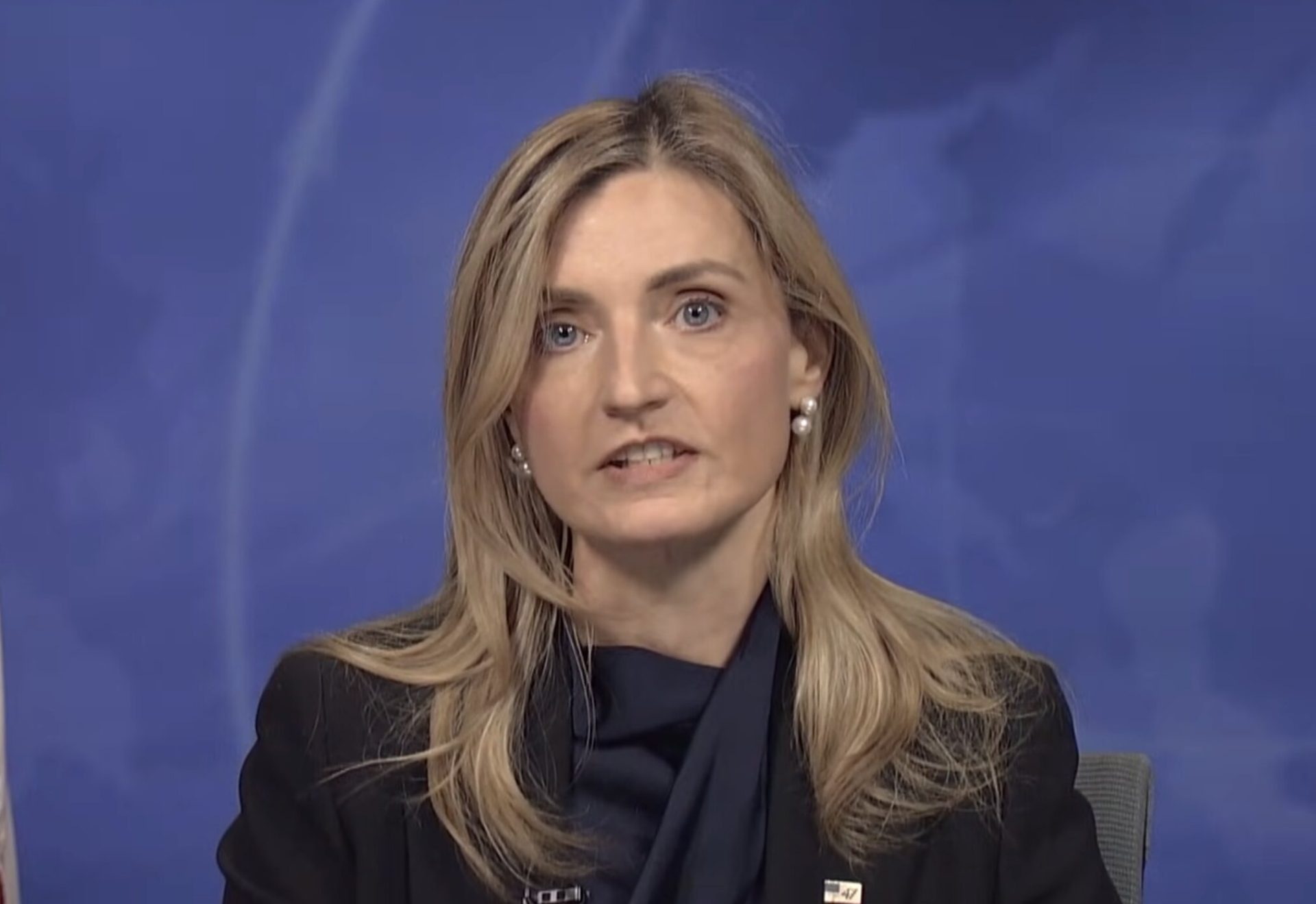
Behind the website’s construction is the Under-Secretary of State for Public Diplomacy, Sarah Rogers. At the Munich Security Conference last week, she denied that she was building “an army of far-Right influencers” — the Americans would like to put some of the funding liberated from USAID into orgs and think tanks that are civilizationist in orientation, which come at Europe’s problems from the perspective that it should lean into Enlightenment values and retain its traditional culture.
Rogers says that laws like the Online Safety Act and the EU’s Digital Services Act are inherently chilling to speech. They impose onerous mandates that come with a built-in precautionary principle — “preventing foreseeable harm” in the language of the OSA — on large risk-averse corporations like X. “And when you impose a vague speech regulation on a risk-averse corporation,” she told Semafor last month, “that’s how you get stilted conversations at the water cooler”. She believes that Europe has become the regulatory center of gravity for online platforms. What Europe regulates gets extended, de facto, to US consumers. This will not stand.
Free speech used to be a nation-level concern, what establishment newspapers could say was a matter for their respective national parliaments. But in a networked world, we are learning that someone somewhere must set the rules for everyone. The US is flexing its sovereign might. From now on, what is or is not “free” speech will be determined in Washington — or else America will break through your digital borders and impose it, as surely as Radio Free Europe once did. The message being sent is one for the hard of hearing in the Reichstag or the Berlaymont. America is too tired and stretched to have to worry about a declining Europe which cannot function as a strong eastern bulwark of the US empire.
