









July 15 2026 - 10:00am
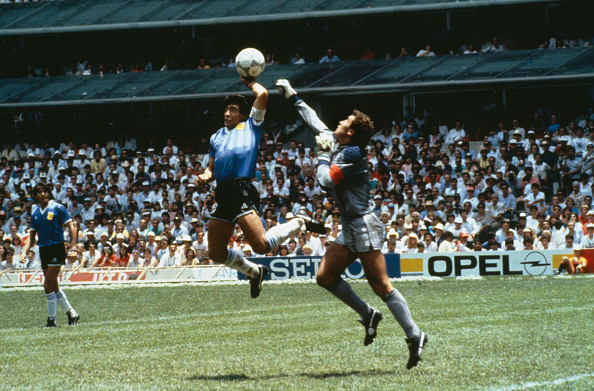
This evening’s World Cup semi-final between Argentina and England has been accompanied by the usual nationalist bluster from both sides’ supporters, all anchored by the continued dispute over the Falkland Islands. Songs will be sung — some of them, as we have already seen, by Argentinian players — and memes of various grades of tastelessness will be circulated.
The rest of the world has joined in on the fun as well. Scottish trolls have delighted in backing Argentina, and much of South America is keen to demonstrate how much they dislike the Argentines.
Mindless nationalism is as essential to international football as the ball itself. Yet one cannot help but think of Jorge Luis Borges’s line that “the Falklands thing was a fight between two bald men over a comb.” If this was true then, how much truer it is today — in football as it is in everything else.
In many ways, the Eighties was a good decade for second-tier powers such as Britain and Argentina. Asia was only at the start of its industrial transformation, while those countries that had industrialized before the Second World War continued to hold their own. In 1982, Argentina could still field an aircraft carrier, while the United Kingdom could still mount an expeditionary force to the other end of the Atlantic Ocean.
The Falklands War has proven to be so memorable because it is that rare thing: a conflict between two sophisticated militaries, with a relatively even playing field. If the UK prevailed materially, it was offset by Argentina’s proximity to the battlefields, thus making it a fairly equal struggle.
In the 40 or so years since, Argentina has become a democracy, transitioning from the military junta which previously ruled the country. But it also underwent a prolonged economic crisis, which wiped out its proud middle class and made it the butt of jokes. Though the UK’s relative decline has been less dramatic, almost 20 years of economic flatlining has turned a country which was once known as the ultimate example of pragmatism into a tinderbox.
It is in this context that the now-tiresome exchanges of abuse over the Falklands take place, whether the football is on or not. Each country has assumed a ritualist sort of character in advance of the game. Argentina’s Foreign Minister wrote an op-ed this week provocatively calling the Falkland Islanders an “implanted” people. Keir Starmer responded with some perfunctory condemnation, and the status quo continues.
The irony is that both countries’ weakness may be the best guarantor that hostilities won’t be renewed. In 2026, British planners can find comfort in the fact that Argentina lacks the resources to invade the Falklands. Meanwhile, their Buenos Aires counterparts can ease themselves in the knowledge that the British would not be able to mount an operation to recapture the islands if they somehow did manage to invade.
If anyone has the last laugh, it is the Falklanders. The Argentinian occupation was traumatic, but it meant that surrendering the islands has become a third-rail issue in British politics. Blood has been shed, and not even a Left-wing government would dream of conceding sovereignty. The bill for the defense of the islands is shouldered without complaint from Whitehall.
Meanwhile, work is underway to drill the first oilfield in the Falklands Islands’ territorial waters, with a maximum projected production of half a million barrels of oil per day in six years. The islands’ GDP could triple as a consequence. The men may still be bald, but the comb has become more important than ever.
