







 Prefer us on Google

January 3 2026 - 1:00pm
Emmanuel Macron’s New Year’s Eve speeches have been a key part of the French President’s political storytelling since his election in 2017. In 2018, at the height of the Gilets Jaunes protests, he announced he would hold a “Great National Debate” to allow citizens to express their grievances in town halls. In December 2020, he recycled Mario Draghi’s old “whatever it takes” line but adapted it to the Covid crisis. In 2023, he took a martial tone to explain that France needed a military and civic rearmament. Last year, he was teasing a series of referendums.
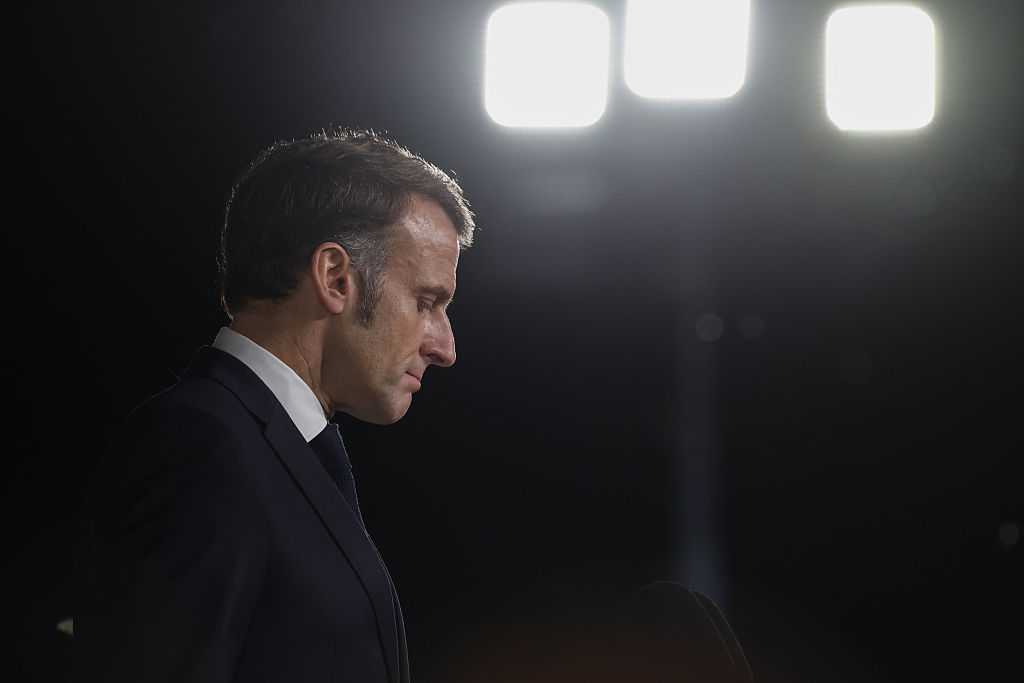
On Wednesday evening, the ninth edition of Macron’s end-of-year presidential allocutions had none of that same spark. The youngest president of the Fifth Republic himself seemed to acknowledge the futility of the exercise after 18 months of parliamentary gridlock. What came out was either already announced — including a social-media ban for children under 15 and a new military service — or a laundry list of welcome but vague intentions: protecting farmers, taking back control of borders, simplifying processes for business. The truth is that Macron simply does not have the authority to push through legislation as he did at his Jupiterian heights a few years ago. Worse, France still has no budget for 2026, running instead on an extended version of last year’s budget.
While Macron was struggling to justify the point of his speech, his political enemies did not even seem to care. Calls from the Left for his resignation have effectively faded away. Only 8.9 million people tuned in to the President’s speech, down 800,000 from last year and down 1.6 million from his maiden New Year’s address in 2017. In fact, audiences on 31 December dipped specifically during Macron’s speech, only to pick up again after he concluded. Not many were inclined to listen to a lame duck — he cannot run for a third consecutive term in 2027 — with no majority to act upon his desires.
But where does that leave France? The last two years have demonstrated the utter ungovernability of the country in its current state, with no fewer than five prime ministers in that time. The stakes are high. Macron this week mentioned France’s pledges to protect Ukraine, but Europe’s influence on Kyiv’s fate remains limited relative to that of the United States. And France’s fiscal situation — its deficit reached 5.4% of GDP in 2025 — is monitored closely by the European Union as well as rating agencies.
Macron wants 2026 to be a “useful” year, but it will surely bring more of the same chaos. A costly budget will likely be found in the next few weeks, and will fall well short of the 3% deficit to GDP ratio set by the EU. A grueling deadlock will follow, only with less room for maneuver than before as the 2027 presidential election nears. France’s fiscal space will continue to dwindle, but not sharply enough for the political class to bridge their divides.
To shake things up, Macron could call another round of legislative elections, but current projections have his supporters in parliament losing up to half of their seats. The Rassemblement National is now firmly in the lead of every single major poll. While Marine Le Pen is currently barred from running for office, her heir Jordan Bardella looks set to become the next French president.
Macron knows that, short of a seismic shift, 2026 will be a painful groundhog year for him. The modesty of his speech was an acknowledgment that he has finally lost his once-total control over the future of his country.
François Valentin is a political analyst and co-host of the Uncommon Decency podcast.
 Valen10Francois