




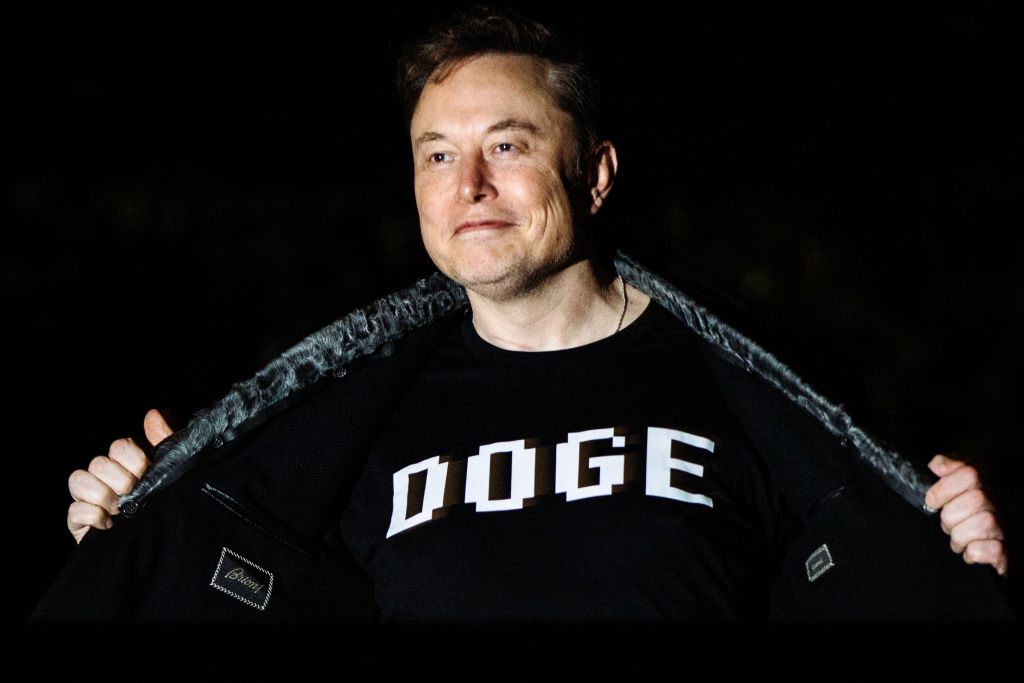





November 24 2025 - 7:30pm
Now that DOGE has been officially pronounced dead, the question is how history will remember it: as a bungled, overhyped failure, or as an earnest — if ultimately doomed — attempt to bring real efficiency to government?
Before Elon Musk had even conceived the “Department of Government Efficiency”, Donald Trump’s plan for a second presidency involved a historic overhaul of the federal government. Musk’s involvement, originally envisioned as a partnership with Vivek Ramaswamy, would bring attention and generational business talent to the project. When Ramaswamy decided to run for Ohio governor, reports suggested that he saw it mainly as a chance to work on budgets with Congress, whereas Musk envisioned it as a bureaucratic “strike force”.
“Musk had his own ideas, and they didn’t leave much room for Congress,” Politico reported. “He imagined DOGE as a strike force empowered to systematically dismantle lists of federal departments and agencies it considered redundant or unnecessary.”
DOGE was, in the end, technically “empowered” to make those changes by Trump. Whether Trump’s delegation of those powers was legitimate, though, is why much of what Musk and DOGE intended to do got tangled up in court battles. There are so many legal challenges that DOGE lawsuits have their own Wikipedia page.
Musk’s leadership of DOGE blew up in spectacular fashion about six months into the administration. It was always rocky, from legal challenges to infighting over defense cuts and more. But the Overton Window has shifted and DOGE won real victories for the cause of limited government. The Education Department is on an off-ramp to total closure. USAID is a shell of itself. The federal workforce is undergoing “the largest single-year reduction since World War II,” much of which is attributed to DOGE cuts.
Until Reuters reported this week that a Trump official confirmed DOGE no longer existed, it was unclear what was actually happening under the auspices of Musk’s creation. Consider Russ Vought, Trump’s returning head of the powerful Office of Management and Budget. He has been rolling out an aggressive version of the unitary executive theory inside agencies like the Consumer Financial Protection Bureau — work that would be happening with or without Musk or DOGE. This is the broader ideological project conservatives had long hoped a Republican president would finally authorize.
Trump was plainly willing, and even eager, to be that president. Well before DOGE, the professional Right had already built a personnel and policy pipeline designed for instant deployment on Day one of the next Republican administration, whether led by Trump or by Ron DeSantis.
Musk’s involvement supercharged this plan, bringing higher stakes and a higher profile along with the billionaire’s boundless energy. That, in turn, brought chaos — for better or worse, depending on your goals. But much of what “DOGE” became after the departure of Ramaswamy was already baked into the second administration’s policy blueprint.
To be sure, Musk’s leadership surely influenced the implementation of Trump 2.0’s government overhaul. It was faster and more furious. When the dust settles, the Right will have to assess whether that helped or harmed the bigger project, and how the cost-benefit analysis shakes out.
But any cost-benefit assessment of DOGE will ultimately come down to the power of branding, because that’s really what it was. “DOGE” became the catchall description for Trump’s efforts to streamline the government, whether Musk had anything to do with them or not. DOGE was an ethos — the packaging that wrapped up a preexisting policy agenda.
If DOGE is truly “dead,” its policy agenda certainly isn’t — it’s simply operating out of view inside 1600 Pennsylvania Avenue.
