









December 16 2025 - 1:00pm
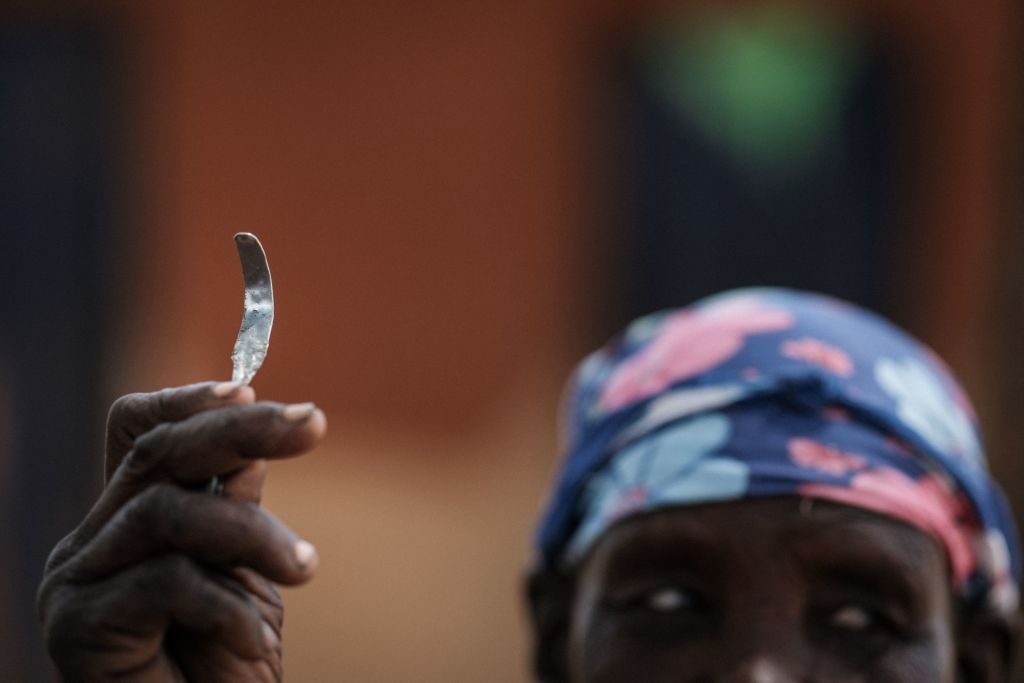
Academics from some of Britain’s most prestigious institutions have crossed a moral boundary that would make even the edgelords lurking in the darkest recesses of the internet blanch. A group of 25 scholars, including researchers from the University of Cambridge, the University of Bristol, and Brighton and Sussex Medical School, have published a paper in the Journal of Medical Ethics which appears to recast female genital mutilation not as abuse but rather as a misunderstood cultural practice in need of gentler language.
The paper, titled Harms of the current global anti-FGM campaign, shows remarkably little interest in the obvious brutality of cutting girls’ labia, excising clitorises or sewing raw flesh together. Instead, its target is the supposed damage done by opposing these practices. Zero-tolerance approaches, the authors argue, are “racialized and ethnocentric”, and actively harmful to the very women and girls they claim to protect.
We are invited to believe that the real scandal is not what is done to girls’ bodies, but in fact the bad manners of Western activists, journalists and policymakers who insist on calling it mutilation. Laws designed to protect children are said to undermine the “privacy, autonomy and self-determination of individuals, families and communities”. To labor the point, the authors draw an equivalence between FGM in Africa and the Western fashion for cosmetic labiaplasty. Both practices are undeniably shaped by sexist myths about what female bodies are supposed to look like. Only one, however, is imposed on girls who have no capacity to refuse.
It is, of course, true that female genital mutilation takes different forms, inflicting varying degrees of injury and distress. It is also true that those raised to regard such abuse as normal may bristle at moral judgment. The lead author of the study, Fuambai Sia Nyoko Ahmadu, is herself emblematic of this tension. Now living in the United States, she returned to Sierra Leone at the age of 22, at her mother’s invitation, to have her clitoris and labia minora removed as part of an effort to reconnect with her Kono heritage. Her reconciliation with that decision as an adult may be sincerely held. It cannot, however, be allowed to settle the question for everyone else, least of all for girls who have no choice at all.
Once you accept the premise that cultural meaning can redeem any practice, FGM becomes just one entry in a catalog of global female suffering that we are apparently no longer permitted to judge, lest we be accused of racism or, in the authors’ words, aligning with “neocolonial development frameworks”. Yet a defining characteristic of racism is precisely this refusal to apply moral norms equally: treating some people as so culturally delicate, or morally other, that basic standards of bodily integrity and child protection are said not to apply to them. Such dangerous cultural relativism ensures that Western girls are safeguarded, while non-Western girls are “contextualized”.
In India, baby girls are still routinely abandoned out of a preference for sons. In Yemen, thousands of girls are married off as children. In Afghanistan, nine out of 10 women say a husband is justified in beating his wife. These facts can be understood in one of two ways: as violations of human rights, or as culturally embedded norms that it would be “neocolonial” or insufficiently nuanced to condemn. Is it really an act of oppression to tell a woman she should aspire to live beyond the reach of a man’s fist?
The fashionable position among certain academics is that moral judgment itself is the real violence. Harm lies not in what is done to girls’ bodies, but in how loudly outsiders object to it. Thanks to them today, the knife is no longer only in the cutters’ hands, but in the footnotes, carving away the idea that some things are wrong everywhere, always, and especially when done to children.
