









Nov 6 2026 - 10:00am
The smart ones know. Kevin Keegan, having already dropped down to the second tier of English football, always claimed he knew he had to retire when, during an FA Cup fixture, a defender six years his junior eased up alongside him and nonchalantly dispossessed him. “That was the precise moment, with the game still going on, that the truth hit me,” wrote Keegan. “I was a Second Division player and I was on the slippery slope.” He retired from the game four months later at the age of 33.
Portugal’s Cristiano Ronaldo, who yesterday announced his retirement from international football at the age of 41, is different. No player, representing any country, has ever won more caps or scored more international goals than his 234 and 146, but he never would have reached those heights had he been a realist. In any other era he would have been clear of any rival, but Ronaldo’s cross to bear is that he will always be seen as the second-greatest footballer of the 21st century. Despite his prodigious talent, he consistently gave the impression of fighting against the odds to stay at the summit of the game, whereas Lionel Messi’s skill and longevity seemed effortless, as if he had been anointed.
Ronaldo has increasingly become a figure of fun, and his international retirement was long overdue — the belated punchline of a shaggy dog story. He had become a liability for Portugal in recent tournaments, a statuesque presence in a game now defined by youthful intensity. Like Muhammad Ali being outclassed by younger men in his final fights, it was not a dignified end.
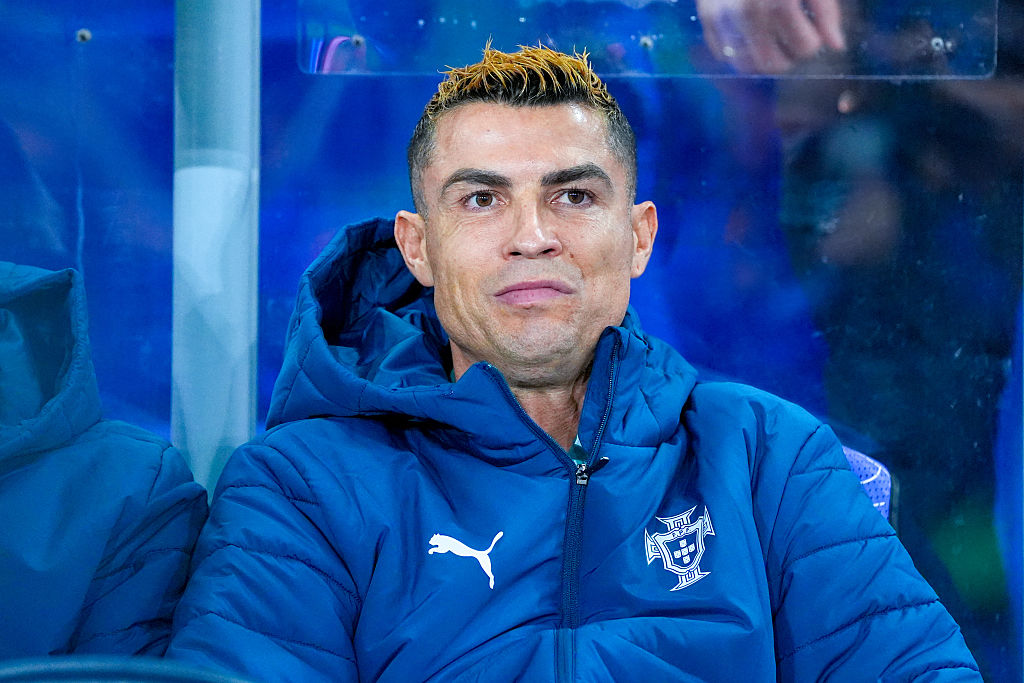
Last month, Ronaldo essentially threw a hissy fit when new coach Jorge Jesus chose not to bring him on from the substitutes’ bench for the national team. The five-time Ballon d’Or winner walked out and issued a 2,000-word statement — an untrammeled emotional download of petty slights and insults to which he felt had been subjected. Social media compared it to Rachel’s excruciating 18-page (“front and back”) letter to Ross on Friends.
Ronaldo did score three goals in five games at this summer’s World Cup, but even then managed to look like a static spare part in a team of talented young players, which ultimately disappointed by exiting in the last 16. The memes were merciless, one featuring a hapless old man plaintively and uselessly trying to help younger, stronger colleagues load a lorry.
Nowadays Ronaldo plays his club football in Saudi Arabia in front of sparse crowds, the equivalent of Elvis Presley’s Las Vegas residency, as he devolves into a parody of what he once was. Even at the end he was outshone by Messi, who retired from international football in August with the nation imploring him to stay. Ronaldo, meanwhile, has left in a huff.
His greatest moments took place at club level for Real Madrid, where he won four of his five Champions League trophies. And yet his most satisfying moment may have come in a game in which he limped off injured after 25 minutes.
It was the Euro 2016 final against France in Paris. With Ronaldo gone, Portugal’s hopes seemed to vanish. And yet, deep into extra time, with Ronaldo supplanting the coach on the sidelines and urging his teammates on, Portugal won. It was the country’s first major trophy. On Thursday, the man who for most of his career had looked like an individualist trapped in a team sport wrote: “I spent my life working to become the best player in the world. Today I realize that my greatest victory was the honor of representing the best county in the world.”
When Andy Murray spent the last years of his career limping through Grand Slams, he was furious at a BBC journalist’s suggestion that he was tainting his legacy. In truth, though, it is uncomfortable watching the greats become mortal. It offends our sense of human hierarchy.
And yet legacy eventually wins out. Ronaldo may have opted to rage against the dying of the light, but in time the current memories of a narcissistic prima donna will surely fade. Then, the true greatness of the player will be appreciated again.