









January 19 2026 - 7:00am
The Thucydides Trap refers to the high probability of conflict when one global hegemon rises to eclipse a declining power. The world avoided that fate as the British Empire was replaced by Pax Americana in the aftermath of the Second World War. The tacit bargain was that London would prostrate itself for a “special relationship”, as an outpost of American interests in Europe. The Western half of the continent itself would also be subsumed into the transatlantic alliance under the US military umbrella through Nato, and under its financial orbit through the Bretton Woods institutions.
But now the international order is shifting — fast. Donald Trump’s promises to annex the Danish territory of Greenland have put decades of British and European Atlanticism under grave threat. Now, this has been underlined and escalated by the US President, who promises tariffs on those countries that do not comply with this annexation. In this most gonzo of presidencies, the White House’s threat of tariffs on nations that have defended Denmark’s sovereignty is signal enough: this time, he’s serious.
What should the UK and other European nations now do in response? Keir Starmer has received few plaudits as Prime Minister. But he was praised for his deft handling of an erratic Trump last year — his dry, lawyerly tone, while repellent to a domestic audience, was a boon to UK-US diplomacy. A successful state visit, a free trade deal, some niceties for the press corps: these would solidify London’s supplicant relationship with its superpower.
Yet the approach so beloved of the commentariat needs to change. The idea that the US commitment to European security could be assured through flattery was almost immediately superseded by events the week after Starmer first visited the White House. When Volodymyr Zelensky was upbraided and berated by Trump and JD Vance in front of the world’s media, Trump’s dissatisfaction with the transatlantic relationship was on full show.
The US is no longer a reliable ally; its malign influence on world affairs is self-evident, and its long-term interests no longer align with either Britain or Europe’s.
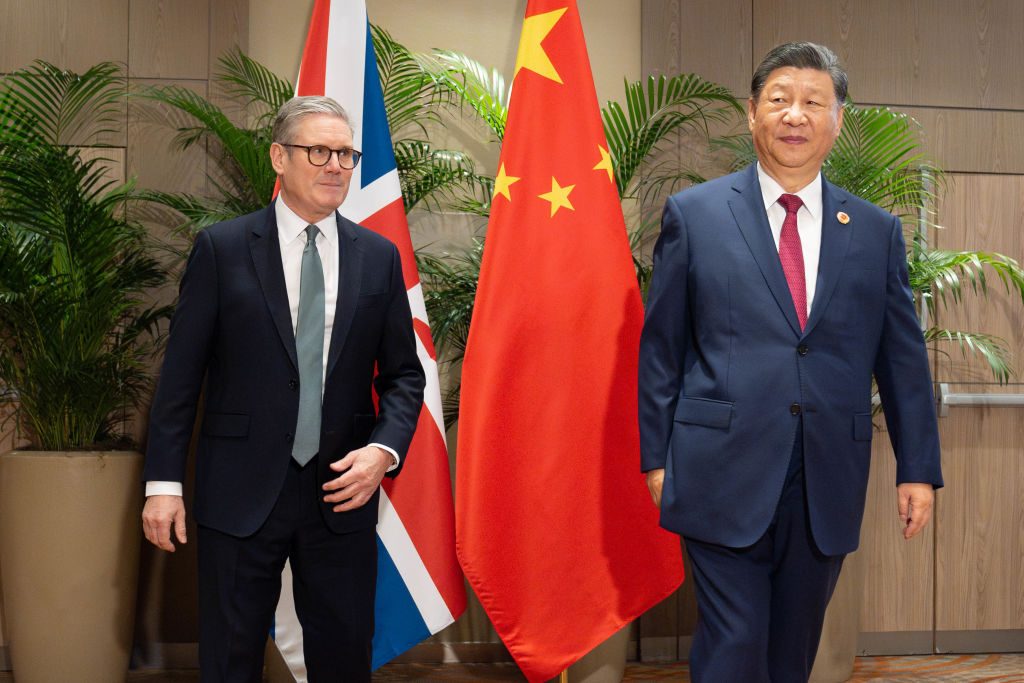
Like Canada’s Mark Carney in recent days, the UK must begin to develop an independent foreign policy and real strategic autonomy, including through a delicate rapprochement with Beijing. This should also include extending trading relationships and cooperation in areas of mutual interest. As the Atlantic alliance strains, Britain and Europe should also remember they both have leverage against Washington if the latter continues to undermine the national sovereignty of allies.
Retaliatory tariffs, regulations against US Big Tech, and vast reserves of US Treasuries, along with consistent capital flows toward Wall Street, are all options on the table. There’s no longer any reason Britain should ban Chinese tech infrastructure at America’s behest. And the exorbitant privilege of dollar hegemony is not a fact of nature — nor is the willingness of our wealthy consumer and financial markets to support it indefinitely.
As Trump’s America consciously decouples from China, pivoting away from the European theater in preparation for its own eclipse by the rising power in the East, the world should hope for a second consecutive avoidance of the Thucydides Trap. An era of multipolarity is already here, turbocharged by MAGA’s international recklessness and dismal displays of realpolitik that push friends into the arms of enemies.
In this new world disorder, Britain and Europe should adopt clear-eyed and realist perspectives, building up national defense-industrial capabilities while pursuing mutually beneficial relationships with global and regional powers. This is surely an improvement on cleaving desperately and pathetically to a defunct Atlanticist paradigm that the US has no intention of honoring.
Jonny Ball is a Contributing Editor at UnHerd. He formerly wrote under the name Despotic Inroad.
 DespoticInroad