









October 15 2026 - 7:00pm
This week, the Wall Street Journal published a fascinating analysis detailing how a contingent of wealthy donors is fueling the rise of far-Left candidates in the Democratic Party. The report details two crops of donors, some newer and others more established. But both appear to share the same fundamental goal: electing more progressives and shifting the Democratic Party’s center of gravity Leftward.
It’s worth pointing out that this is not necessarily a new development. Contrary to conventional wisdom — that most big-dollar donors are primarily motivated by financial self-interest — many of these Democratic donors actually hold views that are consistent with or even to the Left of the median Democratic voter, including on economic matters.
What is new, however, is the momentum and success these donors have achieved this cycle. For starters, many of these donors backed Zohran Mamdani in his bid for New York City mayor. His success has convinced more donors to join the fray.
The obvious problem with these donors’ growing power is that they are perpetuating a longstanding problem in Democratic politics: boosting candidates whose views and priorities often leave the party wildly out of step with the majority of the country.
This was one of the biggest takeaways from the 2024 presidential election. Polling shows that a growing share of voters believe Democrats moved too far Left. One post-election study found that the median American positioned themselves closer to both Trump and the Republican Party than Kamala Harris and the Democratic Party.
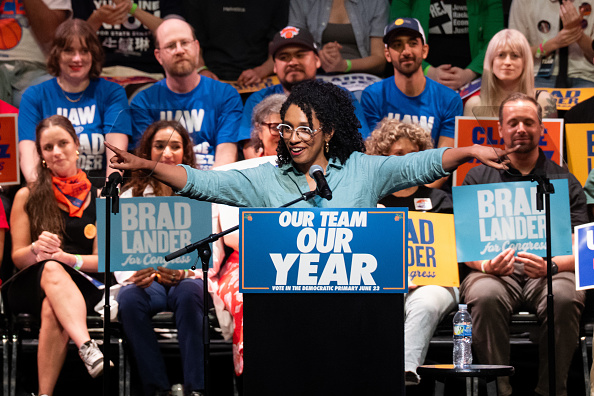
Though some Democrats understood this perception was a liability for their party, others saw Trump’s return as reason to double down on their progressive views. Throughout the 2026 primary season, Left-wing candidates, many backed by this class of donors, have had immense success. The Journal reports that 45 such candidates won their races for Congress, while just seven lost. Moreover, unlike in general elections, incumbents typically have a high success rate in primaries, suggesting that many of these new members could be around for a while.
As these progressive donors gain power and their preferred candidates become more firmly entrenched in the Democratic Party, voters’ perceptions that the party is too far Left will only become more entrenched.
Then there’s the question of priorities. Another major lesson of the 2024 election was that many voters felt the Democrats were out of touch with their concerns. Multiple post-election surveys found that voters believed the party cared more about contentious social and cultural issues than about the problems affecting their everyday lives. This perception was not entirely misplaced: the party had indeed begun to devote more attention to the former.
Yet this is unlikely to change if progressive donors have their way. Many have contributed large sums to American Priorities, an entity supporting candidates who oppose Israel. One such candidate is soon-to-be congresswoman Darializa Avila Chevalier, who famously attended an anti-Israel rally on 8 October, 2023, one day after the Hamas terror attacks (and who holds numerous views unlikely to be palatable to even the median Democrat, let alone American).
For now, most of these donors still wield relatively little influence compared with other major players. But the Left’s growing influence in the Democratic Party is already evident, and its momentum is now being buoyed with serious financial support. If this is a sign of things to come, Democrats’ likely gains this November could prove short-lived.
