









September 25 2026 - 6:45pm
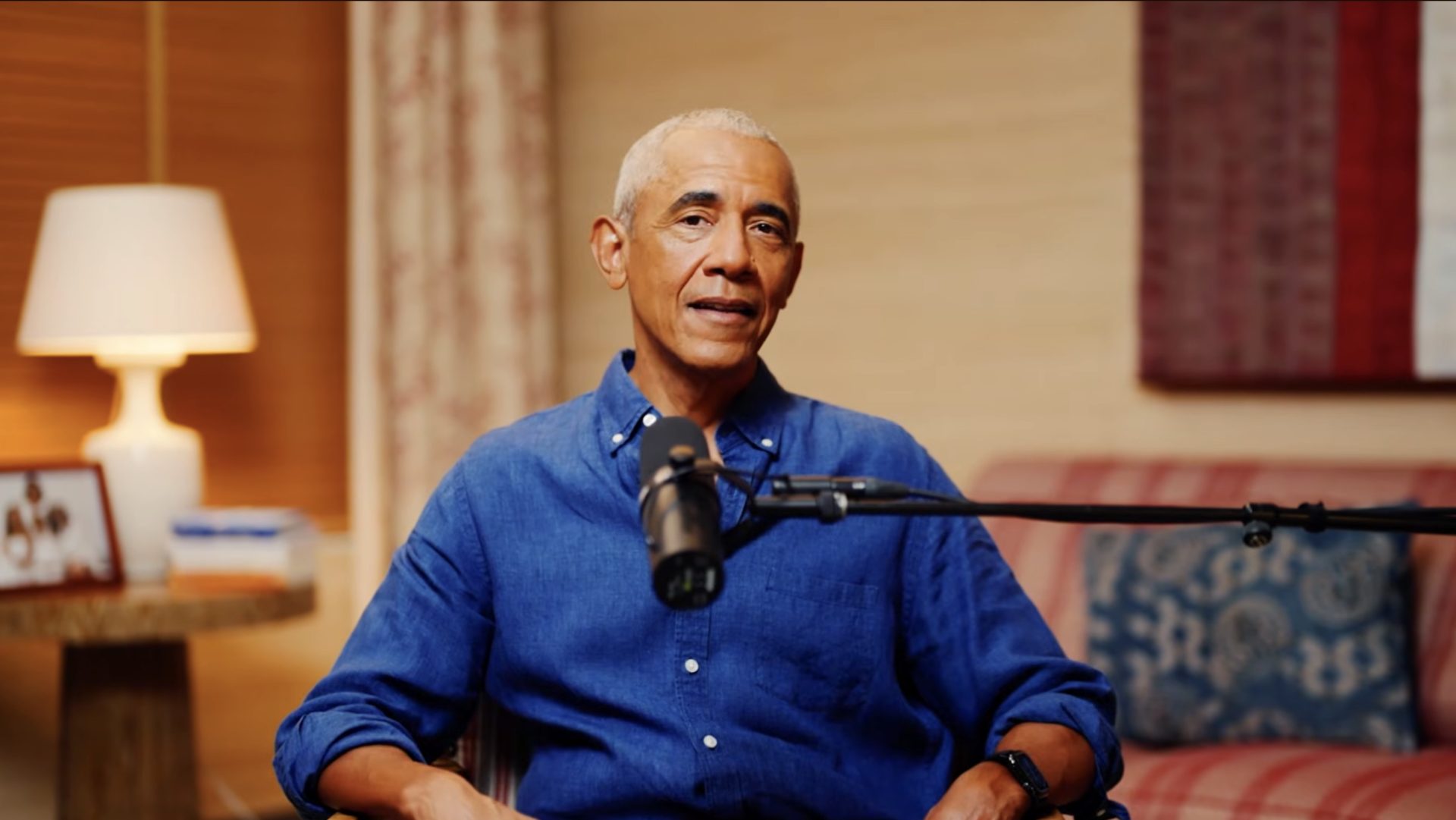
For a few seconds or a few minutes, it can be a wonderful thing to listen to Barack Obama talk. It’s nostalgic. It means going back in time. It’s like listening to an Aaron Sorkin monologue from The West Wing or The Newsroom. If you don’t listen closely enough, if you simply let the pace and the tone wash over you, you feel reassured, safe; you can enter the pleasant cognitive realm of 2013 or thereabouts. You can believe in the moral arc of the universe, and you can believe that your rulers and your celebrities know better than you: that they are wise.
The former president’s new podcast, A Great Book with Barack Obama, which was released on Thursday, is set almost like a work of historical fiction or drama in this nostalgic, timeless liberal past. His guests are Tom Hanks, Ta-Nehisi Coates, Jill Lepore, Ben Rhodes, Percival Everett and Lauren Groff. And the authors they discuss — Marilynne Robinson, James Baldwin, Robert Penn Warren, John le Carré, Toni Morrison, Cormac McCarthy — might have been his guests in previous decades.
All of the guests on the podcast are intelligent, well-spoken, successful people. Rhodes tells us that spy novels can have depth and soul and should be considered great literature, and Lepore is there to contextualize the rise of Left-wing populism during the Depression.
The guests are also well-matched to their authors: Coates knows his Baldwin, while Everett knows his Morrison. Everyone basically agrees. Strategically and blissfully, there’s very little talk of contemporary culture and politics. The question, then, is: why doesn’t it feel nice anymore? Why does Obama-speak, or Sorkin-speak, no longer captivate?
Well, the feeling of comfort and edification that one might have received listening to NPR in 2010 is no longer possible. For one, the dialectic of the guests doesn’t map onto the deep antagonisms of our current moment; what’s more, listening to highly successful, wealthy people talk about books that they find pleasant or interesting only adds to the grinding sense of despair one feels in an era of enervating uncertainty.
We know that the Obama set thinks this enervating uncertainty comes from Western voters, like in the United States, electing populist cretins. We know that populists think the conditions for this enervating uncertainty came from the deep, invisible failures and assumptions of the meritocratic governing elite. The truth may be that the granular horror of contemporary life is just downstream of technological changes which have next to nothing to do with party politics and US presidents.
Regardless, great books on the Obama podcast are not forward-deployed. They’re not used to think about what life feels like for gig economy workers and isolated young people without access to the basic durable goods that were once the right of people in an industrial civilization.
What would really be interesting is for Obama to have on guests who came of age during his presidency. They could be friendly or unfriendly — it doesn’t matter. But it would be genuinely interesting to approach these books through the perspectives of people who are not completely socially and financially secure, who are subject, like the characters in these works, to material and spiritual suffering. Obama remains a charismatic and captivating speaker. He just needs something more interesting to talk about, and he needs someone more interesting to talk to.
