









February 8 2026 - 8:00am
For the first time in its history, Germany’s hard-Right AfD finds itself so close to power that it’s preparing for government. But running the day-to-day business of politics might prove harder still than achieving a large enough majority to do so. Protests, boycotts and resistance from civil servants could bog down the engine room of any AfD government.
And opposition is now being found in unlikely places. Take the Bavarian town of Weilheim, where Der Spiegel reported this week that plans for an AfD-run cultural forum met vehement opposition. The town council responded by approving new no-parking zones in the surrounding area, a move intended to restrict the venue’s use without formally infringing the rights to peaceful assembly and association. Meanwhile, an anti-AfD campaign group comprising some 200 local residents is organizing protests and lobbying politicians.
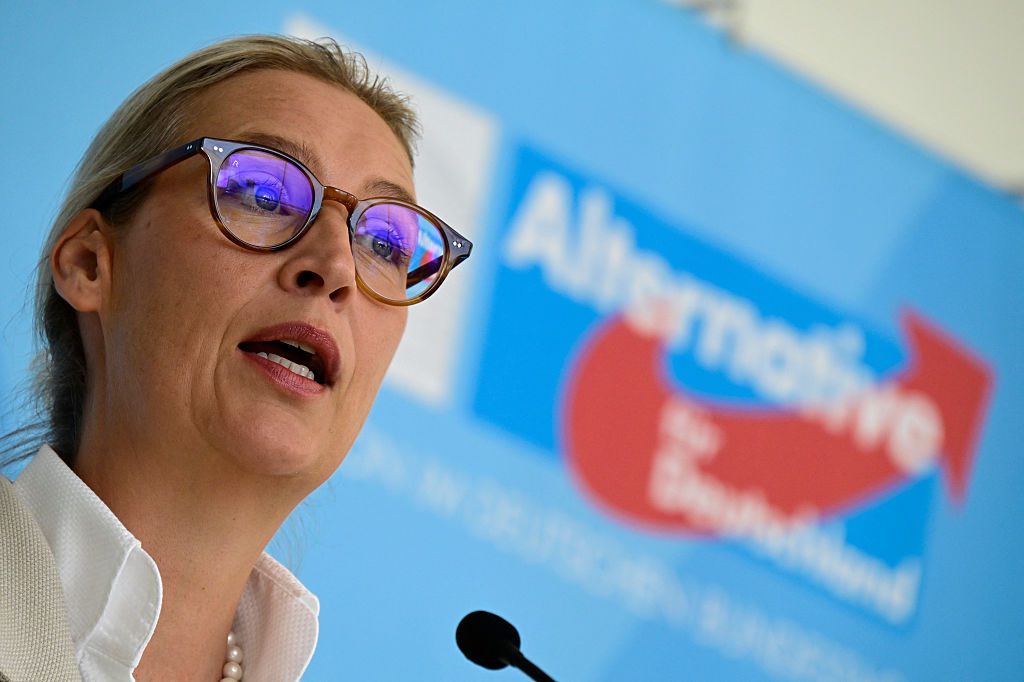
Those may be small measures, but they will concern the AfD. Political parties need venues, infrastructure and personnel. None of these things are easy to come by for the AfD. Leader Alice Weidel has had hotel bookings canceled on the campaign trail. Local party members have had their businesses boycotted. Mass demonstrations have blocked access to party conferences with some protestors turning to violence. These things make day-to-day campaigning and recruitment hard and unattractive.
This is a bumper year for German elections. Five out of the country’s 16 states are voting for new regional parliaments. Within the federal system, important sectors such as education, culture and policing are devolved. The states also send delegates to Germany’s upper house, the Bundesrat. So there is real power to be had, and the AfD knows it. While it has also made huge gains in the former West Germany, its main target will be to win an absolute majority in the September elections held in the eastern state of Saxony-Anhalt, where polling suggests the party is not far off.
Some AfD strategists consider an absolute majority in one state a better path to power than seeking to become a coalition partner at the federal level. The party wouldn’t need to compromise, and there would be no opportunity for the other parties to exclude it from power with large coalitions.
Even so, personnel remains a persistent headache for the AfD. In several eastern states, the party has extended feelers to see whether civil servants could be replaced. One insider said that the result of this investigation had been “sobering” for the party. German civil servants enjoy extensive job security, and they swear an oath to the German constitution, not to the specific government of the day. With the AfD being classed as “Right-wing extremist” by domestic intelligence, some civil servants might decide it is their duty to block AfD measures rather than implement them.
According to German media reports, the AfD leadership certainly expects “massive political and judicial opposition from various levels of government and from civic actors”. It has recently set up a “Working Group: Government Participation”. Drawing on an annual budget of €185,000, this committee is to conduct war-gaming, identify likely threats and develop means to counter them.
In truth, nobody knows how many people would actively resist an AfD state government. When Der Spiegel reported from Weilheim, it concluded that while some opposition to the AfD culture venue had been powerful, it had also come late and reluctantly. The mayor pointed to legal complexities, a Syrian grocer said “he didn’t care” about the center being opposite his shop, and a female neighbor said “the whole media furore about it bothers me more than the culture center itself.”
However, as a party that has never governed, the AfD is struggling to assemble enough personnel for a takeover of one of the eastern states, should it achieve an absolute majority. Its popularity at the ballot box has outpaced its efforts to build a party infrastructure. It would encounter more opposition than the established parties while trying to withstand it with fewer resources. Should the AfD be elected to rule, it might find it hard to govern.
Katja Hoyer is a German-British historian and writer. Her latest book Weimar: Life on the Edge of Catastrophe will be released in May 2026.
 hoyer_kat