









August 10 2026 - 10:00am
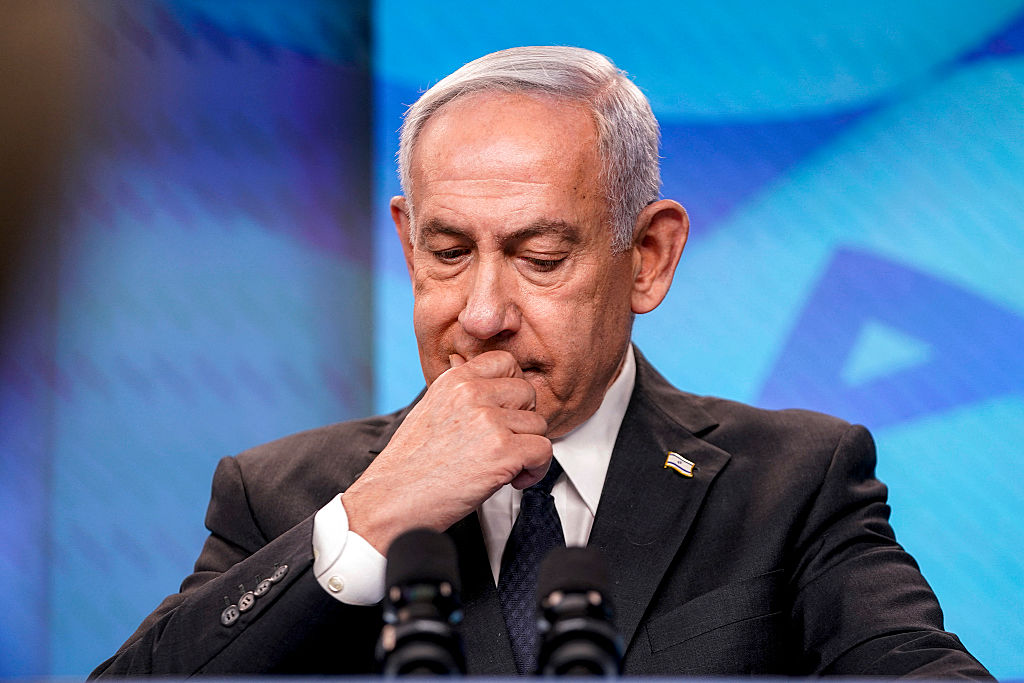
Just a few weeks ago, Hamas’s unexpected announcement that it would lay down its weapons seemed to reinvigorate Donald Trump’s moribund Gaza peace plan. But now the Israeli government has announced its rejection of the plan, insisting that its forces will not leave the Gaza Strip in conjunction with the disarmament of Hamas. Instead, Israeli forces will remain on the ground until they have confirmed that the group no longer has weapons. Benjamin Netanyahu has also stated that, contrary to the plan, there will never be a Palestinian state established in the Gaza Strip.
The cause for this announcement was the pushback Netanyahu received at a cabinet meeting last week. Different members of his coalition told the Prime Minister that they could not support the entrance of the so-called International Stabilization Force, which is meant to take over the security of the Strip, into Gaza. Security Minister Itamar Ben-Gvir even criticized Netanyahu’s decision to pause the systematic assassination of Hamas leaders in favor of targeted hits on those suspected of planning attacks on Israel, stating: “It is not enough to resort to assassinations only if they endanger us. Much more is needed.”
Given that Netanyahu now has both eyes fixed firmly on the Israeli elections in October, he needed to make this decisive statement to steady his own support. But he is also trying to put opposition leaders including Gadi Eisenkot, a former army general with growing support in Israel, on the spot: what will they now say in response? They cannot openly accept a Palestinian state anytime soon, and it will be almost as difficult to advocate leaving Gaza before Hamas is fully disarmed.
This political consideration is also why Netanyahu is in no hurry to leave Lebanon. Israeli forces remain in the southern area of the country, and the scheduled handover to Lebanese government troops is yet to transpire. That Bibi is prolonging the end of this conflict, despite the deaths of two IDF servicemen in Lebanon just last week, shows how he stands to lose more political capital through withdrawal and apparent acquiescence to Hezbollah than he does from Israeli casualties. This is an indicator of how much Israeli politics has changed in the past three years.
The fact that Netanyahu has so publicly opposed Trump also shows how he is focused on the upcoming elections at the expense of geopolitical considerations. He will doubtless be calculating that Washington’s support can’t do that much for him now that he needs to focus fully on his domestic audience for the next two-and-a-half months, and worry about Trump after the election — if he is even able to remain as Prime Minister.
Bibi is in a precarious position in the polls, and has been subject to increasing scrutiny from the religious Zionist/settler parties headed by Ben Gvir and Bezalel Smotrich, as well as the ultra-Orthodox parties. The latter group is furious at his inability or unwillingness to prevent their sons from facing the same compulsory military service as all other Jewish Israelis. But, ultimately, these politicians will always support a Netanyahu and Likud government over one which might put up some resistance to settler outrages in the West Bank and enforce ultra-Orthodox conscription.
Netanyahu needs to shore up his support among his natural constituency, the working- and lower-middle classes of peripheral Israel. It is these people for whose votes he is competing with Eisenkot, and likely these people who will decide October’s election. Seen through this lens, his government’s decision to reject the peace deal is a move to make sure Netanyahu remains Prime Minister for another term.
