










August 19 2026 - 6:30pm
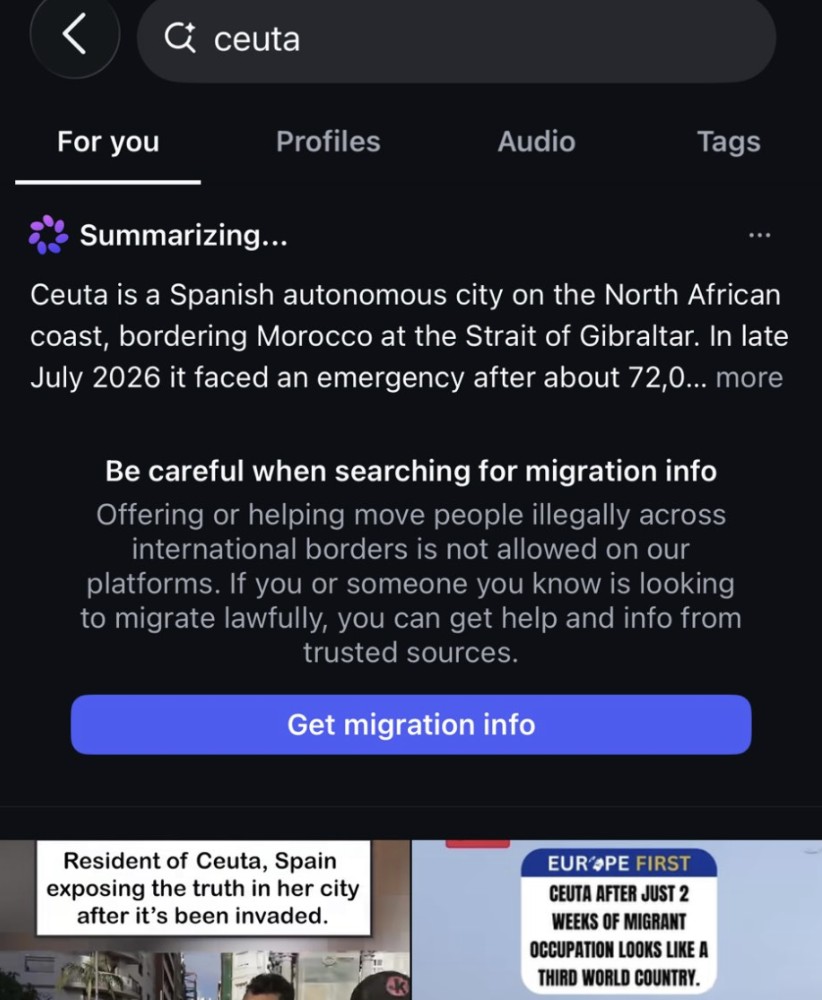
Shortly after migrants flooded the Spanish territory of Ceuta at the end of last month, notices started popping up on Instagram and Facebook. As journalist Bill Melugin discovered, these notices warned users searching for information about mass migration to “be careful” while also providing a “get migration info” button which offered help with “moving to a new country”. The notices would then redirect users to a United Nations website with links to information for asylum seekers, as well as a UN app that brands itself as “empowering migrants”.
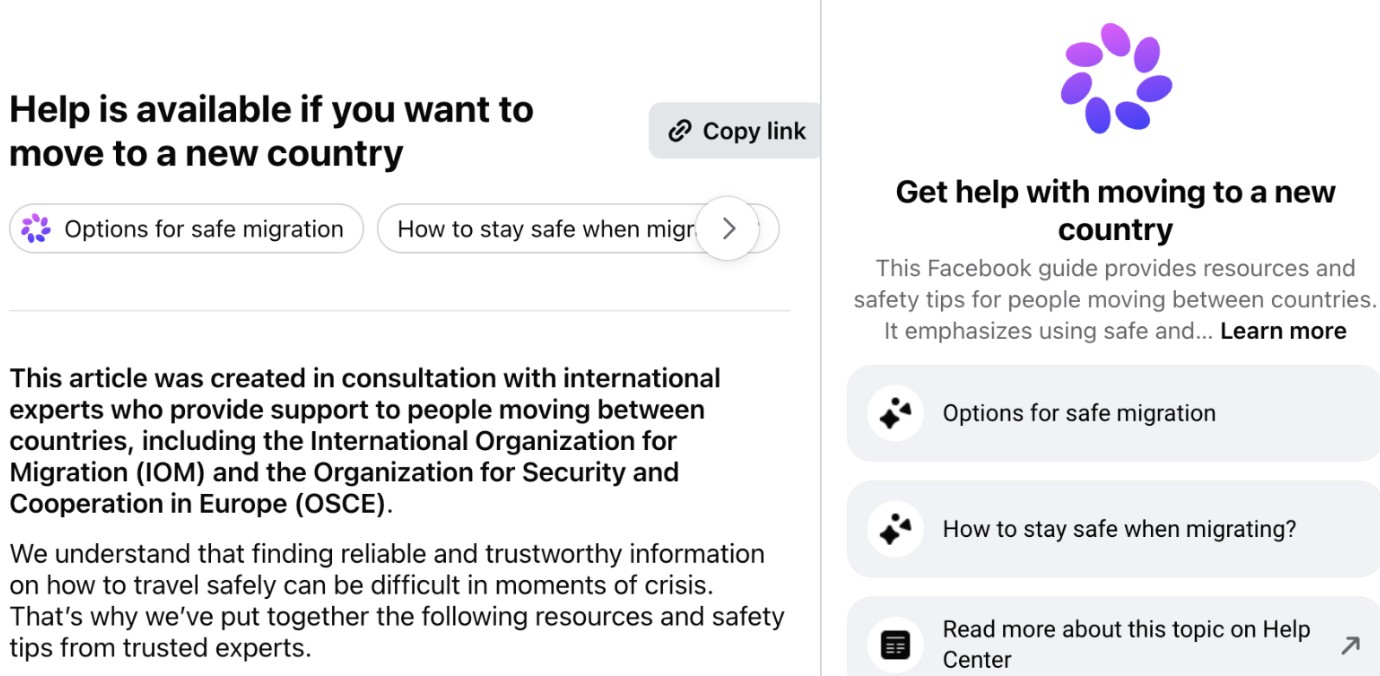
These notices are not organic: they were coordinated by the European Commission along with two intergovernmental organizations described by Meta as “reliable and trustworthy” fact-checkers. There are two components to the European Commission’s rapid response. The first warns presumed migrants about illegal traffickers. The second involves compelling Big Tech companies to activate “crisis protocols”, established under the European Union’s “Code of Conduct on Disinformation”. The Code forms part of the EU’s broader regulatory framework for online platforms. This can expose companies such as Facebook, Instagram, LinkedIn, TikTok, YouTube and Google to fines of up to 6% of their global annual turnover for serious breaches of the Digital Services Act.
The European Commission has activated these protocols for Ceuta. “TikTok and Meta have activated crisis protocols and have now put in place an ad-hoc escalation and cooperation mechanism with fact-checkers,” one European Commission Vice-President claimed on X. Meanwhile, a Commission spokesperson confirmed to me that Meta is “removing content” in cooperation with fact-checkers and the Commission.
But who gets to determine what qualifies as disinformation? In Ceuta’s case, the European Commission designated two transnational organisations as “reliable and trustworthy factcheckers”: the International Organization for Migration (IOM) and the Organization for Security and Co-operation in Europe (OSCE). Neither organization is independent or objective: both are political advocacy groups primarily funded by governments.
According to the IOM’s constitution, its purpose is “to make arrangements for the organized transfer of migrants” and “to provide, at the request of and in agreement with the States concerned, migration services”. According to a separate report, the IOM “aims to support the development of inclusive measures for migrants with diverse SOGIESC [sexual orientation, gender identity, gender expression and sex characteristics] to benefit from protection programming across their migration journey”. Its advocacy work is in direct conflict with its role as a nominally objective fact-checker for the European Commission and Meta.
While the European Commission has no direct jurisdiction over countries outside the EU, we received reports of these notices in the United States, Canada, Australia, Mexico, and the United Kingdom. That these notices are appearing in countries outside the EU raises questions about the global reach of a response initiated by European authorities.
A version of this article was originally published on Effort.
Brian Chau is a mathematician, software engineer, and independent writer at cactus.substack.com.
 psychosort