









July 9 2026 - 1:00pm
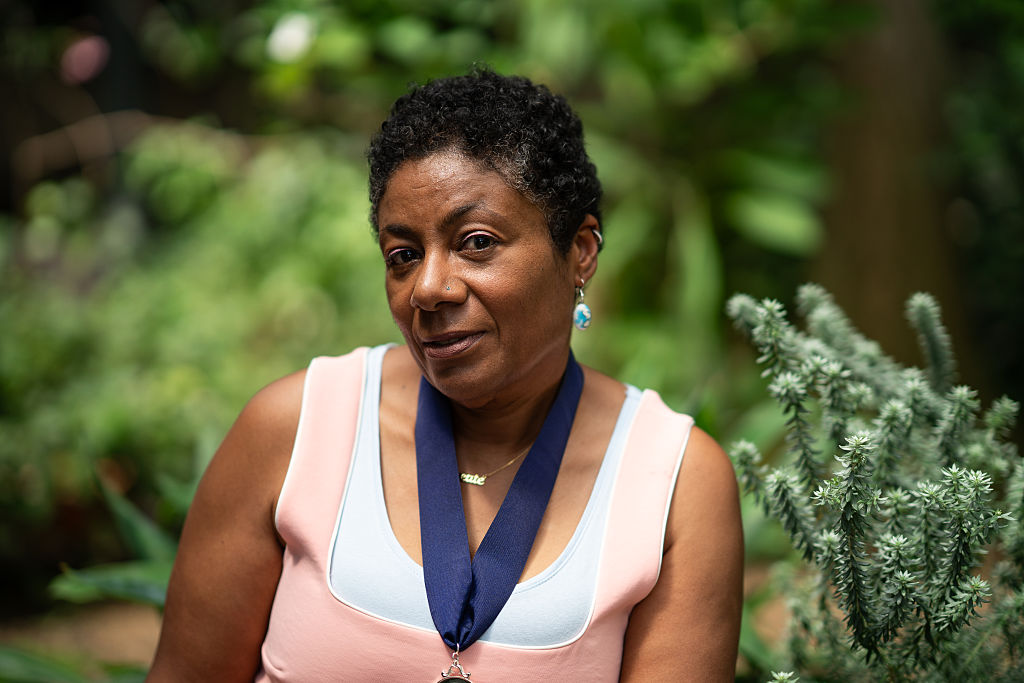
Newly appointed Children’s Laureate Patrice Lawrence wants to help kids “feel seen, understood and, most importantly, valued”. It’s an admirable sentiment, but Lawrence isn’t a social worker, a counselor or a teacher. Her primary task is surely to persuade children — all children — to pick up books again.
The challenge could hardly be more urgent. A decade ago, almost six in 10 children enjoyed reading in their free time and nearly a third read every day. Now, according to the National Literacy Trust, those figures have already fallen to barely one in three and just one in five. One in 10 children aged five to 18 does not even own a book.
This decline is hardly surprising. Books are no longer competing with the comparatively gentle pull of television. Instead, they are up against an army of technologists whose algorithms are engineered to capture young eyeballs. Faced with Minecraft or an infinite stream of personalized YouTube videos, children are being asked to choose between delayed gratification over an instant dopamine hit. If we lose that battle, we’ll have raised a generation whose opinions are shaped less by sustained thought than by whoever can command their attention for 30 seconds on TikTok.
It is disappointing, therefore, that Lawrence’s focus seems to be elsewhere. In an interview with the Guardian, she said she wants to gather evidence from girls and boys in care, refugee families and the children of prisoners to demonstrate how books change lives. Those are worthy causes. But the Children’s Laureate should not need to justify reading through a catalog of social disadvantage. Reading is not a targeted intervention but one of the great universal pleasures.
Lawrence’s approach reflects a wider shift in children’s publishing, where books are increasingly expected to demonstrate the right values as well as tell a compelling story. As a recent report by SEEN in Publishing warned, “no children’s author, agent or editor now dares… publish anything that does not conform to the inclusivity-by-numbers boilerplate.” The inevitable result has been a creeping culture of self-censorship that is driving talented writers elsewhere.
Before social media, most of us grew up immersed in stories about people utterly unlike ourselves. We followed orphans, princesses, witches, talking animals and child wizards without expecting them to mirror our own lives. The magic of reading lies precisely in that imaginative leap: the chance to inhabit someone else’s world. Children do not need every protagonist to look like them in order to recognize themselves in a story.
Many of us will remember reading Roald Dahl under the duvet with a torch. He did not produce generations of readers because Matilda was relatable or because The Witches centered marginalized voices. And his antisemitism would make even the average Green councillor squirm. But his works remain popular because they are grotesque, funny and wildly imaginative.
Perhaps Lawrence will prove me wrong. I hope she does. Britain needs a Children’s Laureate who can persuade young people that reading is neither homework, therapy nor an exercise in affirming their identity. If we want to raise citizens rather than consumers, our best hope is to get children to open books again. Reading is the antidote to the algorithm; it teaches patience in an age of distraction, empathy in an age of narcissism, and sustained thought in an age of endless scrolling.
Children do not need more books which obsess about what makes us different from one another. And their laureate ought to be willing to make the case that stories are valuable in themselves. If Lawrence reminds children that books are magical, they will seek them out for the rest of their lives. If she persuades them that books are medicine, they will take them only when they are told.
