




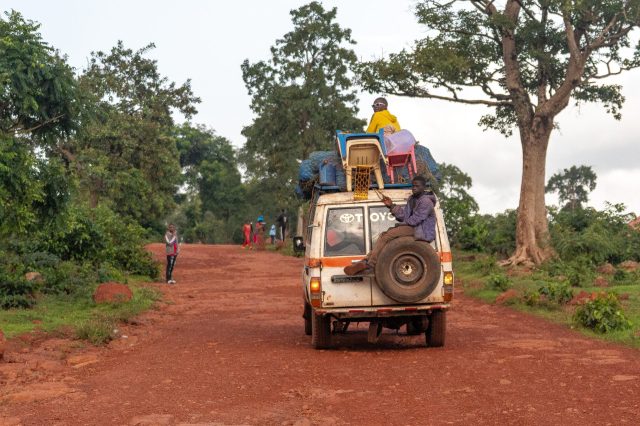
Guinea has benefited from the belt-and-road initiative. (Skrdliik/Dunn)





The landscape of Guinea, a West African nation endowed with the world’s largest bauxite reserves, has changed a lot in the past decade. Just ten years ago, the road between Conakry, which is the capital, and Boke, a sleepy regional city, saw infrequent traffic, much of which was overloaded bush taxis carrying charcoal, chickens and goats on their roofs. On either side was the deep bush, teeming with primates. Subject to regular slash-and-burn agriculture, the vegetation would nevertheless remain indefatigable, rebounding lush and green.
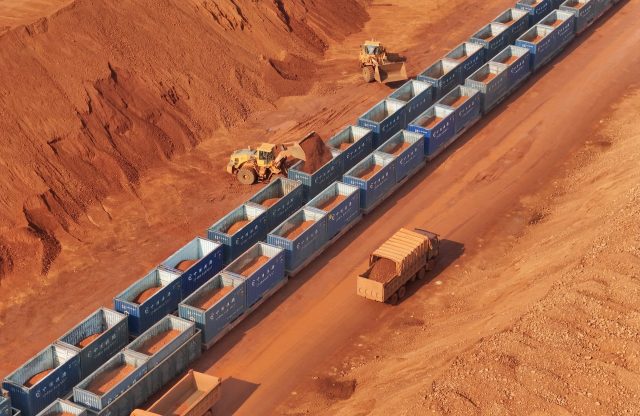
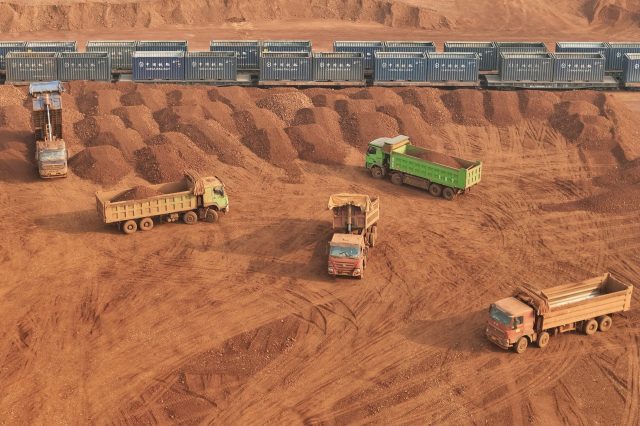
While the bush taxis, charcoal and chickens remain, the bush is now criss-crossed by futuristic infrastructure. Overhead are overpasses, which see freight train and haul truck traffic, and conveyor belts. Each train and truck are laden with bauxite ore — the source of aluminum, the backbone of modern power infrastructure.
The cargo, coming from mines that resemble massive dirt-red scars on Guinea’s tropical landscape, is headed for multiple terminals, built along once-pristine mangrove estuaries. There, it is loaded with cranes onto streams of incoming hundred-meter-long bulk carriers, which bring the materials to even larger vessels anchored out at sea. These giants, measuring up to 300 meters in length, bring the precious ore to ports in China, mostly in Shandong province, home to the country’s aluminum-refining industry.
Offering both lightweight and decent conductivity at the same time, aluminum is one of the most widely used industrial materials, and has fed China’s transformation into the global manufacturing hegemon. With China’s push for electrification, both domestically and globally, it is gaining even more importance as an essential component in products such as transmission lines, solar panels and electric vehicles.
Between 2015 and 2025, Guinea’s bauxite exports increased nine-fold from 20 million tonnes a year to 182 million tonnes, making Guinea the world’s biggest producer of the ore. With approximately 82% of the production bound for China, this surge is largely the product of Chinese capital, which facilitated the construction of the necessary port, road and rail infrastructure.
The production surge shows no signs of slowing down. As recently as last week, a consortium of Chinese companies tabled plans worth $3 billion to construct yet another railway and deepwater port, aiming to unlock another major bauxite deposit.
Until the recent mining boom, driven largely by Chinese investment, Guinea was one of the poorest countries in the world. This transformation is representative of a wider pattern seen across the resource-rich Global South. Since the late Nineties, when China first experienced trade surplus and became a net capital exporter, it has gradually built up a near-total dominance of global mineral supply chains and offered itself as a reliable strategic partner.
As of 2025, China accounted for about 60% of the global production of aluminum, and exercised similar dominance in the production and processing of other critical metals. Approximately half of the global supply of steel and refined copper is produced in China. Its supremacy is even stronger in a category of metals known as rare earths — about 20 elements with special magnetic and optical properties critical for the production of high-end technologies. There, China controls 60% of the global mining output and around 90% of the refining capacity.
With the escalation of the new Cold War, China has shown increased willingness to leverage its near-total control of these supply chains. Perhaps the most humiliating confrontation with reality for the US was the April 2025 “Liberation Day”. Following Trump’s imposition of an additional 34% tariff on Chinese imports, China imposed reciprocal tariffs alongside severe export restrictions on seven dual-use rare earths – prompting a brief escalation followed by full-blown TACO, whereby Trump suspended all the newly imposed tariffs.
But the weaponization of rare earths has continued. Last month, Reuters reported that some Chinese suppliers refuse to ship rare earths to the US for fear of repercussions from Beijing.
The Trump administration appears to have acknowledged this as a problem. “We outsourced the manufacturing so we could focus on designing these goods. And then one day we woke up and we realized we had outsourced our economic security and our very future,” said Marco Rubio in his opening remarks at the Critical Minerals Ministerial held in Washington in February. It was easy to detect regret of the four decades of neoliberal dogma that have held sway over American economic policy-making, dictating minimal state intervention and free trade. “We were at the mercy of whoever controlled supply chains for these minerals, so my hope is that we are gathered here today as the first but important step to rectifying this mistake,” he said to a room filled with delegates from 55 partner states, with whose cooperation the administration hopes to counter China’s strategic dominance.
But these efforts appear to have run aground. This is, for what it seems, not necessarily a function of policy-making incompetence but more reflective of deeper structural forces that allow China to engage in capital-intensive and risky projects offering only long-term payoffs.
Freed from the whims of the four-year electoral cycle, the system allows for long-term economic and social planning. In the case of China, policies are implemented with decades-long strategies in mind.
With unrestrained state intervention and high levels of state ownership, policymakers allocate resources to the priority sectors. In the Eighties, these were steel, cement and coal. In the 2020s, these sectors are dominated by high-tech renewable energy, electric vehicles, advanced robotics and artificial intelligence.
As China transformed into the global industrial powerhouse, its trade surplus grew significantly, spiking from $8 billion in 1994 to a historical high of $822 billion in 2025. With this massive surplus of international currency, China has obtained substantial capacity to export its capital across the globe.
This came in the form of concerted efforts to develop infrastructure and build access to strategic resources, mostly in Asia, Latin America and Africa – activities that in 2013 took on the moniker of the “Belt and Road Initiative”.
Guinea was an obvious target for Chinese capital. Home not only to the world’s largest bauxite reserves but also to Simandou, the largest untapped deposit of high-grade iron ore, it has always been of high speculative interest for mining investors.
The first Francophone African country to gain independence, Guinea is still deeply marked by the legacy of its totalitarian, inaugural leader, Sékou Touré, who ruled the country from 1958 until his death in 1984 – creating an oppressive and invasive state apparatus that quickly metastasized into a tool of extraction.
Plagued by political violence and instability, deeply embedded corruption and non-existent infrastructure, the country was long considered unbankable. Rio Tinto, for example, kept its rights to the Simandou deposit, which it acquired in 1997, at arm’s length for almost two decades.
Things only started moving when the country fell into China’s line of sight. In its first major investment in the country in decades, a subsidiary of the state-owned China Three Gorges Corporation completed a 240 MW hydropower plant in 2016, more than doubling the country’s electricity generation overnight. This was followed by the construction of another 450 MW facility in 2021, which again doubled Guinea’s power supply. The total investment from the two projects came to $1.6 billion.
At the same time, rich bauxite deposits in the hinterlands were being connected to the coast — where a string of new ports were under construction — by a network of railways, conveyor belts and dirt roads, equating to roughly $5 billion in investment.
It was likewise Chinese capital that finally got the Simandou project rolling into motion. Underpinned by an investment of roughly $20 billion, the project involved several port terminals and a 670-kilometer long railway — arguably the biggest mining infrastructure investment in African history — with an estimated three-quarters of the capital coming from Chinese sources.
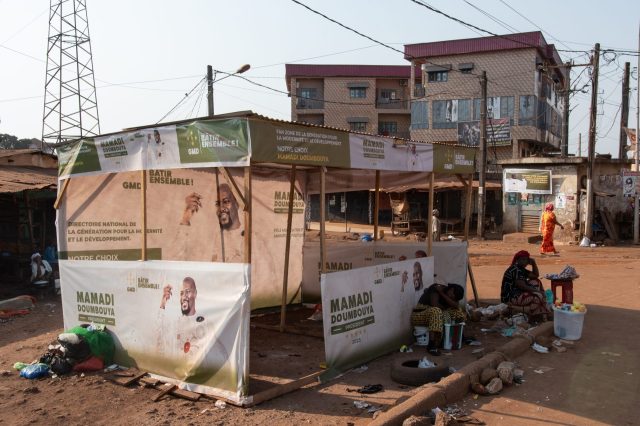
It was here that the dark side of Chinese engagement took shape. In September 2021, Guinea’s incumbent president, Alpha Condé, who had extended his rule into a third term with an unpopular constitutional change, was overthrown in a coup staged by the head of his presidential guard. An imposing figure at 6’5” tall, Mamadi Doumbouya — married to a former French gendarme — ultimately soured on the democratic handover he had initially promised, instead eliminating virtually all political opposition through a campaign of kidnappings, disappearances and bloody clampdowns on protests.
As the Chinese government’s 2025 Guinea Country Guide to Outward Investment and Cooperation indicates, Beijing is well aware of the regime’s brutality. But China refrains from judgment, concentrating on what these actions imply for the regime’s durability and thus investment security. “Although there have been occasional mass incidents or small-scale riots in various places, the military government has been able to handle them effectively,” it notes, adding that “the military government demonstrates a strong ability to maintain control”.
When Doumbouya eventually dared to face the electorate in late 2025, he was able to present a track record of concrete development — a convincing counterweight to the rise in political violence and the suppression of freedoms. Since he took power, Guinea’s GDP per capita has grown by more than 50% With Chinese help, the Simandou works were completed just a month before polling stations opened.
Billboards bearing Doumbouya’s likeness — clad in sunglasses and magisterial white robes — next to the slogan “Simandou 2040, Guinea’s economic transformation” became omnipresent in the streets, while Doumbouya’s ministers toured the country promising a windfall of cash and staging dance competitions to pro-Doumbouya pop music.
What the US is able to offer pales in comparison. The collective West has just a single bauxite asset in Guinea. Producing about nine million tons of bauxite a year, Alcoa’s mine relies on infrastructure built largely in the mid-20th century.
Owing to its noncompliance with good governance standards — which include controlling corruption, upholding human rights and democratic elections — Guinea was historically excluded from the American infrastructure-development initiatives such as the Millennium Challenge Corporation.
A privately-funded American initiative, centering on an iron ore deposit that neighbors Simandou, has yet to see the light of day. This inertia is perhaps reflective of financial markets’ unwillingness to take long-term bets in high-risk states. And elsewhere on the continent, examples of US mining and infrastructure success stories are virtually nonexistent. Much of the discourse around the American mining investment on the continent has centered around the Lobito Corridor in Angola, which, in 2025, secured a $553 million loan from the US International Development Finance Corporation, created under the first Trump administration to counter the Belt and Road Initiative.
The fund was used to enhance the capacity of a railway connecting an Atlantic port in Angola to the Central African Copper Belt, split between the DRC and Zambia, and secured several additional billions in commitments to implement associated projects. But awkwardly, even Lobito bears the mark of Chinese capital. The former colonial railway, almost entirely destroyed during the Angolan Civil War, was originally, between 2006 and 2014, rehabilitated with the help of a $2 billion Chinese loan — part of a bigger $30 billion loan package that China spent on rebuilding Angola’s infrastructure.
Trump’s other supposed success story, the US-DRC Strategic Partnership Agreement — signed in December 2025 and granting the US preferential access to Congolese minerals in exchange for settling the conflict with the Rwanda-backed rebels in the east — likewise turned out to be not much more than a PR exercise to signal Trump’s deal-making genius.
More than a year on since the US promised to bring peace to the region, the conflict continues to rage, and American capital inflows remain to be seen.
This impotence has come alongside the wider recession of Western influence in the Global South. With China churning out unprecedented volumes of capital, tied to the development of hard infrastructure, the West has ultimately come up short and is incapable of offering anything remotely competitive.
For decades, the only way for developing countries to access aid was through agreeing, even if in a token way, to comply with Western norms of good governance and liberal values. This era seems to be over. Uninterested in seeing its face reflected across the globe, China is content to let partner states abide by their own norms.
The spike in Chinese investment has, therefore, given dictators and rogue regimes, previously largely reliant on the West as a sole source of meaningful finance, freedom of choice and leverage, and as the case of Guinea shows, legitimized their rule.
It is, however, questionable whether these countries were ever viable targets of liberal democratic evangelism, and the fact remains that China brought cash and development to regions with no historical experience of substantial capital inflows. Perhaps the ultimate, uncomfortable truth is that China has produced an extractive-authoritarian equilibrium that actually works, offering a modicum of stability, infrastructure and growth.
In Guinea, Doumbouya’s militaristic regime, continuing a total war against political opponents, is set to preside over a growth rate of 8.7% this year, according to IMF, making the Guinean economy the fastest growing in Africa only after Ethiopia. IMF estimates that government revenues from Simandou alone could amount to 3.4% of GDP between 2030 and 2039, compared to just 2.2% of GDP for all mining government revenues in 2022.
Ever more fearful of a mutiny among his armed forces, divided along ethnic lines and subject to long-standing frustrations, Doumbouya has nevertheless apparently done a decent job in entrenching his rule. With little transparency over how the proceeds of the mining windfall are being spent, the security apparatus has ballooned. Since 2021, Groupement des Forces Spéciale, Doumbouya’s de-facto praetorian guard, has grown from 500 to at least 2,500 well-paid men. Downtown Conakry, where the presidential palace is located, is now guarded by modern surveillance systems and armored vehicles and gunmen stationed at every crossroads, pointing machine guns at passing traffic. The Hotel Kaloum, a Chinese-built five star hotel not far from the palace, hosts a high-tech surveillance suite on its top floor. Doumbouya’s personal survival is not guaranteed, but the repressive state apparatus will be a formidable asset for whoever might come next.
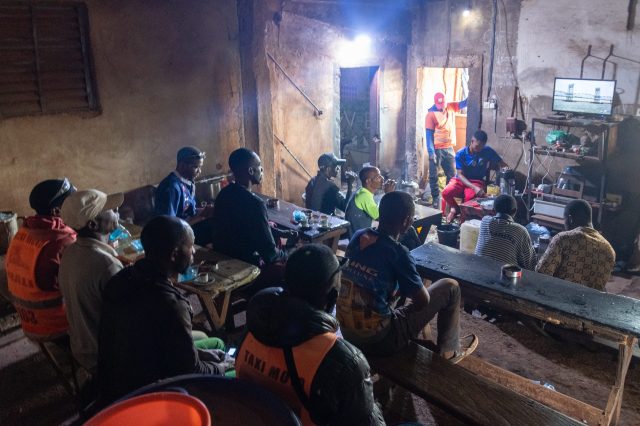
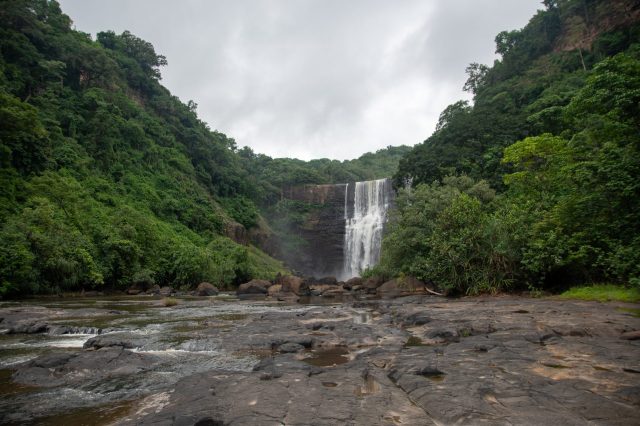
While it is hard to argue with fast economic growth being ultimately a good thing in a cash-strapped nation like Guinea, its fruits, at least for now, are being distributed very inequitably. The mining industry is extremely capital-intensive, thus creating very few jobs. In the absence of comprehensive redistribution mechanisms, the mining boom has benefited primarily a handful of lucky contractors and those close to power. It has also come along with community displacement, rise in violence and full-blown environmental destruction — pristine forests have been erased, estuaries polluted and wildlife endangered.
This warrants some nostalgia about once non-negotiable conditionalities in the allocation of developmental help and investment, and demands a response from the West. But the current economic model seems incapable of providing one that is adequate. Proselytizers of free trade and a small state have gone noticeably quiet. In the Trump administration’s attempts to play China at its own game, however, it is merely doing a version of it that is both incompetent and ineffective. As the fruits of China’s decades-long strategic planning continue to materialize, the collective West may find itself forced to rethink the very foundations of the existing neoliberal economic order of small government, free trade and unrestrained financial markets, built upon the dollar as the global reserve currency. As Branko Milanovic thoughtfully pointed out some years back, Trump, incapable of understanding the complexity of the institutions underpinning the system over which he presides, might turn out to be America’s very own Gorbachev.