









October 26 2026 - 7:00am
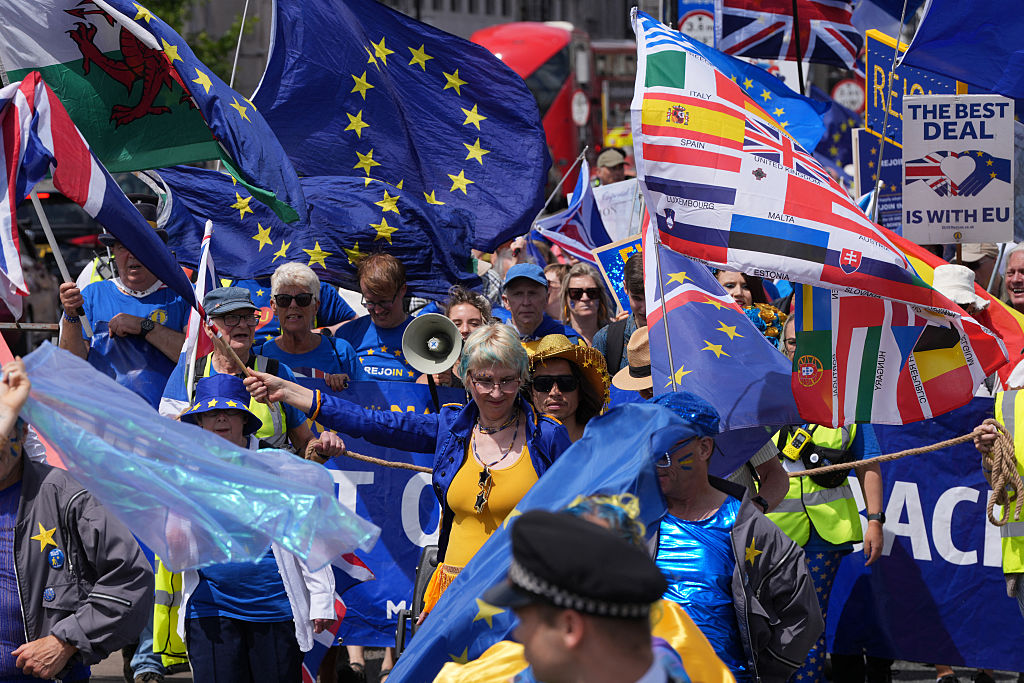
In an interview with The Sunday Times, the Prime Minister says he’s open to the idea of restoring free movement with the European Union.
But, hang on, isn’t this the same Andy Burnham who fought the Makerfield by-election on a promise not to “re-run” the arguments of Brexit? It is indeed, so why is he re-running the most pivotal argument of Brexit, which was over who controls Britain’s borders?
Perhaps, like his suggestion that Britain should declare independence from the bond markets, or his claim that Russia influenced the Brexit referendum, this is another of his “thinking aloud” moments. Except that, on free movement, Cabinet colleagues such as Angela Rayner have been sent out to amplify his message. He really does seem to be serious about this one.
Burnham may feel like he’s in a position to take risks. His party is now hitting 30% or more in some polls — the sort of level that could win Labour an absolute majority in a snap election. He might also be encouraged by British Future polling on voter attitudes to UK membership of the single market and freedom of movement. The research found that 48% of those asked were in favor while 30% were against. However, the fact that the pro side includes 39% of Reform voters does suggest that the full implications of free movement — such as giving 450 million EU citizens the right to live and work in the UK — aren’t yet fully appreciated.
Labour is building a narrative that immigration from the EU is qualitatively different from the immigration we’ve experienced since Brexit — and in particular during the Boriswave. This isn’t, of course, an explicit reference to race or religion, but rather to permanence. Burnham emphasizes the example of young Europeans who come to work here for a few years and then go back home (plus the opportunity for young Britons to do the same in the other direction).
That is, however, a highly partial picture of what immigration from Europe can mean. For instance, there are now something like 600,000 Romanians living in the UK (up from 83,000 in 2011). The fact that Romanian is now our third most-spoken language is proof that EU immigration can have a major and lasting impact.
We also need to think about the even bigger consequences that open borders with Europe could have in the years ahead.
Both politically and economically, the EU is less stable than it was when Britain left. Marine Le Pen is on the brink of power in France and the AfD has never been closer to breaking through in Germany. At the same time, the EU’s more liberal leaders are lowering barriers to mass immigration. In April, the government of Pedro Sánchez in Spain granted legal status to half a million illegal immigrants, provoking angry responses from other EU governments. The migrant invasion of Ceuta was another reminder that, in the single market, the weakest border is everyone’s border.
To that combustible mixture we can add the impending accession of new member states like Albania, the growing risk of a second Eurozone crisis, and the chaos that could come from worsening military conflict on the EU’s eastern and southern flanks.
In short, Andy Burnham is in absolutely no position to say that free movement with the EU would have predictable or positive consequences for the UK. Perhaps Reform and the Tories could stop bickering for long enough to point that out.
Peter Franklin is Associate Editor of UnHerd. He was previously a policy advisor and speechwriter on environmental and social issues.
 peterfranklin_