




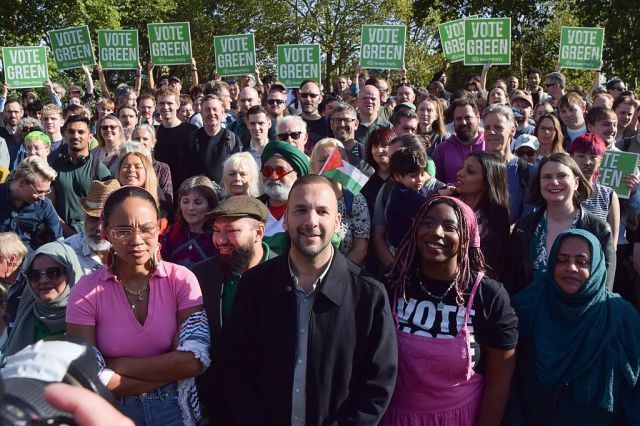
“So far, Polanski’s stagecraft has served him well.” (Vuk Valcic/Sopa Images/LightRocket/Getty)





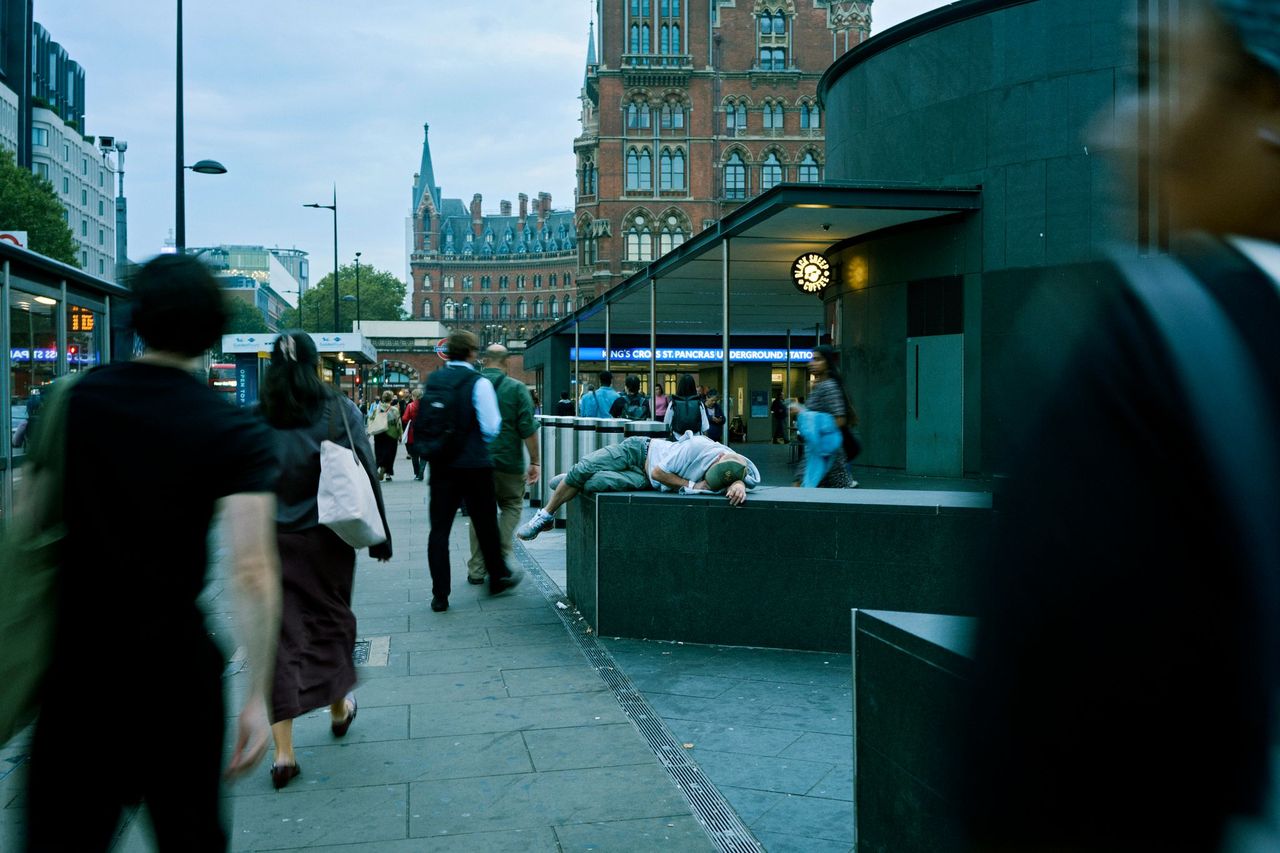
The constituency of Holborn and St Pancras, Labour since its inception 43 years ago, is a strange shape, encompassing strange people. It is home to some of the sharpest wealth disparities in London: here, a single set of railway tracks can cut the average house prices in half, as it does between Gloucester Avenue and Juniper Crescent. Walk southwest and you’ll see Somers Town, formerly a slum and long a deprived area, bleed into the sprawling gardens of Bloomsbury. The constituency continues right up to the borders of Fitzrovia, where city boys drink, before finally dissipating at the top of Shaftesbury Avenue.
And then there’s Camden Town, one of the most impenetrably weird neighborhoods in London, with its inequality, its destructive conflagrations, its degrading tourism, its faltering but proud cultural legacy and its obscene threats. I once saw a preacher tussle with a legless man in a wheelchair outside the entrance to the Northern Line.
To succeed here, a politician must recognize the paradoxes of the constituency, and understand how the area has changed and warped over the years. “Holborn and St Pancras,” wrote the academic Rob Ford recently, “is distinctive on practically every demographic indicator available.” It is full of university students, private renters, young professionals, and residents born abroad.
Did the former prime minister understand these constituents? Keir Starmer held his seat here for 10 years, yet many are glad he has gone. “I was pleased to see the back of the despair, of the hopelessness,” says Millie, a 26-year-old Labour canvasser. “It was sort of like a bad breakup… ‘It’s not you, it’s us’…. You felt bad when it happened, but the whole time you wanted him to leave.”
As a result of Starmer dumping his voters, the people of Holborn and St Pancras find themselves in the middle of a political hinge-point. Today, in their by-election, they get to choose whether Andy Burnham will cement his “new manager bounce” via his candidate, Sagal Abdi-Wali, a former child refugee from Somalia. Or whether Zack Polanski and the Greens can claw back relevance, having snookered themselves after pushing the Labour party Leftwards. George Galloway is supposedly campaigning here, too, for his Workers Party of Great Britain — if not for the constituents. Though nobody knows where he is. Last I checked, he was “in exile” in South Africa.
Many people I meet echo Millie. They were annoyed at Starmer for not being present, for undermining Jeremy Corbyn — say what you want about Corbyn, the people half a mile to the west in Islington North have a lasting affection for him — and for abandoning Gaza to unrestrained Israeli aggression. Starmer’s gone now, gone back to his favorite pub in Kentish Town, but some of these issues persist.
The Holy Land has never been far away in this campaign, or from its streets. And opinions are held passionately on both sides. Both the Greens and the Workers Party of Great Britain are leaning heavily on the issue of Gaza in their literature. Furthermore, there are just over 2,000 Jewish people living in the constituency, according to the 2021 census. They hold various, often competing, views pertaining to Israel and Palestine.
Polanski, himself a Jew, was roundly bollocked at a recent Jewish community hustings in Holborn. He told the room: “Many genocide scholars around the world recognize [the Gaza war] as a genocide and calling it that is not antisemitic.” The room loudly disagreed. But Polanski continued: “In the Jewish community we need to come together to recognize that when we call that antisemitic we are making ourselves, as Jewish people, less safe.” After he finished speaking, amid boos, a woman in the crowd turned to her neighbor and whispered, “And he calls himself a Jew?”
The Green stance on Israel eclipsed their party conference at the weekend, where the membership passed a motion declaring Zionism to be racist. That this is now party policy has angered many, including the chair of Jewish Greens, Vivien Lichtenstein, who is publicly considering leaving the party, and the UK chair of Amnesty International, who has now left.
“I don’t think it’s helpful,” Lichtenstein told the BBC, “and it doesn’t make any difference whatsoever to Palestinians in Gaza who have suffered devastation, orphans left behind, it doesn’t make any difference to Palestinians in the West Bank who are currently suffering, are currently being attacked and killed.” Polanski was conveniently absent for the vote. But his name is inextricably linked to it.
In a boutique shop in Primrose Hill, I speak to a shopkeeper who makes her feelings clear. “He’s what we call a kapo,” she tells me, describing Polanski. She says she’s experienced antisemitic harassment before, “I’ve had six, six or seven six-foot men circling me and calling me a baby killer.” After that, the conversation pivots to her disdain for the UK immigration system. “I would only vote for [somebody] that actually preferred us to all these inbreds that are coming in… and doesn’t put an alien in a hotel.” She’s planning on voting for Reform. She gets her news from Instagram.
Given the tenor of the national debate, perhaps it’s not surprising that the canvassers here are keener to talk about housing policy. It’s a terrain that demands excellent local knowledge. But Polanski is not a local and locals can tell. Faduma, 31, is the sort of voter the Greens would traditionally be looking to attract — a young, liberal-minded Muslim woman, moved by the suffering of Gaza, sympathetic to Corbyn and deeply enmeshed with the local community via her work at a youth center on Crowndale Road.
“He’s not from the borough,” Faduma says of the Green Party leader, “I think he’s a great politician, and his promises sound fantastic. But how much is he going to deliver for us if he does win? [He doesn’t] know the community’s needs.” Faduma loves it here. “The second I leave Camden,” she says, “I can feel it.” Likewise, Faduma implicitly knows that Abdi-Wali is a Camden girl. “She understands what’s going on. She knows what’s happening with her constituency.”
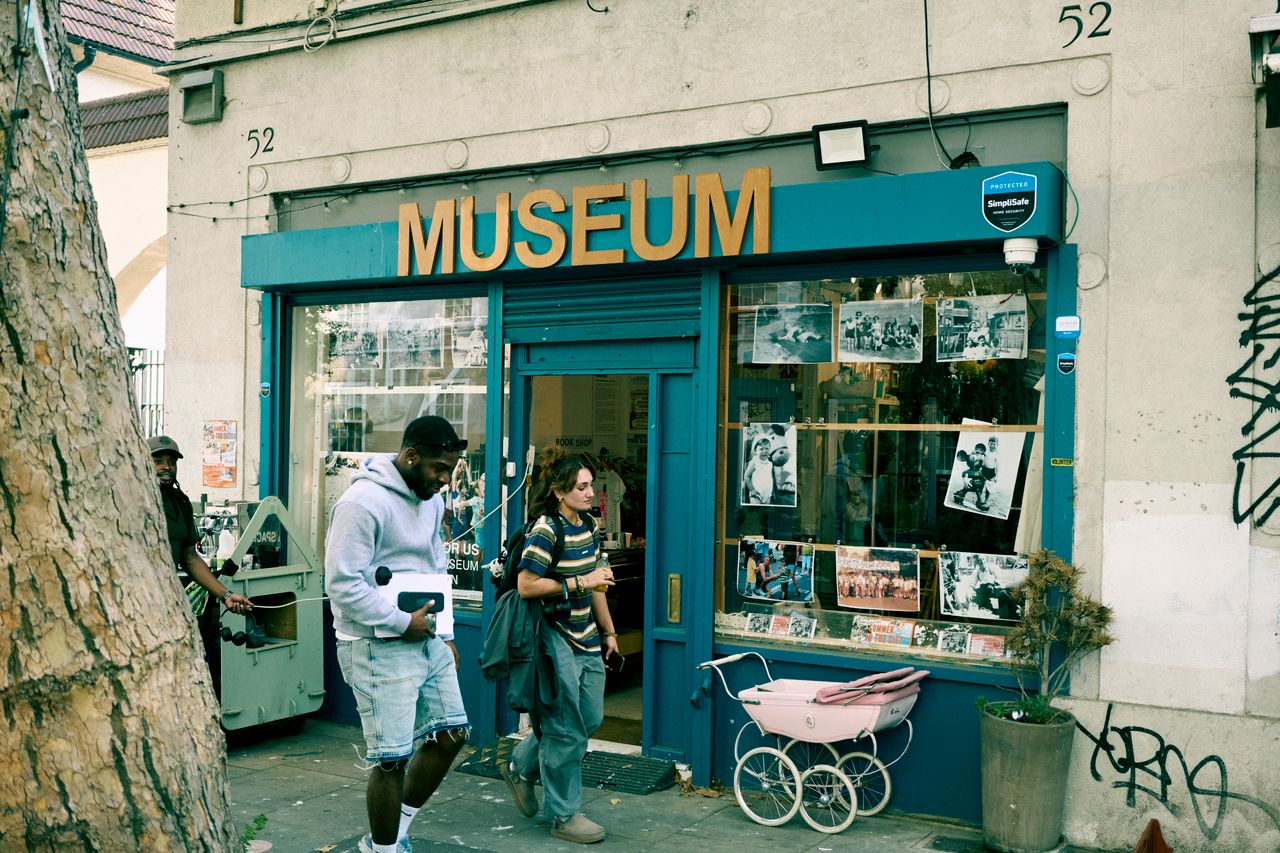
Few people know the local area and its history in such granular detail as Esther Leslie, a professor of political aesthetics and the co-director of the People’s Museum in Somers Town. Leslie is planning to vote Green. “I wouldn’t normally. I’m more of a revolutionary, if one can still say that. [I’m] not that interested in elections… I don’t think [they’ve] got much of a chance, really. I think Labour will walk it.”
Her tiny museum is only a single room packed with information about local, countercultural legacies and potted histories, detailing, among other things, how the area was transformed in the Twenties by the Magdalen Mission and Britain’s first female surveyor. Together, they established St Pancras Housing Improvement Society and began clearing the slum tenements to make way for new flats, culminating in a ceremonial bonfire during which residents set fire to effigies of cockroaches, rats, bedbugs and fleas.
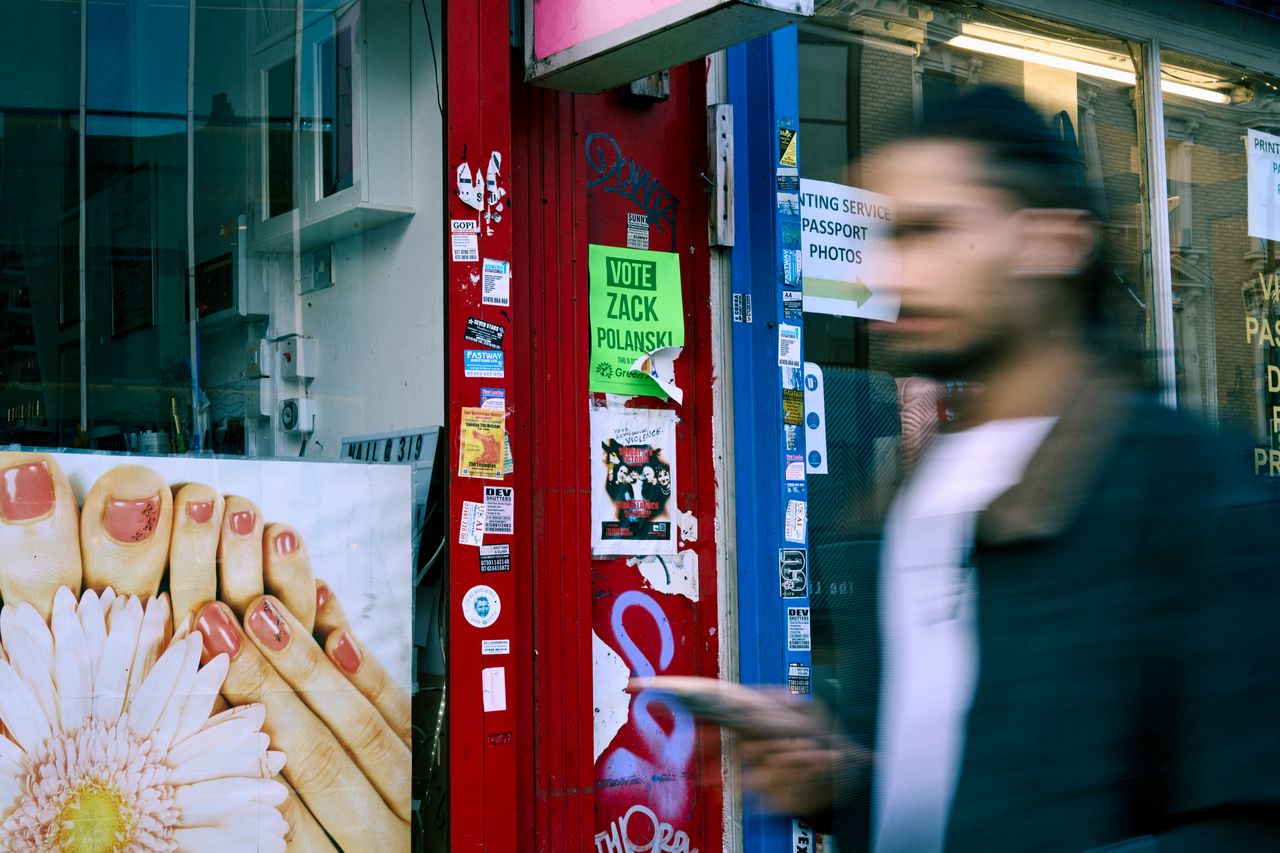
Much of the progress made by schemes like this, seems, in Leslie’s view, to be falling away. “The fantastic housing that this [museum] was set up to honor has been allowed to decay… There’s overcrowding, there’s mold, or there’s just vacant buildings that sit empty for years.” According to the Camden New Journal, there were 356 void council properties in the borough; 43 of these were in Camden Town, “including 13 two-bedroom flats, eight three-bedroom flats and three four-bedroom flats standing empty”. It was recently reported by the North West Londoner that “Camden has recorded a 23% increase in rough sleepers in the last year, the biggest proportional rise of any London borough”.
At the same time, hugely expensive development schemes are rising across the constituency’s four square miles. “The British Library is building this massive commercial tower,” Leslie says, “and underneath it, they’re digging out Crossrail Two Station to link Euston and St Pancras, even though that project has been stopped, but they have to do it in case it comes on-stream again. All of that really impacts people’s lives here.”
But in some ways, the development has improved the area. It’s certainly made it safer. Walk along the now-pristine dock towards Camden Road, you’re far less likely to get mugged or intimidated or hassled. The water looks nice too: fewer sunken shopping carts. But it has also jettisoned much of the area’s unique character in favor of new-build architectural slop. Camden’s newly-modernized Stables Market appears to have lost something vital, a loss that has substituted sordidness for bland marketability. A few months ago I set out to buy a novelty bong shaped like a gas mask for a friend’s birthday, but couldn’t find one, and felt quietly bereaved.
In the lobby of Camden Goods Yard, a massive, multi-million-pound block of flats is being erected by Berkeley Group. In 2025 the developer told planning inspectors it would “mothball” the site if its appeal to cut the amount of affordable housing in the scheme was unsuccessful. Peering out across the lobby is a portrait of Amy Winehouse, the local girl. What might she feel about her image being reconstituted as gaudy art for shareholders to barely notice as they carry on shafting the locals over affordable units? Hell, I wonder what Baudrillard would think.
Down the grotty high street from these £2 million flats is Saint Martin’s Gardens. This park, flecked with gravestones from a previous incarnation as a cemetery, provided the backdrop to John Healy’s unflinching memoir of his time spent homeless among the winos of Camden in the Sixties. “I called it the Grass Arena,” Healy told The Observer, “because, in the parks where the winos congregated, you could never show any weakness.” People still drink there today. On a bench, two young men, Ricky and Ali, are enjoying a lunchtime quarter-bottle of Smirnoff mixed with Sprite, along with a packet of cigarettes. Both grew up here. Both distrust politicians generally but like Andy Burnham. “He seems alright,” Ali says. If they could change one thing about the area, I ask them, what would it be? Ali says housing, but Ricky worries about the empty schools.
As the sun sinks onto Harlesden and Wembley, I find a gaggle of Green canvassers. Horsia, 66, has dedicated her evening to campaigning for the Greens, even though she wouldn’t vote for them in a general election. “I don’t think he’s Prime Minister material”, she says of Polanski. “He doesn’t always speak in a way that that to me appears to recognize the broad audience that he needs to cultivate and bring along with him.” Horsia is a scientist and is profoundly concerned by the climate crisis. She wants an environmental “purist” in Parliament and thinks Polanski could reliably “back the right propositions”. This is interesting, as Polanski has mostly shrunk away from campaigning on environmental issues in favor of the economic and geopolitical. “He needs to get back on it,” she says, “and I’ll be a real mosquito in his ear if he doesn’t.”
Before I can ask more, I’m chased off by a press officer with a smile that reads “Go fuck yourself”. This kind of frantic comms control is unusual for the Greens — but they’ve come a long way since 2023, when the party was struggling to maintain relevance and still had two leaders. The party conference that year felt like a school reunion; lots of friendly faces remembering each other from somewhere or other. The upstart Polanski was very on-message when I met him at that conference. But it was hard to tell whether he truly meant any of it, or whether the former actor had simply learned his lines. After all, just five years previously, he had been a vociferous Liberal Democrat.
So far, Polanski’s stagecraft has served him well. And actors can go a long way in politics: think of Zelensky, Reagan, and Blair. But sticking to the script isn’t always enough, particularly if the script-writing process is member-led and increasingly risk-tolerant. Moreover, the script the members come back with may not care for the people here. They may barely factor in.
Whatever Polanski’s political lifespan, this fragment of north London will outlast him. In many ways it embodies a vital problem of modern politics, that the everyday is fracturing like a broken mirror and everyone is stooping among the fragments. The fragments of Camden and Kentish Town and Holborn and Primrose Hill and Tufnell Park and Somers Town and King’s Cross are all extremely sharp. Sharp enough to cut yourself on if you grasp them crudely.