









Only tedious people share their dreams, but I beg your indulgence. In a recent dream — a nightmare, really — I visited the home of a friend with whom I also have a professional relationship. Only, this was nothing like his home in waking life. It was more like a town designed by M.C. Escher, with numerous side alleys and illogically placed staircases, bridges to nowhere and mysterious tunnels, all haunted by shadowy, menacing figures.
I had to find my friend. The search seemed to go on for a long time, now marked by frightful incidents, now by moments of relief and even inexplicable humor. When I finally did come across him, my friend was in his lair at the center of this labyrinth, holding court before servants and sycophants, who were the shadowy figures from earlier. He had a hard-to-place but unmistakably wicked aspect and was boasting of his villainy to the delight of his audience.
Then I awoke and managed, against my usual habit, not to check my phone — a habit that almost always erases my memory of dreams, no matter how vivid. A few moments of groggy reflection, and I knew exactly what the dream meant. In waking life, I face a difficult decision in this friendship. The details are irrelevant, but the upshot is that if I can fully trust my friend, then I must take X course of action. If I can’t trust him, if he is indeed a false friend, then Y.
The trouble is, the situation is shot through with ambiguity. I can’t know for sure. My nightmare, however, eliminated all doubt by framing my friend as a monster. This, I had to admit, served a psychic purpose: because Y is my preferred path. The dream, then, granted me leave to choose the course of action that best serves my interests, thus fulfilling a deep-seated wish.
If he were still around, Sigmund Freud would no doubt agree with my general way of thinking about dreams as a sort of wish-fulfilling nighttime hallucination. This, even as he’d caution that my interpretation of this particular dream might be a little too easy, too accepting of its manifest content at the expense of the truly hidden meanings it might encode. To get at the latter, I’d probably need to undergo a lengthy psychoanalysis — these days, a boutique treatment preferred by an aging and wealthy few in Upper Manhattan and North London.
Meanwhile, many of my 21st-century contemporaries would tell me that my dream probably means nothing at all. Just a random outpouring of stress and mental dross. And they’d urge me not to bother with the pseudoscientific, perverted theories of a coke-addled Viennese doctor who, in the absence of modern experimental methods, drew his picture of the mind from his overactive imagination. Leave the couch and follow the science.
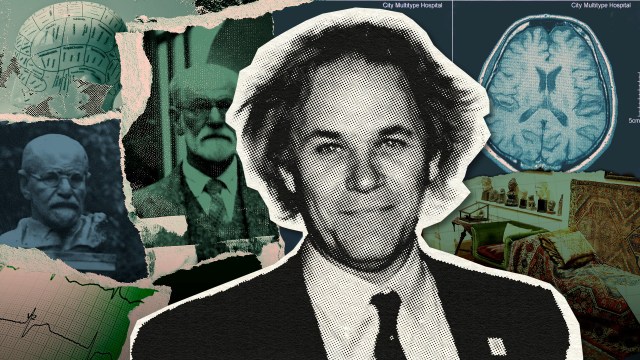
You might be surprised to learn, however, that some of the world’s most authoritative neuroscientists are increasingly parting ways with the anti-Freudian herd. They see psychoanalysis as a fundamentally rigorous enterprise that “takes the life of the mind seriously [and] takes subjectivity and tries to bring it into science,” as the South African neuroscientist and psychoanalyst Mark Solms tells me in a recent video interview.
Credited with discovering the forebrain mechanisms of dreaming, Solms has spent some four decades testing Freud’s insights against cutting-edge science. The results of this lifetime of research are detailed in Solms’s artful new book, The Only Cure: Freud and the Neuroscience of Mental Healing. The upshot is that, although Freud got many of the details wrong, his big-picture account of the mind accords with modern brain science to a degree that is downright embarrassing to his many haters.
While the general public still largely thinks of Freudianism as a discredited relic, neuroscience is quickly circling back to it. Sometimes, this return to Freud is explicit, as in the work of Karl Friston of University College London, among the world’s most-cited neuroscientists (and Solms’s occasional collaborator). More often, though, brain scientists and psychiatrists independently reach conclusions that are identical to Freud’s, or nearly so, but present them under new names, with their debts to psychoanalysis carefully airbrushed out of view.
This new scientific interest in Freud might just renew how we understand and address a mental-health crisis that, in the United States, swallows nearly $300 billion a year — even as Americans become more anxious, more depressed, and more addicted to drugs and destructive vices like online gambling.
Psychoanalysis — unlike the drug-based models that dethroned it and are now being cast into doubt, in turn — insists that mental suffering has meaning. Less an incorrect response to external stimuli or an organic imbalance in the brain than a human riddle to be solved. To cure the patient, as Solms argues, calls for uncovering “the story of his life” and “actually understanding the disorder.” This links psychoanalysis (now assisted by brain science) back to the great humanistic tradition, running from the ancient Greeks, which says that we can’t get better until we see ourselves as creatures who are both biological and meaning-bearing.
Solms’s chief proposal has been to bring this quest for meaning, launched by Freud, into an experimental frame. It has proved astonishingly successful. Large segments of the old psychoanalytic edifice — which Freud himself could only construct on the basis of what his patients told him — are now mirrored in ultra-modern, experimentally and prospectively tested brain science, as we will see shortly.
The prospects appeared dim in the 1980s. That’s when Solms, already a neuroscientist, began considering psychoanalysis. He couldn’t have picked a more inauspicious moment. Freudianism, after half a century of dominating psychiatry, was beset by opposition on all sides: from civil libertarians who deplored the supposedly autocratic reign of Freudian doctors over the state asylums; progressives who accused him of heteronormativity; conservatives who saw him as the fount of modern perversion; radical thinkers who questioned the very existence of mental illness; and insurers and health administrators who groaned at the high expense and long length of Freudian treatment.
The deepest challenge, however, had to do with the scientific status of psychoanalysis. As Solms tells me, when he informed his brain-science peers that he was decamping for London to train as a psychoanalyst, one of them scoffed: “A neuroscientist training in psychoanalysis is like an astronomer training in astrology.”
Yet the prevailing brain science and clinical methods failed to extinguish the “burning mysteries” raised by an early tragedy in his family. When Solms was 4, his older brother, then aged 6, sustained severe head injuries as a result of a fall. The damage derailed his brother’s development, and he became “my embarrassing little brother” (though older in age), as the author recounts in The Only Cure. “What is a mind?” he wondered in the wake of the accident. “How does it arise from within the body, and make people who they are?”
The sheer ambition of Freudian analysis — its claim to unlock just these sorts of mysteries and at a deep level — proved irresistible, notwithstanding the skepticism of his fellow scientists.
Beginning in the late 19th century, Freud’s treatment of patients suffering mental distress led him to a conclusion that he saw as comparable in importance to Copernicus’s discovery that the Earth isn’t the center of the universe. It was that conscious mental activity isn’t the only kind. There were also, it seemed, unconscious processes that only revealed themselves in dreams, jokes, slips of the tongue, forgotten appointments, misremembered names, “accidental” mishaps that really weren’t so, and the like.
Early childhood development, Freud thought, powerfully shaped the unconscious, which, in turn, determined adult personality. In the case of the mentally ill, the unmet needs and confusions and libidinal tensions of that early period expressed themselves in the form of psychic distress: the symptom. By having patients talk freely in his treatment room at 19 Berggasse — at length, under an objective gaze seated behind them — he could help them achieve a new understanding of their lives. In time, this freed patients from the symptom, from the compulsion to repeat the same behaviors that sabotaged their lives and relationships.
Freud’s teaching, of course, went far beyond this core set of insights (about the existence and formation of the unconscious, its role in mental distress, and how analysis can bring it to light). He also offered an expansive metapsychology — a theoretical framework for the mind — that encompassed larger questions about religion, literature, and civilization. This set of ideas proved enormously influential, to the point that Freudian concepts have become part of the cultural air we breathe: resistance and projection; id, ego, and super-ego; castration anxiety; the Oedipus Complex; the pleasure and reality principles; and so on. Freud is thus a touchstone even for those who claim to revile him.
But sheer ambition, intellectual inventiveness, and cultural influence don’t make a science. If this were all that Freud were up to, he would still be celebrated as a major cultural critic, who happened to couch his interesting-but-unfalsifiable ideas in pseudo-medical terminology. Indeed, that’s exactly how many even sympathetic readers receive Freud. Yet as Solms contends, Freud was up to something else. He was, Solms says, a “dedicated and serious scientist,” a daring neurologist determined to study the subjective life of the mind as a part of the natural world.
It’s often forgotten today that Freud spent years as a neurologist and neuroanatomist before he ever invented psychoanalysis. For Solms, it’s impossible to understand Freud the scientist — and psychoanalysis as a scientific enterprise — without paying attention to this phase of Freud’s work. His contributions to brain science during this period are still considered foundational in the field. His account of cerebral palsy, for example, held up as the standard for decades — “yes, really!,” one is tempted to shout in the face of the multitudes who dismiss him as a quack or worse without having ever cracked a page.
Freud, to take another example, laid the groundwork for the neuron theory: the recognition that the nervous system runs on billions of specialized cells called neurons. He also pioneered the functionalist account of the brain, according to which the various functions of the nervous system, such as language and memory, are spread across multiple parts of the organ, rather than being localized in single areas, as had previously been thought. That latter insight was later adopted by Alexander Luria, the Soviet founder of neuropsychology, who, as it happened, began his career as a Freudian before renouncing psychoanalysis, likely under political pressure. (Stalin banned Freudianism as a “bourgeois science” and exiled its great Soviet patron, Trotsky.)
Yet Freud struggled to connect the “stuff” of human subjectivity, as he encountered it in his work as a practicing physician, with his findings as a brain scientist. How did the experience of being a mind interface with having a mind? The problem has bedeviled philosophy down the ages. Freud himself suspected that the two are the same thing under different aspects — one subjective and internal, the other objective and external. (Students of the classical tradition might recognize here a faint echo of the Aristotelian-Thomist idea that the psyche is the “substantial form of the body,” as Aquinas taught; Freud, curiously enough, had studied under an Aristotelian philosopher who’d abandoned the Catholic priesthood.)
In putting this conjecture to work, however, Freud only had access to the subjective mental stuff as it disclosed itself on the treatment couch and in patient case histories — and in dream reports and “accidental” (but telling) mistakes, his own and others’. From there, Freud built a model of what he called the “mental apparatus,” while resisting the temptation to pin its workings on brain anatomy, given the limitations of the science in his time. All along, however, he maintained that “all our provisional ideas in psychology will presumably someday be based on an organic substructure,” as he wrote in a 1914 essay.
Solms’s project — neuropsychoanalysis — aims to unearth that organic substructure. Freud comes out looking very good, indeed.
Let’s count the ways. A good place to start would be the interpretation of dreams (as wish-fulfilling hallucinations). Dreams formed Freud’s central piece of evidence for the existence of the unconscious. But for generations of anti-Freudians, as Solms notes, Freud’s dream work has served as the “paradigmatic example of a theory that didn’t meet the standard” of falsifiability. That’s in reference to the philosopher of science Karl Popper’s idea that truly scientific theories are open to being disproved by empirical observation. Freudian dream interpretation, Popper and his followers charged, can’t even be falsified — his theories “always fitted” the case at hand, as Popper wrote, and thus amounted to pseudoscience.
Is that still true? Or has the picture changed?
For a good while, the leading post-Freudian theory of dreaming belonged to Harvard’s Allan Hobson. It was based on the well-known observation that dreaming coincides with the rapid-eye-movement, or REM, phase of the sleep cycle, when we can observe the dreamer’s eyeballs darting about under the eyelids. REM sleep, in turn, is brought about by a part of the brainstem shooting a chemical at regular intervals (about every 90 minutes to 110 minutes).
So it turns out that Freudian dream interpretation could be falsified, contra Popper, and it was falsified: for Hobson, his finding debunked Freudian dream interpretation. After all, he wrote, “the physiological substrate of consciousness is in the forebrain.” That’s where wishing happens — not in the brainstem, which causes dreaming. Thus, wish fulfillment and dreaming arise from different parts of the brain and can’t be linked together.
But not so fast. Beginning in 1985, Solms began work on the study that made his name. He set out to determine how “damage in different parts of the brain” correlates “with changes in dreaming.” It thus brought together the objective or bodily aspects of having a mind with the subjective aspects of being a mind in just the way Freud predicted, and hoped, that science would one day be able to do.
What he found was astonishing. First of all, patients dreamed even after damage to the part of their brains that injected the REM chemical. Other patients, meanwhile, showed rapid eye movement, even though they could no longer dream, seemingly owing to damage to other parts of their brains. REM and dreaming coincide, in other words, but the REM mechanism doesn’t cause dreaming. Then Solms discovered the part of the brain that does cause dreaming. It’s known as the medial forebrain bundle, which also shelters the “wanting” part of the brain, associated with chemical dopamine. Dreaming, wanting: I wish my friend were a bad guy…
To recap: the effort to debunk Freud’s wish-fulfillment account of dreams had itself been cast into doubt. More than that, as Solms concluded, “if the brain’s dopamine reward system did generate dreaming, that looked good for wish-fulfillment theory.”
To be clear, this doesn’t mean that brain science has cleanly vindicated Freudian dream interpretation. For one thing, as Hobson himself pointed out in a subsequent debate, linking dreaming to the forebrain’s dopaminergic mechanism doesn’t — without more — get us to Freud’s account of dreams as disguising their latent content behind the manifest. What was demonstrated was, first, that a key Freudian theory was indeed falsifiable; and, second, that the Freudian edifice wasn’t nearly as shaky as once assumed. There appeared a nexus — provisional and far from fully understood, to be sure — between the brain’s wishing drive and the tendency of our dreams to fulfill our embarrassing wishes.
But this raises the question: could other lines of neuroscientific inquiry fill in some of that “without more”? Solms’s answer is a resounding yes.
Consider the unconscious. Freud described human memory as stored between several different memory systems: conscious, preconscious, and unconscious. The standard neuroscientific picture of memory today is analogous to this, and it may bridge the gap between the wanting circuit and the censorship mechanism that leads to bizarre dreams, slips of the tongue, etc.
Modern neuroscience uses “short-term memory” or “working memory” to describe consciousness. This is the system that holds “what you are aware of right now,” as Solms writes. Space is necessarily limited — you can only access so much information at one time — and so consciousness is constantly trading content with the preconscious system, or what brain science now calls “declarative long-term memory.” To get through life, our brains constantly consolidate and reconsolidate new and existing information, sending material up from declarative long-term memory to short-term memory and rewriting both in light of each other.
But there is a third system, called “non-declarative long-term memory,” because its content “cannot be brought back into consciousness,” as Solms says. Freud called this the unconscious. It isn’t, as is commonly believed and portrayed in Hitchcock and David Lynch films, a “shadow realm full of trippy detritus.” Rather, it’s best thought of as a set of “policies” that regulate behavior in light of what the subject believes, often mistakenly, to be the most efficient means of meeting its needs. It can be thought of as an automatic process of prediction — prediction being closely linked to wishing and wanting. The unconscious determines how we predict.
Thus, for example, the subject who only received loving parental affection in the breach, when acting out or falling into crisis as a child, may develop an unconscious policy of acting out or generating crisis in her grownup relationships, recapitulating the destructive pattern set down from an early age. She must lose her keys to get her boyfriend to leave work early and help her — right away. And even his anger is welcome; better than being ignored. That is, until the boyfriend gets fed up, and the relationship breaks down.
Repetition, constantly tracing the same circuit set down by childhood trauma, is of the essence of the psychiatric symptom. It is the form of the symptom.
Classic Freudianism almost stereotypically linked all this to the sexual life. Yet Freud’s singular focus on sexual pleasure is one of several areas in which Solms parts ways with the master. “It wasn’t,” he tells me, “that Freud focused too narrowly on sex. It’s that he widened the meaning of that word too much. He said, all of these things we do are for the purpose of pleasure. Therefore, sexuality is not synonymous with reproduction; sexuality is synonymous with pleasure for its sake. And then he said, therefore, anything you do for pleasure’s sake, I’m going to call sexual.”
Thus, we get the almost cartoonish Freudian tendency to discern a sexual motive in the most mundane and innocent of daily activities. Why do we like chocolate? Because it generates oral sexual pleasure. Drawing on modern brain science, by contrast, Solms discerns multiple categories of pleasure, of which the sexual is but one. (In the case of chocolate, it’s the pleasure associated with nourishment and replenishing the body’s energy supplies; sometimes a Cadbury bar is just a Cadbury bar.)
And this is one of several areas where Solms is perfectly prepared to revise orthodox Freudianism. There are aspects of the classic theory which are clearly the result of the scientific limitations of Freud’s time or the man’s own overconfidence in his total theory of the mind. What matters more, for Solms, are the broad structures. And it is critically important to treat even these as scientific theories, which means: subject to revision in the light of evidence.
Sadly, such an attitude wasn’t always normative among analysts. Freud himself, though hopeful of one day putting psychoanalysis on a firm biological footing, was too often quick to dismiss efforts to empirically test the talking cure. One early empirical researcher, as Solms notes, approached him in 1936 with limited evidence in favor of psychoanalysis, only to be gently shooed away by Freud on the grounds that what happened in the treatment room spoke for itself.
Then, too, he sometimes embellished his case histories with just-so stories that vindicated his theories and the treatment. Take his famous study of the “Wolf Man” — Sergei Pankejeff, a Russian aristocrat who suffered from a debilitating obsessive disorder, supposedly as a result of having witnessed, as an infant, his parents copulating “doggy-style.” This “primal scene” had created in Pankejeff a terrible fear that his father would castrate him, as he had apparently done to his mother.
Having unraveled the mystery of the primal scene, Freud claimed, Pankejeff was cured (this, even though in the very same case history, Freud conceded that he couldn’t be sure if the primal scene involved the patient’s parents or animals he’d seen on the family estate). Decades later, when Freud was long dead, Pankejeff went on the record with a journalist to claim that he couldn’t be sure if the primal scene wasn’t, in fact, the analyst’s invention. Plus, contrary to Freud’s assertion of a definitive cure, Pankejeff remained in therapy almost to the end of his life.
In such instances, Freud himself laid down traps that would later ensnare his successors. “Hubris on the part of the psychoanalysts was a big part of it,” Solms tells me, “an overestimation of themselves, by themselves and by the public.” Some analysts pronounced oracularly, vainglorious in their position as “the subject supposed to know” — the role that, according to the French analyst Jacques Lacan, patients incorrectly ascribe to the therapist. It is, in fact, the unconscious itself that “knows” — the analyst merely helps to draw it out.
But many of the external attacks were indeed underhanded, and reflected the broader intellectual poverty — and steady marketization of all realms of life — that have characterized the West in recent decades. Psychoanalysis, Solms tells me, also fell out of favor because its slow pace and emphasis on deeper causes and deeper meaning were out of tune with an age that demanded “quick fixes.” And one in which “it’s much easier to believe that you can take a pill and change your life — but you can’t.”
Speaking of pills: overconfidence wasn’t the exclusive domain of the Freudians. As Solms points out, when powerful psychiatric drugs emerged beginning in the 1950s, their proponents, too, thought they had hit upon an unimpeachable method. Now, drug-based therapies too are facing a reckoning as patients increasingly speak out about the downsides of SSRI anti-depressants, and as prescriptions, Big Pharma profits, and rates of misery seem to rise in tandem.
Solms isn’t categorically opposed to drug therapies. For some forms of severe mental illness, such as psychosis, the best that can be done is to manage the worst of the symptoms with drugs. But emphasis on manage: psychiatric drugs, he argues, can’t cure mental illness, period. In the case of a psychotic patient, for example, “the mere fact that the withdrawal of a drug that has been taken chronically causes the person — more or less immediately — to flip … that shows that the drug hasn’t cured the condition,” says Solms.
His “bugbear,” he goes on, “is the claim that the cause [of mental illness] is a chemical imbalance, and that you can therefore treat the cause by giving a drug that replaces the missing chemical, as it were. … The reasoning there is the same as saying that if you take an opiate when you’ve got a headache, and it takes the pain away, that means pain is caused by opiate deficiency. It’s as stupid as that.”
Fair enough, but even if insurers and HMOs could be persuaded to cover psychoanalytic treatment, is it a feasible solution on a mass scale? It’s surprisingly effective, for starters. Contrary to all those Woody Allen jokes about being in therapy for years and years, to no good effect, numerous studies now show that psychoanalytic therapy far outperforms drugs and treatments-as-usual. Writes Solms, “For certain conditions, even short courses of psychoanalysis seem as dependable as, say, insulin for managing type 1 diabetes, or the HPV vaccine [for] preventing cervical cancer.” Not all patients need to undergo the full classic analysis, but some of the principles can be imported into other treatments.
That should include elements of the Freudian ethic or philosophy, which Solms the neuroscientist somewhat eschews. That ethic can be highly demanding — again, contrary to a pat, simplistic line of thinking in which Freud is to blame for a “therapeutic culture” that for generations has robbed people of moral agency. On the contrary, insofar as there is a Freudian ethic, it can be strikingly conservative — not in a culture-warring Right-wing sense, but a tragic one: it describes people as caught between powerful drives, not least the erotic, and the limits imposed by reality, including our species’ need for order and self-perpetuation. The biological and cultural landscape of Freudianism isn’t infinitely malleable, it isn’t open to infinite emancipation.
It can be, as Solms says, “a rather dark philosophy.” Its founder’s strident atheism is an affront to believers like me, though, over the decades, there have been plenty of religious analysts, and fruitful dialogue between the great faith traditions and the talking cure — starting with Freud and his friend and fellow analyst Oskar Pfister, who was also a Protestant pastor. The overlaps, though of course rejected by Freud himself, aren’t accidental. At its best, psychoanalysis calls us to responsibility; teaches us to compromise with reality; and to strive for a mature, genital (in the full sense) personality, capable, as Freud is said to have put it, of “love and work.” And capable, too, of confronting its own darknesses in dreams as in waking life.
Sohrab Ahmari is the US editor of UnHerd. His next book, on The Triumph of Normal, is forthcoming from HarperCollins.
 SohrabAhmari