









September 21 2026 - 7:00am
Two state elections held in Germany on Sunday constituted a make-or-break moment for Friedrich Merz — and the German Chancellor’s authority has been shattered. Results that Merz called a “disaster” for his Christian Democratic Union (CDU) party put in doubt the future not only of his leadership, but of centrist politics in Germany as a whole.
In Mecklenburg-Western Pomerania, the anti-immigration Alternative for Germany (AfD) became the largest party, following closely on the heels of its crushing victory in Saxony-Anhalt earlier this month. As in Saxony-Anhalt, support for the AfD skyrocketed, increasing by more than 21 points since the last round of state elections. The CDU, meanwhile, collapsed to a vote share of below 5%, its worst ever state election result, meaning it fell out of the state parliament altogether.
Nonetheless, the AfD is unlikely to take leadership of the next state government. Unlike in Saxony-Anhalt — and despite a 38% vote share — preliminary results suggest that the centrist “firewall” against the AfD will hold, largely thanks to the individual popularity of incumbent center-left state premier Manuela Schwesig, whose Social Democratic Party (SPD) came close behind on 35%.
Centrists will, however, be even more concerned by results in Berlin, where the Left Party swept to victory. The party’s campaign took a leaf out of New York City Mayor Zohran Mamdani’s book, promising Left-wing populist solutions to cost-of-living issues, including a controversial plan to expropriate properties from real-estate companies owning more than 3,000 apartments.
Also like Mamdani — and, it should be said, like the AfD — the Left Party has been dogged by allegations of antisemitism. The Central Council of Jews in Germany condemned the party’s win, suggesting that chants of “Death to the IDF” led by a rapper at a recent Left Party campaign event were a call for another intifada.
Only two other parties saw their vote share in Berlin grow: the AfD, which finished third on 16%, and the anti-establishment Sahra Wagenknecht Alliance (BSW). None of the city’s three growing forces are part of the centrist firewall, although there is obviously a world of difference between establishment attitudes towards “extremists” of the Right-wing and Left-wing varieties.
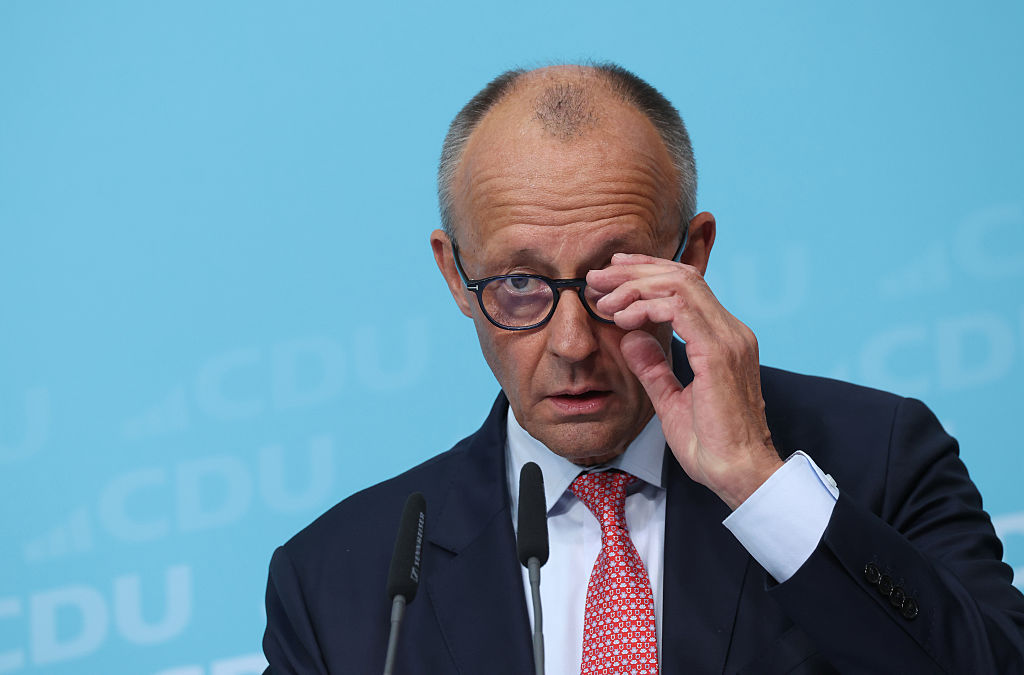
Merz’s Christian Democrats were undoubtedly the biggest losers of the day, seeing precipitous declines in both states. “We can’t sugarcoat the results in Mecklenburg-Western Pomerania,” Merz said on Sunday evening. “It’s a disaster.” His determination to lead his party appeared unshaken as he insisted that his government’s program of economic reform is “the antidote to the poison of authoritarianism”. While there was no mistaking which party Merz was referring to, the elections showed that it is not only the dominance of the AfD that threatens the future of the centrist bloc. The rise of radicals on both the Right and Left, from the left-behind communities of the former East Germany to the diverse neighborhoods of trendy Berlin, illustrates widespread disillusionment with the political establishment.
The CDU now faces an existential choice. Its longstanding preference for cooperation with the Left over the AfD increasingly comes across as an abandonment of its core Right-wing voters. Speaking in Berlin after the election result, AfD leader Alice Weidel said Merz can “no longer stay in office” and called on the CDU to break the firewall, pointing out that coalitions between her party and the Christian Democrats could already have formed Right-wing governments at both state and federal level. She added that the AfD’s goal is “to hold coalition talks with the CDU in the long term, but we will under no circumstances compromise our positions”.
Her message was clear: the AfD is the future of German politics, and the centrist bloc is the past. Working with the AfD, rather than continuing to deny its legitimacy, may be the only way for Germany’s center-right to avoid a slow and painful political annihilation.