









September 20 2026 - 5:00pm
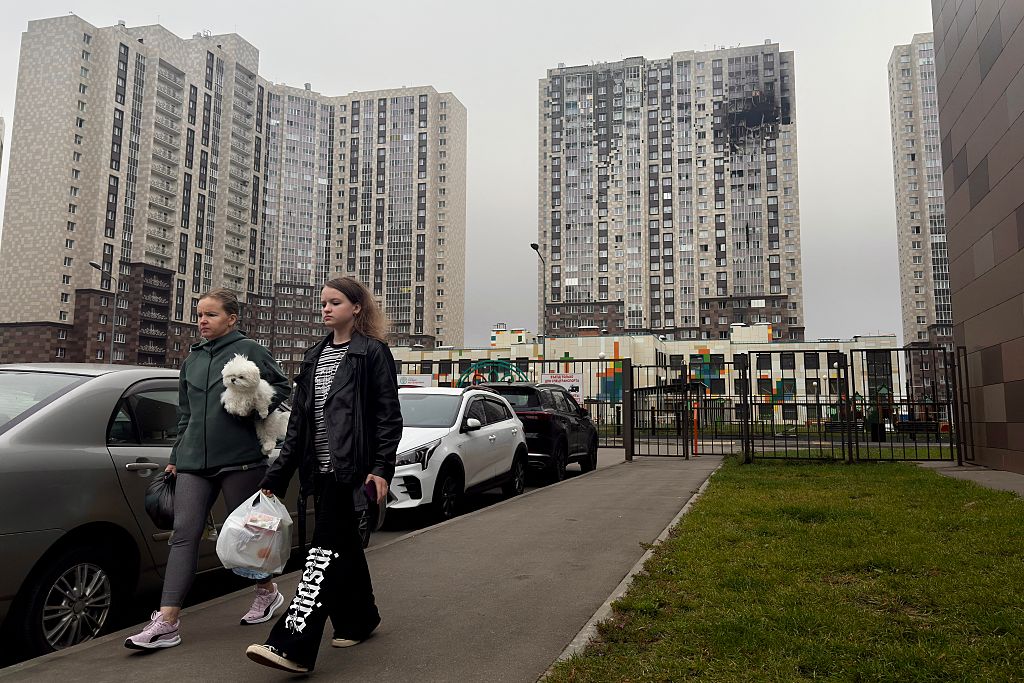
Last night, Ukraine launched its largest attack yet against Moscow, with the Russian defense ministry claiming to have shot down 1,110 drones across the country. At least two people in the capital were killed, all three of the city’s major airports had flights grounded, and the main oil refinery was hit.
As the city’s Mayor Sergei Sobyanin noted, the assault was designed to disrupt Russia’s parliamentary elections, which conclude today. Ukraine has a clear interest in making Vladimir Putin look vulnerable and incapable of defending his country just as voters go to the polls. Then there is the joy of stealing headlines from the Russian leader: the images traveling around the world are those of a city in flames, not of an orderly, stage-managed victory.
Kyiv is undoubtedly eager to rain (drones) on Putin’s parade, while casting doubt on the legitimacy of a result that the Kremlin intends to portray as a display of public support for the war. However strong the eventual showing for war veteran candidates and the United Russia party that backs the President, Putin now cannot claim that the election was conducted smoothly and fairly, given that it was disrupted — and any number of voters kept away — by attacks.
Interrupting voting in the occupied territories complicates the Kremlin’s efforts to incorporate those areas and treat them as simply “another Russian region”, further reminding Putin that Ukraine will continue to contest the annexation. Earlier this week, an election official was killed in a drone strike in a Russian-occupied part of Kherson as a warning to collaborators. Finally, Ukraine wants to reduce the number of pro-war votes, impeding Russians from participating as well as ensuring that those who do enter the voting booth feel the consequences of supporting the conflict before casting their ballot.
Still, it is doubtful whether such tactics can reap the desired benefits. If Ukraine has, as the Kremlin alleges, been interfering in Russian election processes, it can hardly complain when Moscow next does the same. Besides, any attempts to reduce levels of support for the Russian leadership cannot compete with the fraud and intimidation that the Kremlin deploys in a controlled election process. There are no anti-war or anti-Putin candidates for voters to select in protest — and even if there were, the President would not end the war simply due to the views of his people.
No matter what the Kremlin says, the world knows the election result to be manipulated, rendering any subsequent war of words about legitimacy a waste of time. There is also the risk of sparking a “rally around the flag” effect. Russians under Ukrainian fire may be more inclined to vote in such a way as to strike back at those attacking their homes and encourage Putin to escalate the conflict.
And then there is Donald Trump to consider. The US President was boasting earlier this week that he had brokered a truce between the two sides on energy strikes. In his eagerness, he announced this achievement so prematurely that it surprised Ukrainian officials. Moscow is loath to engage, since Putin intends to use this winter to pound Ukraine’s energy infrastructure in a bid to force concessions. But as the most reliant — and therefore least favorite — of Donald Trump’s allies, Ukraine always receives the blame. Last weekend, he lashed out at Volodymyr Zelensky, telling the Ukrainian President “to stop knocking out diesel fuel in Russia”.
High diesel prices on the eve of the US midterms do not augur well for Trump’s Republicans. The US President is unable to admit that his ongoing conflict with Iran may be a contributing factor, instead pointing the finger at Russia and Ukraine’s energy war. Zelensky can expect rage from the White House, given that this latest large-scale assault not only helps drive up gas prices but also publicly demonstrates Trump’s inability to get any kind of enduring ceasefire in place.
Moscow’s voters went to the polls in a city full of fire and beneath a sky full of drones. Kyiv can congratulate itself on embarrassing Putin on Russia’s election day. But it has also embarrassed the US President in the process. Ukraine should remember that America’s voters can easily turn against their leader, whereas Russia’s cannot.
