




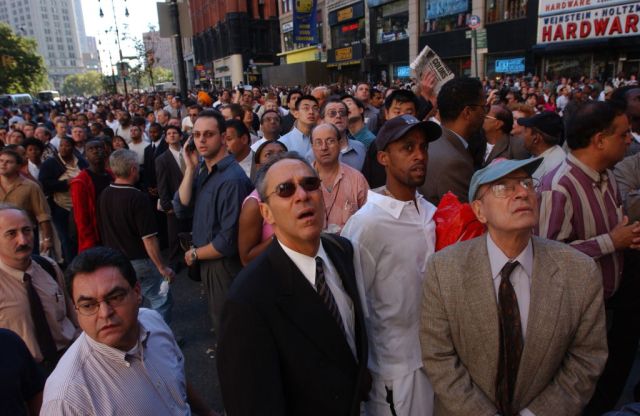
New Yorkers watch the 9/11 attacks. (Spencer Platt/Getty)





When I visited the trenches of northern France a century after the First World War ended, I found farmers’ plows still turning up munitions and dead men. Like little children who enjoy tasting the sweetness of ant poison, we harm ourselves out of ignorance of past causes. Unexploded ordnance may or may not hurt us — better to stay clear. In cases of foreign policies deployed by variously zigzagging administrations, we lose sight of which boobytraps were buried where and why. Even when there is continuity in government, we forget our own doings until they detonate.
Thus 11 September, 2001, that dire shock whose collision momentum irresistibly knocked us out of reality as we had understood it — perhaps because we had failed to understand it accurately — and into something terrifying, agonizing, unformed. Maybe Pearl Harbor felt like this, at least to isolationist homebodies who ignored developments in Poland and Manchuria; the American Civil War, calamity though it was, had telegraphed itself for years; sad John Quincy Adams intuited its approach though he died before it came.
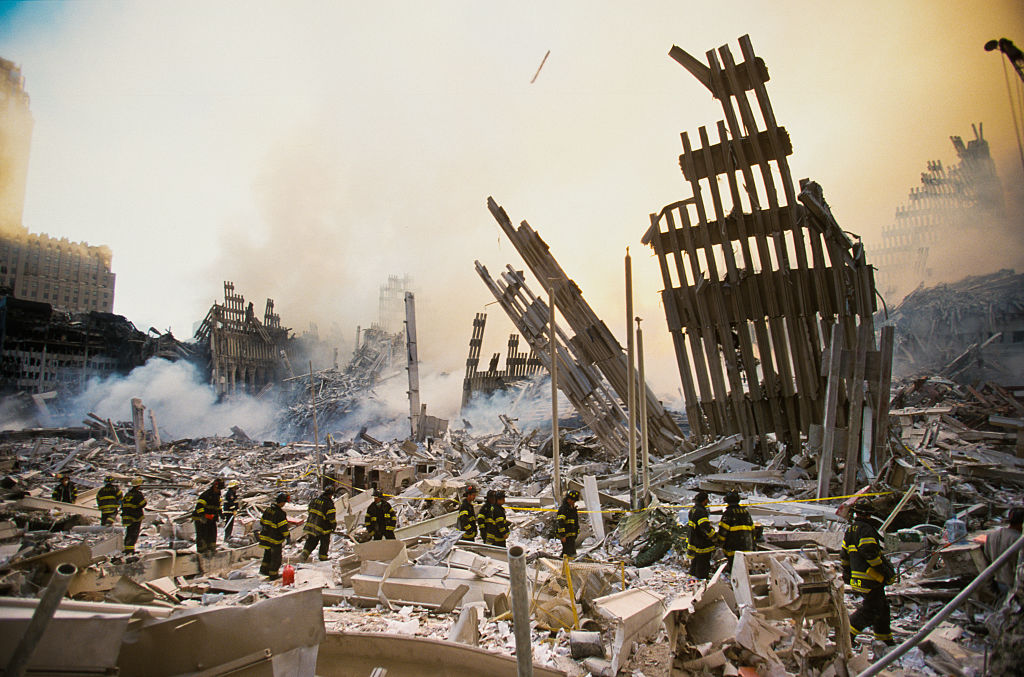
And then the little child got a stomach ache; the bomb went off; the South seceded and a pair of hijacked planes slammed into the Twin Towers. At first we were bewildered. We could not understand “why they hate us”. But in its own time, the new reality grew distinct. It was necessarily grimmer than the old, because we were at war with shadowy murderers to whom we had paid too little attention.
If this were a happier essay, I would write that the shock improved our comprehension of the world, but that isn’t so. Not long after we invaded Iraq in 2003, to confiscate imaginary weapons of mass destruction and punish Saddam Hussein for 9/11, with which he had absolutely nothing to do, the Iraqis whom we were impoverishing, torturing and shooting very naturally began killing ever more of us and each other. In 2004, I was in California’s Imperial Valley, a poorish, agricultural, fairly pro-military place, when I heard people say: “We liberated them, but they don’t appreciate it. We’re trying to help them, but they’re mean.” And why had the 9/11 hijackers been mean? Well, “they hated us for our freedoms.”
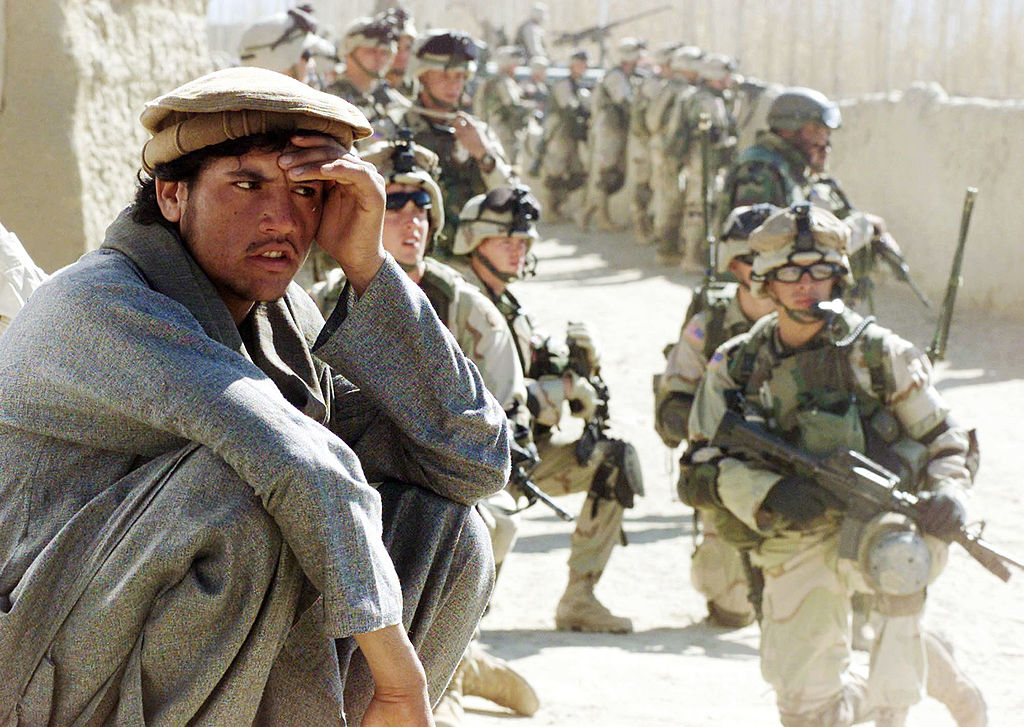
We the Americans (never mind the politicos who got us into this) were the little children who maybe or maybe not should have known better, and 11 September was the ant poison left over from the Cold War. When the Soviets invaded Afghanistan in 1979, that was a vicious atrocity; hence we were right and just to support the Afghan resistance. However, we should not have collaborated with the Saudis on bankrolling, arming and letting loose Islamic extremism. We thought we could stir up the Mujahideen to bleed the “Evil Empire” — which they did — Roger, Wilco, over and out! — but what then? Spent, the Russians withdrew in 1989, while we rested on our laurels.
Right then, when the Afghans were still grateful to Reagan and the CIA, we could have spent a pittance on mosques, hospitals, running water and girls’ schools, and maybe helped to build peace. In Yemen, I have seen schools and clinics labeled “A GIFT FROM THE EUROPEAN COMMUNITY”. In 2002, at least (I have not been back since), the Yemenis remembered those gifts. They did not hate the Europeans as they hated us. As for us, buttoning up our wallets, we walked away from the Afghan warlords we had enabled. Once the power vacuum grew literally murderous, the Taliban sprang up, promising to replace robberies, kidnappings and rapes with a literalist Muslim society — an awfully persuasive response to the atheists who had burned women alive and drowned “reactionary feudal elements” in Marxist-Leninist cesspools. What tune were we whistling then? The Afghans had served our turn, so about them we no longer cared a rat’s ass. Now we could crow about a “peace dividend”.
***
Osama bin Laden was a brave and effective Mujahid. Maybe he took our money, or possibly he sucked entirely on Saudiya’s tit. When did leaving him alone with his toys and zealots become imprudent? This ordinary citizen cannot say. But once he commenced uttering explicit threats, meanwhile appearing implicated in terrorist acts, why wasn’t he stopped? Much has been written about the cavalier indifference of the Bush administration, which preferred to look for excuses to “take out” Saddam. The intelligence community itself blamed “the wall” imposed by Congress in the Seventies, after revelations of FBI-CIA collusion in various abuses, including widespread illegal surveillance of American citizens. This partition between spookish entities, we are plausibly told, prevented FBI and CIA cadres from sharing enough information to “connect the dots” and stop the hijackers in time. As the 9/11 report told it, “the wall” now “regulated the manner in which such information could be shared from the intelligence side of the house to the criminal side. These procedures were almost immediately misunderstood and misapplied.” So down came “the wall,” and, to the government’s credit, I will say that there have been no 9/11-sized attacks on American soil since 2001.
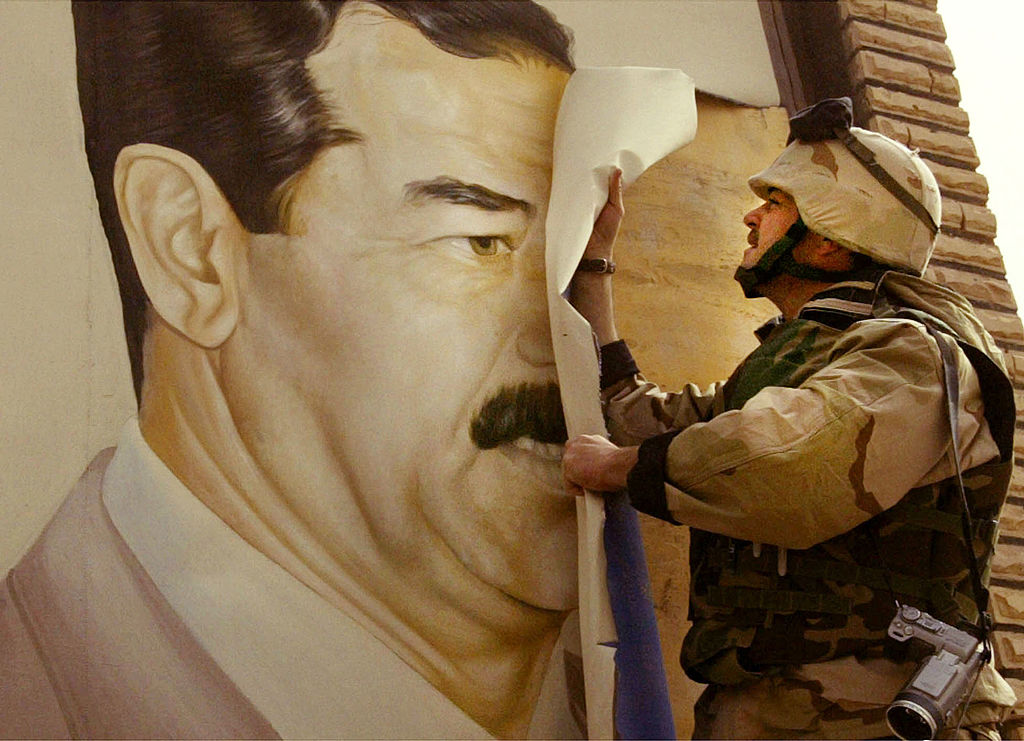
Of course, thousands of Middle Eastern civilians have been killed to further that outcome. How many died for no good reason? How many were justifiably tortured? (My answer is none, because I disbelieve that torture is ever justified. But in my magisterial objectivity let me now quote a “CIA veteran” from the other side, circa October 2001: “A lot of people are saying we need someone at the agency who can pull fingernails out… The only question then is, do you want to have CIA people in the room?”.) How many suitcases of hundred-dollar bills have passed out of oversight? What cost have we paid in civil liberties to achieve our tenuous tranquility? I remember the so-called PATRIOT Act, one of whose provisions was that librarians must on request turn over a list of books checked out by a specific patron, and then keep secret from him or her that the list has gone to the government. Ah, freedom; oh, democracy! We citizens gave in and gave up; we left PATRIOTic tricks up to our protectors, because by definition they knew best. But did they? Has the War on Terror been making us more or less safe?
This August, I was reporting from Kuwait, where I found significant hatred of America and Israel. Our stupid, vicious bully of a President goes on exacerbating Muslim hostility with his Iran war, which in Kuwait has increased food prices and triggered retaliatory Iranian drone casualties to people and infrastructure. One man told me that while he did not support Iran “even 1%”, he stood against America “more than a thousand percent.” His position requires a fairly lofty will-to-hate. That is why I see another 11 September coming. Maybe this time it will entail swarms of drones. Meanwhile, we go on making enemies and strengthening their accusations against us. I guess that’s the American way.
As the 11 September report admitted: “Coalition warfare also requires coalition policies on what to do with enemy captives. Allegations that the United States,” to take just one instance, “abused prisoners… make it harder” — who would have thought it? — “to build the diplomatic, political and military alliances the government will need.”
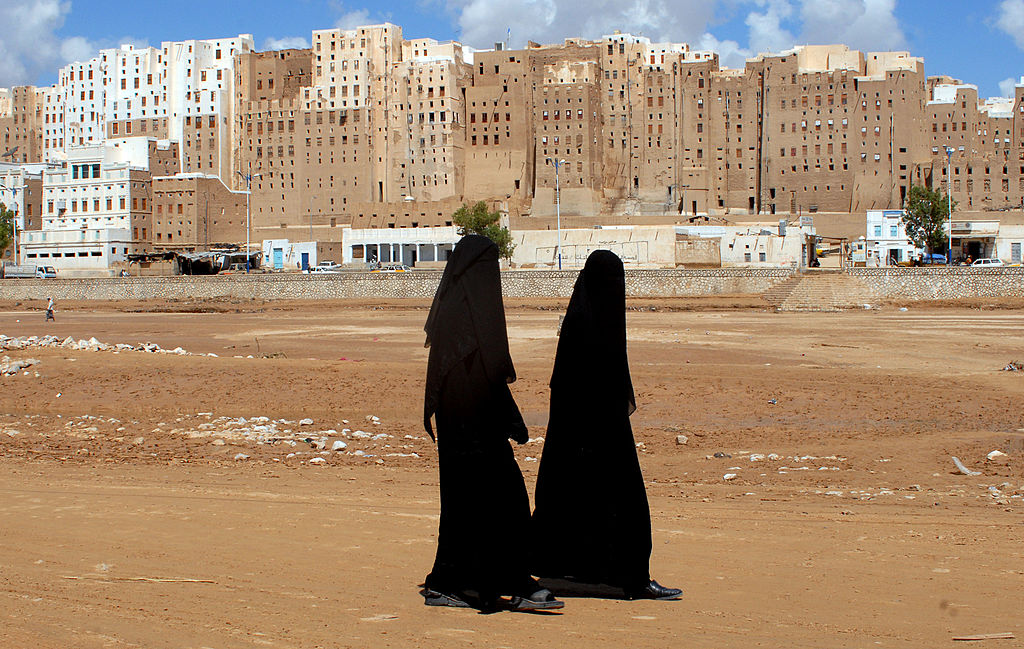
The victims of 9/11 were innocent, and their murderers evil. I am grateful to the intelligence community for killing the killers. As for the waterboarders and blithely careless shooters and detonators (doubtless they are still at it in some “black site”), how can they not make war into a perpetual motion machine? We citizens never know what well-intentioned cruelties they are up to today and tomorrow. And how can we imagine what we cannot see? From Yemen I remember rectangular windows and round windows like kaleidoscopes of multicolored glass, and, in the old city of Shibam in Hadramawt, a cluster of gingerbread or halvah blocks very occasionally ornamented with satellite dishes. My friends and neighbors will likely never go to Yemen. If they ever hear that we dropped a Predator drone over there, that will mean as much to them as learning that we did something classified on Saturn.
The US, we are told, has a representative government. Abe Lincoln called himself our servant, as well he might. Although King Donald takes furious exception, our representatives are supposed to be temporary servants. (Just wait until he makes terrorism great again in his illegal third term!) In Congress and the judiciary branch, decisions made on our behalf are least supposed to be public. As for the executive branch, its purpose, wrote John Adams, is to do whatever must be done with secrecy and dispatch. Obviously, when the Twin Towers fell, the American masses remained in and of themselves unqualified to decide how to react. How many could have distinguished Iran from Iraq, or located Yemen on a world map? How many could say that Saddam was or was not a 9/11 kingpin? So the chief executive decided for America: get Iraq! I do wish he had worked with other world leaders to map out al-Qaeda targets, instead of dragooning his “coalition” into an unjust war based on a lie.
As for his war with Afghanistan, was it effective? Did it gain its purpose? With our military out, and the Taliban inevitably as strong or stronger than before — Americans go on disbelieving in their populist appeal — I can’t exactly applaud Bush’s victory. But maybe we killed a lot of bad guys, and not so many good guys as to create more bad guys than before we started. How can I know? Doubtless he’s proud of his accomplishment.
***
Yes, we Americans remain blind to Yemen, though even an ill-educated ISIS cadre may possess an excellent visual understanding of his sector of Target America; thanks to the internet he might even have soared up the 405 past the Getty Center, exiting at Mulholland Drive to ascend the green coastal hills and then roll down across stone canyons and round the moist green hills with the San Fernando Valley below; there are the enemy’s white houses; perhaps he hates the more expensive ones most; let’s say that he sees Los Angeles as we cannot see Hadramawt, but does he see us, the ones whom he would kill? I remember chatting with some Talibs about Americans. That was how I learned that we are all prostitutes, gang bangers, homeless addicts, perverts pornography addicts; because these men had all worked in the United States, and therefore thought that they knew us; of course the only work they could get was pumping gas in the red light district, selling cheap liquor to alcoholics or manning the counters of “adult” bookstores. No wonder they had a bad notion of us. And no wonder, too, that my neighbors can’t tell a Talib from a Shi’ite from a Sikh. (“Come on, Bill; they’re all ragheads!”) What turban-wearers do they ever see on their screens but America-hating evildoers?
Again I propose that we set aside a fraction of what we burn on surveillance and drone strikes, and spend it on what will benefit people, and make them friendlier toward us. After years of careless carnage and brutality, it will take more years to soften their hearts. But why not build schools? If the Islamists blow them up, build them again. The locals will take eventual note of who seems to be addressing their interests. Otherwise we can “shock and awe”, but then what? We believe in our own kindness, so why not convince them of the same?
At home, meanwhile, we are now proving the Talibs right by spreading libels about non-white, non-Christian immigrants. Texas politicos fulminate about clearing their state of Muslims. Well, then, why shouldn’t Muslim countries cleanse themselves of American military bases?
I wish, here, that American Muslim organizations would more clearly distance themselves from extremists. I wish there could be a place (or, as post-9/11 Americans would say, “a safe place”) for Muslims and non-Muslims to meet, possibly to share food or practice calligraphy (illuminated Qurans are some of the most beautiful works I have ever seen). You see, I am a lucky man. I can wish away without responsibilities, and keep blaming others.
***
The UK has endured a heartbreaking number of high- and low-level terrorist attacks. From my possibly outsider perspective, it seems that many Muslim immigrants have integrated into British society sufficiently to live anonymously, but not enough to feel accepted. Perhaps it is like that in the Algerian neighborhoods of France, the petri-dishes of Belgium and Germany.

My conclusion — an impractical one in my country now that the Bigot-in-Chief is deporting people right and left — is that immigration ought to be managed mindfully. It should benefit both the hosts and the new arrivals. In a better America, a municipality with a shortage of workers might bid to take, say, 1,000 people, in exchange for infrastructure grants or tax breaks. If the new arrivals are Muslim, then an organization such as the Committee on American-Islamic Relations (which somebody in Texas has pronounced terrorist; for my part I am fond of it and its members) could arrange a meet-and-greet, perhaps with some church volunteers, to teach the respective parties that in our country women can wear short skirts (or have sex with other women) and that no one should be forced or tricked into consuming pork and alcohol. Whenever I go to a foreign place, I feel more at ease once I have found a big brother or big sister to teach me the local mores and help me make friends. Why wouldn’t a new immigrant feel the same?
Meanwhile, one thing I can do right now (as can you) is to reach out to those who seem “other” or even positively alien, before their feelings of rejection render them isolated and estranged. It is the grinding little quotidian incivilities that irritate us into resentment.
Consider the possibilities. We could close our borders, abandon our global capitalist empire to China and Russia and devolve into an autarky. Without cheap imported plastics, rare earths for their cell phones and a committed export market, even the most radical Trumpeter Swans might grow disgruntled then. Or we could isolate and surveil immigrants in hopes of precipitating out the haters. My suspicion is that this treatment would defeat its own purpose. (In 2004, according to the International Committee of the Red Cross, 70 to 90% of Iraqi detainees “had been arrested by mistake.”) Or, thirdly, we could welcome them into our community and treat them according to the Golden Rule. Which of these would be easiest, cheapest and kindest?
***
The Pentagon Papers proved that American Presidents were willing to escalate an ever-more-obviously unwinnable war in Vietnam to look tough in elections. As for our 9/11 goon squad — Bush, Cheney, Rumsfeld, Condoleezza Rice and that bunch — it might despite warnings from the intelligence community have truly believed that Iraq was behind the attacks Or, perhaps, they simply felt impelled to “do something”, with Iraq already on the “to do” list. Who can say? The executive branch’s necessary Adamsonian qualities of secrecy and dispatch protected it from oversight and embarrassment long enough for Bush II to steer the country into disaster and then step down without fear of punishment.
One of the most serious deficiencies of our rotating representative system is that any chief executive’s theory of foreign policy can suddenly be contradicted and undone by his successor. Just consider the sharp transition from Carter to Reagan, or Clinton to Bush II. And so, returning to the matter of the Afghan Mujahideen, who drove out the Soviets in 1989, we can if we like blame Bush I, who as a former CIA supremo should have understood the necessity for maintaining ties with his proxies and their weapons;.ut we could also point a finger at Clinton, in whose time Afghanistan grew more volatile — why didn’t he re-engage with the people who were still our friends? (A year before 9/11, the Talibs were still in my hearing expressing gratitude to America.) Did anybody in Washington care?
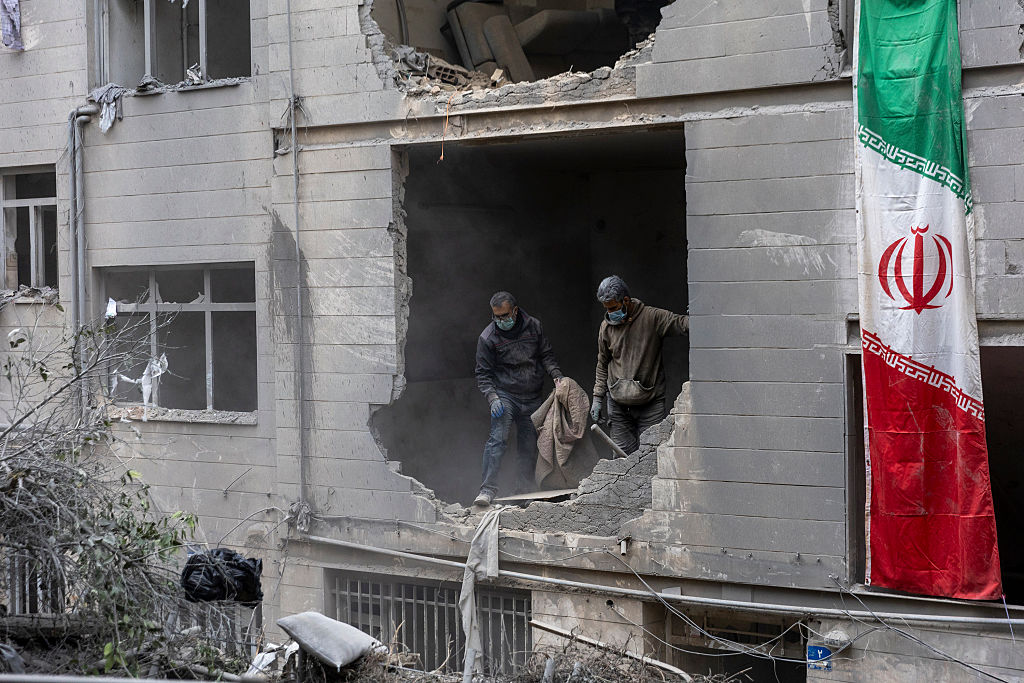
It would be lovely had there been some sage at State and Defense to assure us: “We’ve been following this issue ever since we ramped up the Mujahideen in 1979. Here is how events have evolved, and so our current national interest can be served as follows…” But with the Soviets beaten, and still more so with the collapse of their system in 1991-92, Afghanistan became irrelevant, which is another way of saying that our Afghan policy was ultimately incoherent, like our current Venezuela policy (kidnap the head of state, blow up random fishing boats) or our Iran policy (threaten, bomb, declare victory and repeat).
Our Vietnam policy continued until the Pentagon Papers got leaked. Then it finally began to founder. If and when we are ever relieved of President Trump, some new politician can end the Iran war, or else continue it in some way that is the same only different; then my neighbors will be satisfied, and forget all about it. But the Iranians, Turks, Saudis, Kuwaitis, Omanis, Qataris and Emirates will not forget. Someday we’ll wonder why they hate us.