









July 16 2026 - 7:00am
This Labour government has long insisted that education policy should promote equity and inclusion. Yet, according to reports, one of the reforms now being discussed by education leaders — the digitization of GCSEs and A-levels — would do precisely the opposite.
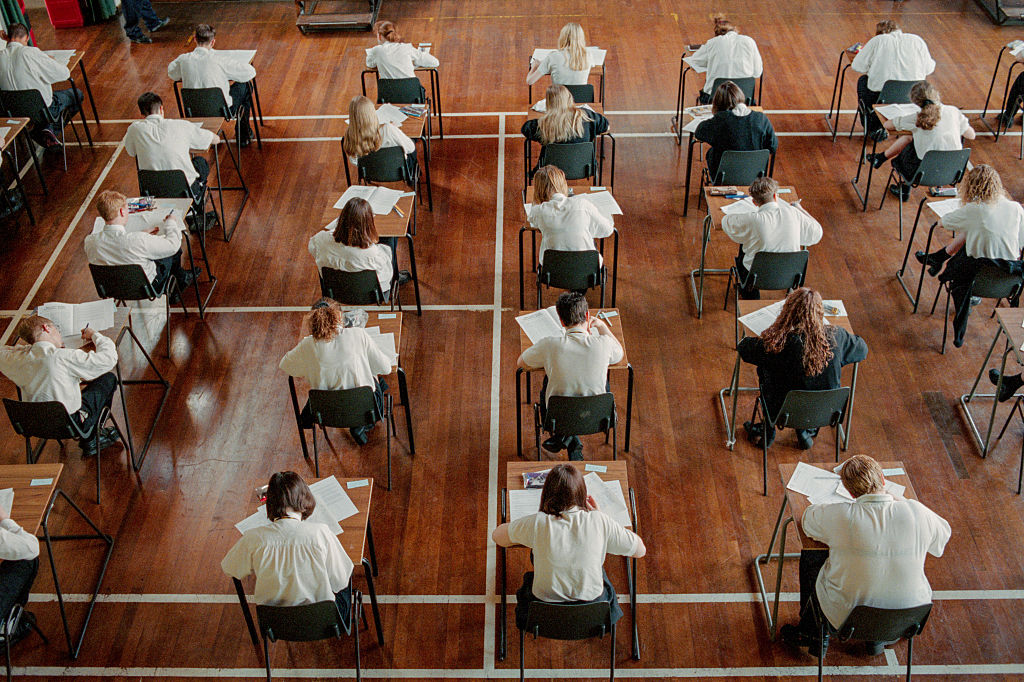
Ever since the Covid-19 pandemic and the suspension of public exams, there has been debate over whether GCSEs and A-levels should continue in their current written format. Critics argue that written exams discriminate against pupils with special educational needs and those for whom English is a second language. Yet there is no compelling evidence for this, and paper exams, marked blindly, remain the fairest way to measure attainment.
It is therefore deeply worrying that Colin Hughes, who as CEO of AQA oversees Britain’s largest exam board, has said that there are “almost no downsides” to public exams moving from pen and paper to being conducted via a screen. Should GCSEs and A-levels go digital, it will be the most disastrous — and fundamentally unfair — decision ever approved by Ofqual and the Department for Education.
The greatest objection is not logistical but moral. The change would not be fair for the many pupils who do not have access to devices at home. For a large proportion, it is school that provides the paper, pens and textbooks on which they rely. To ask them suddenly to switch to using a keyboard, even though most of their classwork has been handwritten, would seriously damage their prospects of attaining the grades they need. In contrast, pupils who attend schools able to provide devices from the moment a child joins, and whose parents can afford touch-typing lessons, will once again be advantaged by online assessments. Ultimately, a paper examination asks every candidate to demonstrate the same skills under the same conditions.
However, the practical consequences would be equally serious: schools simply would not be able to cope with running examinations on this scale. Computers can malfunction, and we already see this with pupils with special educational needs who use laptops. Now imagine nearly 300 pupils completing an examination on laptops, each able to see other screens, each device capable of crashing and work being lost. Paper, meanwhile, is silent, secure and remarkably dependable.
Sometimes old-school is best. Pupils sit examinations with pens, pencils and paper because these tests assess depth of understanding. It’s worse that there is a risk that, to make the technology work, the format of the examinations themselves will change. Hughes has already suggested offering “short-answer text boxes” that are “beneficial for less-high-performing students”. Fairer on less able pupils, perhaps, but unfair on those aiming for the highest grades.
Not every innovation represents progress. Before we abandon an examination system whose strengths are simplicity, reliability and fairness, we should be certain that any replacement is demonstrably better. At present, there is little to no evidence that it would be. There is, however, every reason to believe that it would be more complicated and less equitable. Technology undoubtedly has an important place in education, but fairness must always come first.
David James is deputy head at a leading independent school in London, and also teaches at a local state school.
 drdavidajames