





A group of EDL supporters in Luton. (Mark Makela/Corbis/Getty)





“I am England til I die! I’m England till I die. I know I am, I’m sure I am, I am England til I die!” Mum’s in her element. She’s belting out the words like she’s leading “Jerusalem” at a WI meeting. Only she’s not. She’s on a far-Right march in London, singing at the top of her lungs, the thrill of the words marred only by chants of “Nazi scum!” from the protestors who outnumber her. She just sings louder.
It was 2013, her first ever march. A few months before, she’d discovered Tommy Robinson on Facebook. A few months before that, Islamists had murdered Lee Rigby outside his barracks in Woolwich — and something happened to mum. An anger exploded, a flashpoint I couldn’t get my head round. Where did it come from? How did she go from a shy Cumbrian farm girl to a 60-year old gran marching with an EDL splinter group too Right-wing even for Robinson? “Sandy,” their leader Paul Pitt once told her at a protest in Rotherham, “You’ve got more balls than most men.” I mean, the man had a point. Sandra Wilding was feisty. She cared. She had always cared.
Mum had been a carer for over four decades. She’s cared for the elderly, for dementia sufferers and adults with complex needs. She’d been attacked; kicked, bitten, punched; had her hair yanked out, a sink thrown at her head. But she loved her clients and her clients loved her, clung to her warm, no-nonsense practicality as their own lives unraveled. They all knew if it came down to it, she’d have their backs. When an elderly client died, mum would gently wash and dress them in their favorite outfits, pick a flower from the garden and press it into their folded hands. “The least a body deserves,” she told me once.
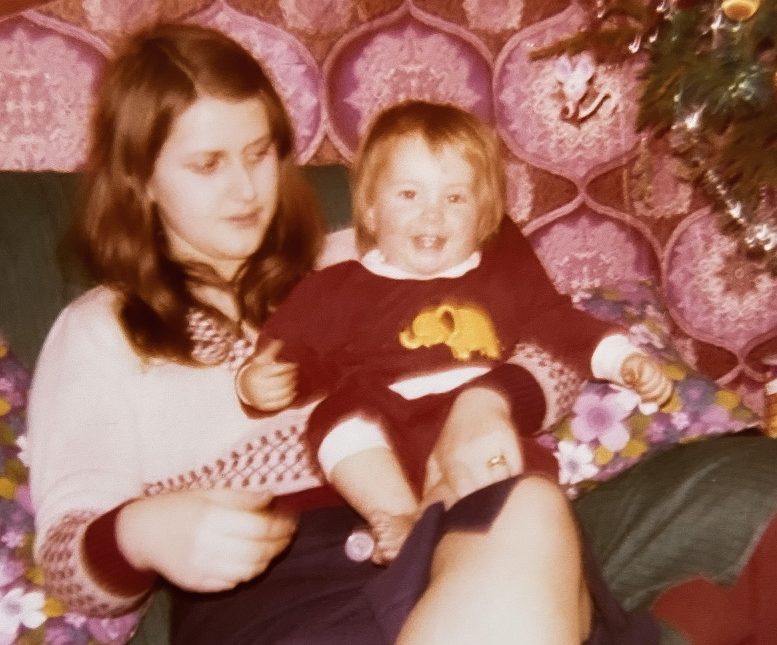
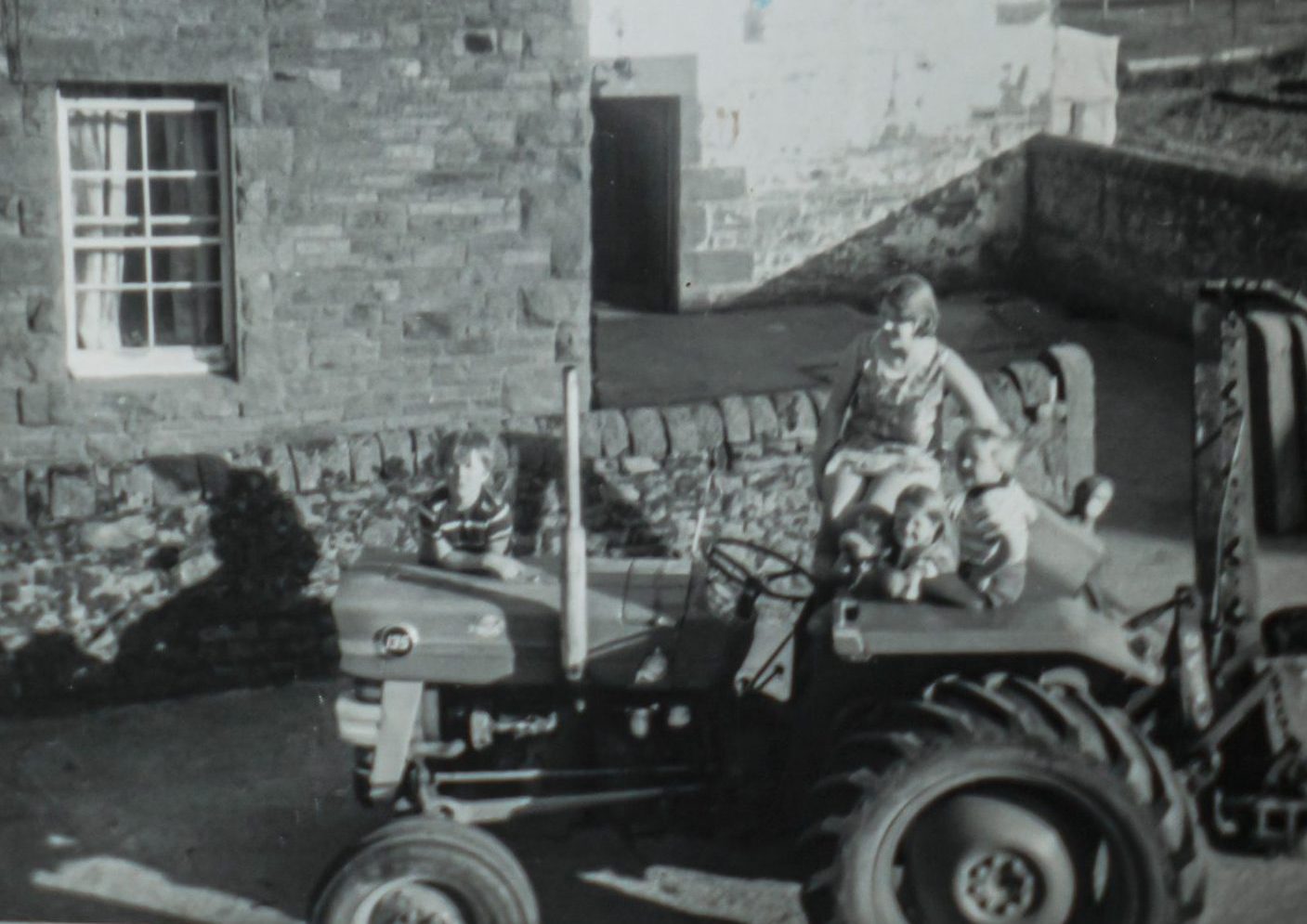
People deserved dignity and respect, she believed. You didn’t abandon them. That word there — abandonment — was the key to understanding mum’s anger. It didn’t explode overnight. It took decades. Mum was one of eight, brought up on a farm in the Eden Valley in Cumbria, a lush agricultural valley that sits between the backbone of the Pennines and the messy jumble of the Lake District fells. Grandad was a farm laborer, on the bottom rung of the rural ladder. It was a hard life and the burden of eight kids and rural poverty eventually took its toll. Nana kept running away, leaving mum and grandad to hold the farm and the family together.
Rural poverty breeds a hard self-reliance, a sort of bootstrap fatalism where the political solidarity fostered in urban industrial England can feel like a world away. What use is collective bargaining against bad weather? The seasons don’t give a shit about solidarity. You survived alone against forces bigger than yourself. Winter was kept out with blankets stuffed under doors and draped across sofas. There was never enough money for food, but there was milk from the house cow, eggs from the chickens and always potatoes. When the flour ran out, mum would use animal feed from the mealhouse to make pastry. All that beef in the byre but none for the table. But you made do.
Mum wasn’t political. Not at first. She spent much of the Seventies on the dole, bringing me up in and out of stormy marriages while working-class power crumbled under Thatcher. In 1985, she bought our council house through Right to Buy, but when we fell behind on payments, loan sharks circled and mum escaped by marrying a soldier who promised stability and security.
That’s when things started getting political. In 1993, mum and my siblings were posted to Lisanelly barracks in Omagh, while I stayed in England for university. One day outside the barracks, a group of men spotted mum’s British number plate as she was returning to camp. They started shouting abuse. She jumped out of her car to confront them as soldiers roared at her to get back inside. That was the moment she quickly realized she couldn’t come here and mind her own business. Her very existence was political.
Inside camp, she ran the barracks pub, watching young working-class lads coming back from close ops patrols with haunted, hunted looks. 1993 was one of the bloodiest years in the Troubles. Mum felt a maternal protectiveness and a defensive, brittle pride. It pulled everything into focus at once: her class, her Protestantism, her Britishness.
Twenty years later, when mum learned of Lee Rigby’s murder outside the gates of his barracks, it felt personal. Memories of Northern Ireland. Another young lad abandoned by the state he had served. But this time, to be hated in your own country. When Tommy Robinson said they’ll come for your daughters with grooming gangs and your sons with meat cleavers, it sent her marching over Tower Bridge singing “I am England till I die”.
London was just the start. Mum traveled to demos across the country: Rochdale, Luton, Bradford. Her fellow marchers wore “FCK ISIS” t-shirts and called each other patriots. She went to Rotherham twice, protesting the state’s handling of the grooming gangs and its abandonment of vulnerable white girls. But on her third visit to Rotherham, in 2015, she never made it into the town center. Police shut down the road until mum’s minibus was the only vehicle on it, boxed in by police cars. Every time her bus neared a slip road, another police car shot ahead to block them. “It was all a bit Benny Hill,” mum laughed. The whole operation had cost the police £750,000. “Don’t you think,” mum asked me later, that “money wasted on escorting a minibus of pensioners could have been better spent?”
At the time, I watched her drift into far-Right protest groups with a kind of shocked bemusement. I was a documentary TV producer, telling other people’s stories, while mum was out there on the streets. I watched her rage harden, her worldview reinforced with every news headline, every anti-fascist screaming in her face. Things got sticky when she started with the “Defund the BBC” posts. “Mum,” I asked her, “do you want me to be jobless?”
I also asked if sharing Facebook posts about Muslims was racist. “Islam isn’t a race!” she snapped back. When white supremacists chanted the notorious “14 words” under the white cliffs, at a protest she attended in Dover, I asked if she really believed it all. “Not everything,” she replied, losing the courage of her convictions. “But I do believe we will be a minority one day.”
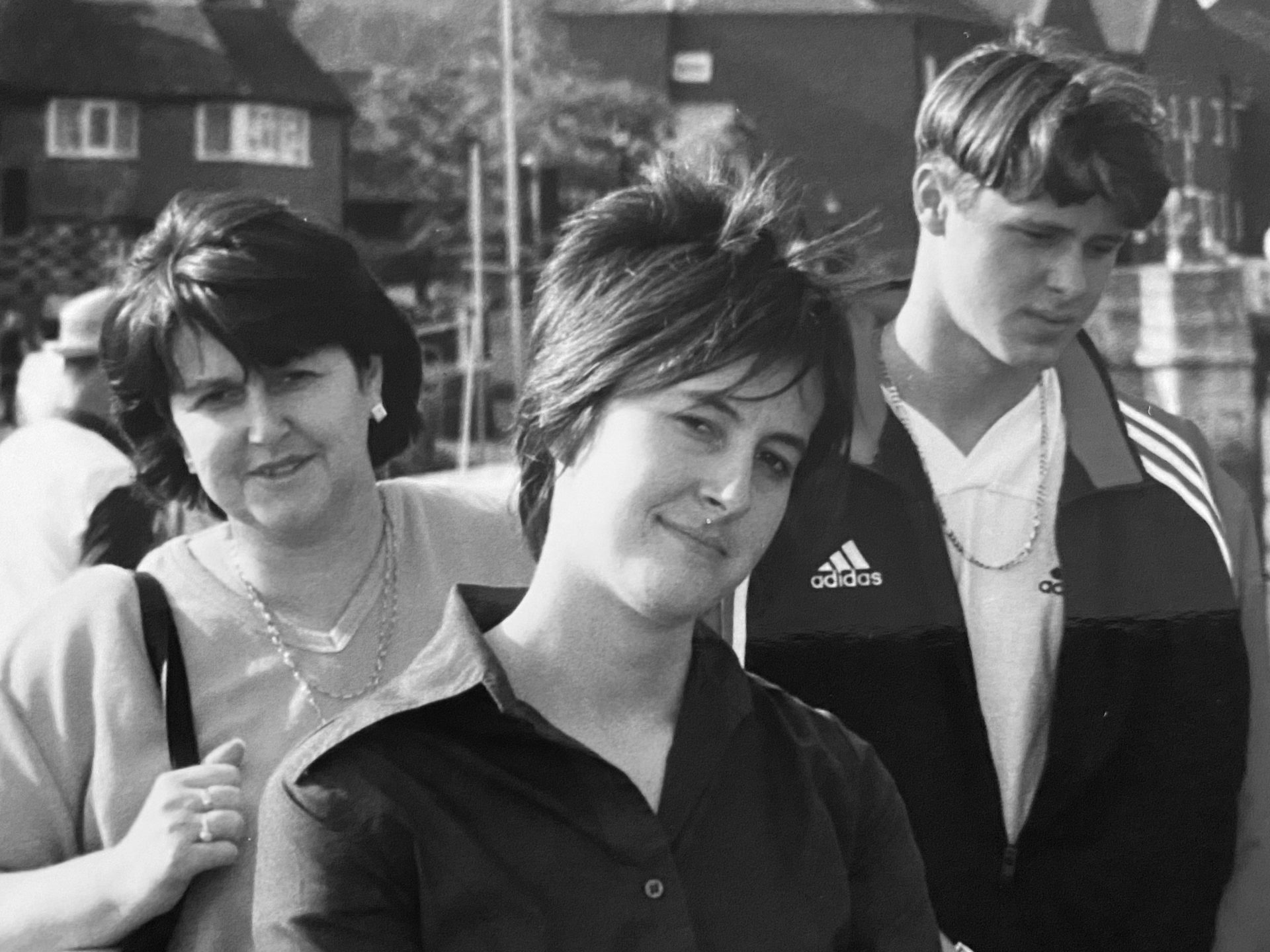
A protest in 2016 helped me finally understand her sense of loss. Howe Barracks, on the edge of Canterbury, had been my family’s home in the Nineties, the first place mum and my siblings finally put down roots. It was a safe, close-knit community, filled with quiet cul-de-sacs and pretty gold-brick houses and cherry trees. Then came the cuts. The barracks was abandoned and left to rot. Now it would house London’s most vulnerable — migrant families — while locals missed out because social housing operated in a weird market economy where the richest councils could outbid for homes anywhere. So mum pinned her Union Jack on the chain-link fence outside her abandoned home, and raised her fingers in a “V for victory” salute at the local-news photographer. At the time, I was making a film about the housing crisis, and it felt like our universes had aligned. A few months later Brexit happened, much to half the country’s surprise. Not mine though. I knew mum.
Then, three years after that, Covid. I begged mum to quit her care job, to shield. She had a bad heart. But she refused.“I’ll die in harness, standing up,” she laughed. But care workers were twice as likely to die from Covid as the rest of the population. Social care, once run by local councils, was now almost fully privatized: a system built on a shaky structure of debt and faceless offshore companies exploiting minimum-wage workers like mum. I didn’t trust those companies to protect her or the people in her care.
One Thursday, a few weeks into lockdown, mum left the house to start her night shift. She lived on an ex-council estate. Others were coming out of their houses too, and gathering on the overgrown green, abandoned after the council stopped maintaining it. People smiled at each other over the tatty wasteland and started clapping. They were clapping for carers and they were clapping for themselves because they were the ones keeping it all going.
They were the low-paid and unskilled, the gig-economy grafters, the left-behinds, the precariat: an atomized working class who had built the country, only to watch their inheritance — power, security, a stake in the national story — sold off. Mum felt the tears welling. It wasn’t so long ago that people were calling her fascist scum on the street. Now, for a few minutes, the country stood and clapped for people like her. And for those few minutes, she stood still and felt it and just let the stupid tears come; hot tears not of anger, now, but of pride. But it didn’t last. Britain clapped on Thursday and forgot on Friday. And, 10 years on from Brexit, that sense of abandonment hasn’t gone away.
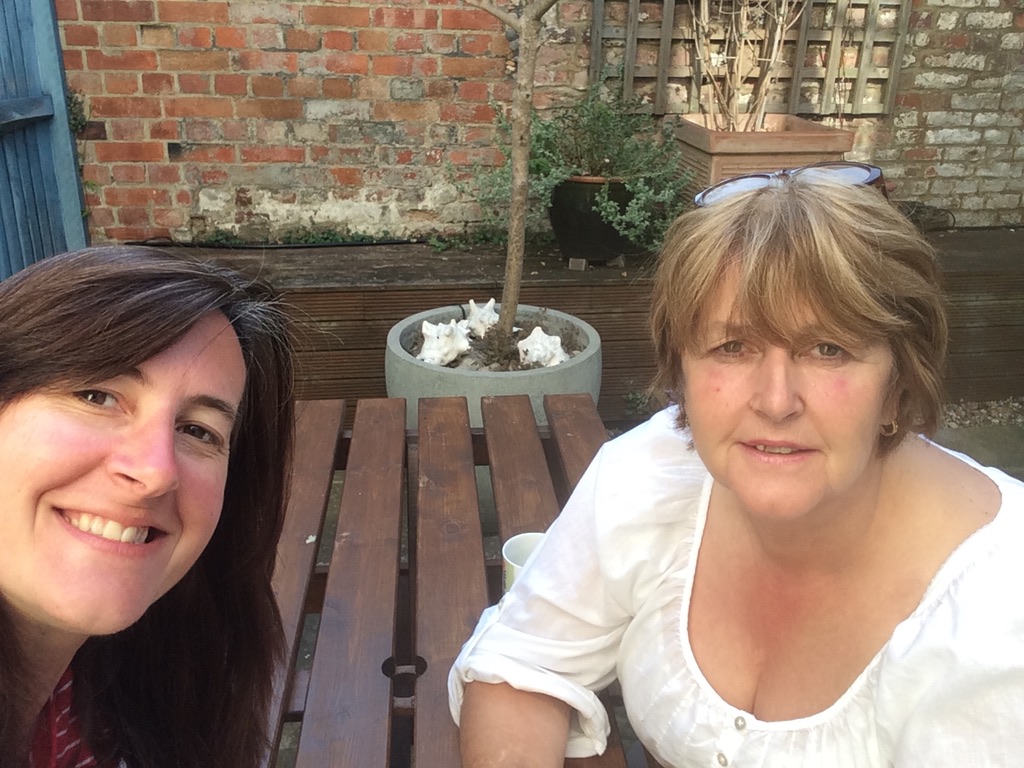
Whatever happens in Clacton, the rise of Farage and Reform shouldn’t surprise us, not really. People like mum are still looking for someone to speak to them in the language of loyalty and belonging, to pull them back into our fraying national story. Someone to tell them they are not far-Right for feeling discarded. And if Reform finally wins? Chances are commentators will probably treat it as something sudden, like an earthquake. But for families like mine, the ground has been shaking for decades: in abandoned farms and barracks, privatized care homes, hollowed out communities, the slow erosion of the dignity and security that work once promised.
I wish I could tell you mum voted Reform in the recent elections. Not because of my own political leanings — but because it would mean she would still be here. But we lost her to cancer and a broken NHS a year and a half ago. She was a proud, passionate, loyal woman trying to muddle her way through the mess of modern Britain. She died at home with all us around her. My sisters dressed her in her favorite summery dress and denim jacket. I placed a flower in her folded hands.
***
These Wild English: A family, a class, a country on fire is published by Profile Books.