








June 20 2026 - 8:00am
Memory is a trickster, but I am quite sure that when I was growing up, in the Eighties and Nineties, it was extremely unusual to see individual houses flying the Union Jack or the St George’s Cross. You might see a few more during big football tournaments, especially on cars and vans, but it just didn’t happen, by and large. This was a noticeable difference not only from the United States, but also from several other European nations.
The reasons for this are fascinating, and complicated. I don’t entirely buy the Centrist Dad idea that British patriotism is inherently understated and undemonstrative, and that more robust displays of national pride are out of character. Coronations, jubilees, royal weddings, and celebrations of martial victories have all seen huge amounts of enthusiastic flag-waving. But it is clearly true that permanent displays of national flags on individual homes or in public places have been rare in Britain until quite recently, except in Northern Ireland.
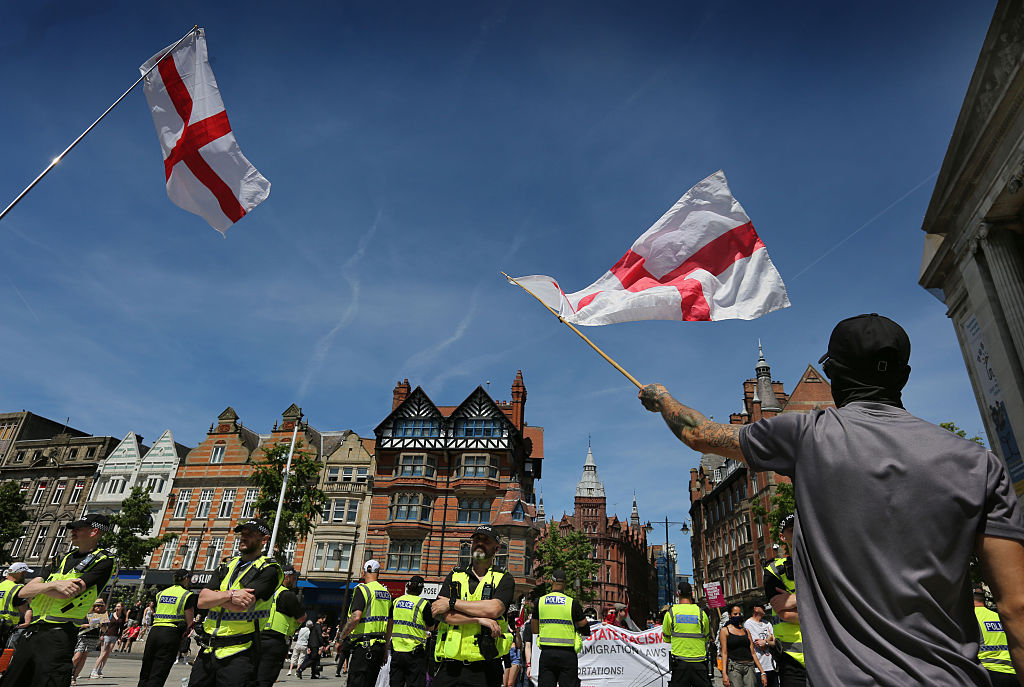
This has changed. Last summer’s Operation Raise The Colours campaign — which saw Union Jacks and St George’s Crosses displayed on lampposts, bridges and other public infrastructure — was the culmination of a growing trend over the last two decades for more public displays of national flags. There has been considerable pushback — most recently from Oxfordshire County Council, which is apparently seeking new powers to prevent the attachment of flags to street furniture and other public areas. There may be some reasonable arguments for such a position. But the wider and more significant question is why flying the national flag has become so much more common over the course of this century, and why it has become so contentious.
There are two closely linked trends behind this. First is the rapid demographic change that Britain has experienced since 1997. Rallying around the flag, both literally and metaphorically, is a natural reaction from Britons who are opposed to the pace and scale of national transformation. So of course people who support current migration trends, and multiculturalism more generally, will regard flag-waving as an attack on their position. Everyone understands the symbolism involved, even if both sides try to obscure the real meaning of their actions — conservatives by insisting that they are just flying the national flag, so who could possibly object to that, and progressives by dressing up their concerns in the language of public aesthetics or safety.
The second trend is the broader discomfort with the embrace of national self-interest that now marks most elite Britons. Cultural and educational change since the Second World War, and the role of nationalism in causing that conflict, has meant that sincere patriotism has come to be seen as threatening. Anything but the most cautious and hedged enthusiasm for one’s own country is now considered low-status, something engaged in by your ghastly suburban relatives. The recent embrace of national symbols by people who regard the current elites as their enemies is, consciously or not, a reaction against what Roger Scruton called “oikophobia”, an irrational and excessive skepticism of one’s own country and people.
There is now a serious and fundamental divide between the national and post-national visions of Britain, and the public display of flags will continue to be a tangible manifestation of that split, just as it has been in Ulster for many years.

Join the discussion
Join like minded readers that support our journalism by becoming a paid subscriber
To join the discussion in the comments, become a paid subscriber.
Join like minded readers that support our journalism, read unlimited articles and enjoy other subscriber-only benefits.
Subscribe